
Why Your AC Smells Musty: Causes and How to Fix It
A musty or mildew smell from your AC almost always means mold or trapped moisture inside the system. Here are the common causes, how to fix each one, how coastal humidity makes it worse, and when a musty smell is a sign to call Comfort Masters across North Myrtle Beach and the Grand Strand.
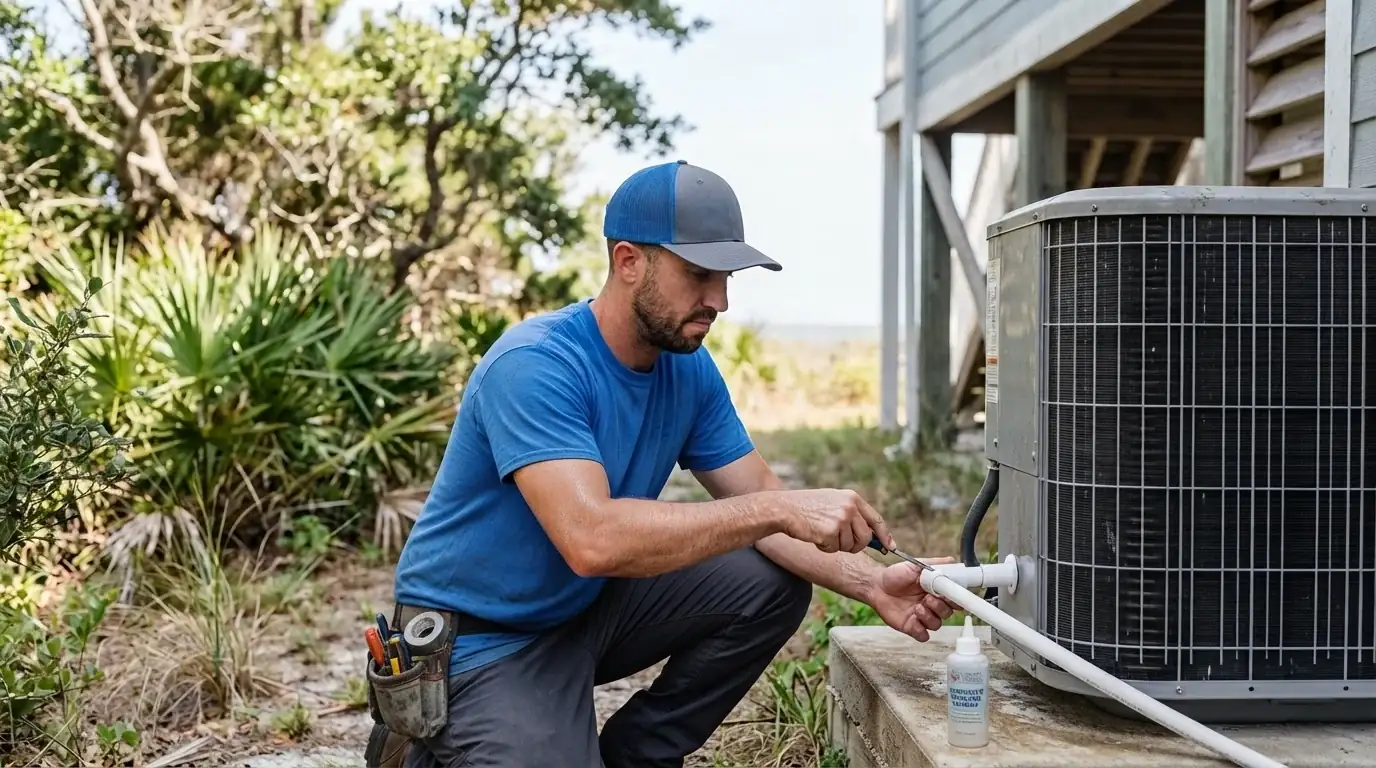
A musty smell from your AC almost always means moisture is sitting somewhere inside the system and letting mold or mildew grow. This guide explains what that smell is telling you, walks through the common causes and how to fix each one, and shows when a musty smell is a sign to call a professional.
Quick answer
Why your AC smells musty
A musty smell from your AC usually comes from mold or mildew growing on a damp evaporator coil, in a clogged condensate drain, or in the ductwork. Start with a fresh air filter, changed every 30 to 60 days, and a cleared drain line. If the smell lingers, Comfort Masters can inspect the system across North Myrtle Beach.
On this page
- 01What a musty smell actually means
- 02Common causes and how to fix each
- 03Why coastal humidity makes it worse
- 04How to prevent it coming back
- 05When to call a professional
- 06Common myths about musty AC smells
- 07Common questions
What a musty or mildew smell from your AC actually means
That damp, basement-like odor is biological. A musty or mildew smell means mold, mildew, or bacteria are growing on a wet surface inside your system, and the air blowing past them carries the smell into your rooms. The smell is the symptom. The moisture behind it is the problem worth fixing.
How the smell forms
Your air conditioner cools by passing warm indoor air over a cold evaporator coil. Moisture in that air condenses on the coil, drips into a pan, and drains away through a condensate line. That is normal. The trouble starts when water lingers, on the coil, in the pan, or in a clogged drain, because a dark, damp surface with a little dust is exactly what mold needs to grow.
When a musty smell is an air-quality concern
A persistent musty smell is an indoor air quality signal, not just a nuisance. The U.S. Environmental Protection Agency advises keeping indoor humidity below 60 percent, ideally 30 to 50 percent, because mold grows readily above that range (EPA, A Brief Guide to Mold, Moisture and Your Home). Masking the smell does nothing about the growth producing it, so the right move is to find the moisture and clear it.
48hr
Mold can begin growing within 24 to 48 hours of a moisture problem.
That is why a damp coil or a slow drain turns into a musty smell so quickly on the coast, and why clearing the moisture early matters more than any air freshener.
Mold and moisture timing per the U.S. EPA.
Common causes of a musty AC smell and how to fix each
Most musty AC smells trace back to one of a handful of damp spots. The three most common are a clogged condensate drain line, a dirty air filter, and a fouled evaporator coil. Here is each cause, what you can safely do yourself, and where the fix becomes a job for a technician.
A clogged condensate drain line
This is the single most common cause. When the drain line clogs with algae and dust, water backs up and sits in the pan, and that standing water grows the smell. You can find the drain line, a PVC pipe near the indoor unit, and flush it with a diluted vinegar solution to clear light buildup. If it keeps clogging or the pan stays full, the line needs to be cleared and checked by a professional.
A dirty air filter
A filter thick with dust restricts airflow and holds moisture against itself, which both feeds mold and lets the coil run too cold. Replacing the filter is the cheapest and easiest fix, and on the coast it should happen every 30 to 60 days through the long cooling season. A fresh filter often clears a mild smell on its own and keeps the coil working the way it should.
A dirty or frozen evaporator coil
The evaporator coil stays wet by design, so dust that settles on it becomes a film where mold takes hold, sometimes called biofilm. A coil can also freeze when airflow or refrigerant is low, then drip heavily as it thaws and overwhelm the drain. Light surface cleaning is possible, but a chemical coil cleaning is a maintenance-visit task. If the coil is icing over, the system is often struggling to cool too, which is covered in why your AC is not cooling.
Standing water in the drain pan
Below the coil sits a pan that catches condensation. If the pan is cracked, rusted, or not level, water pools instead of draining and turns stagnant. You can clean a reachable pan and wipe out the slime, but a cracked or corroded pan needs replacing, which is a technician’s job because it sits under the coil.
Mold or mildew in the ductwork
When mold takes hold inside the ducts, the smell reaches every room the system serves, and it usually gets stronger right when the air kicks on. Duct interiors are not a do-it-yourself surface. Professional duct cleaning and sanitizing remove the growth and treat the surfaces so it does not simply return.
An oversized system that short-cycles
An air conditioner that is too large for the home cools the air fast, shuts off, and never runs long enough to pull the humidity out. The house stays damp even at the right temperature, and that lingering moisture feeds mold on the coil and in the ducts. The fix is correct sizing from a Manual J load calculation rather than a like-for-like swap, which is how Comfort Masters sizes every system. It is engineered, not estimated.
Dirty sock syndrome on the coil
The name is real, and so is the smell. Dirty sock syndrome is a sour, musty odor that shows up when microbial buildup on the coil releases as the system starts after sitting idle, often on the first cool day or the switch from heat to cool. A thorough coil cleaning is the reliable fix, and a germicidal UV light near the coil helps keep growth from returning.
Why coastal Carolina humidity makes musty AC smells worse
A musty AC smell is more common on the Grand Strand than inland, and the climate is why. Coastal South Carolina sits in ASHRAE Climate Zone 3A, a hot and humid zone where summer design temperatures reach 93 to 96 degrees with sustained humidity across a cooling season that runs roughly April through October. More runtime and more moisture give mold more of what it needs.
Why Grand Strand homes are prone to it
Your coil stays wet for six months of nearly continuous cooling, your drain line moves water all season, and salt air keeps outdoor metal damp. Each of those is a surface where growth can start if maintenance slips. Managing moisture is a core part of caring for a coastal system, which we cover in our guide to coastal Carolina HVAC.
Whole-home dehumidification and indoor air quality options
When a home stays clammy even with the AC running, controlling humidity directly often solves both the feel and the smell. A whole-home dehumidifier holds indoor humidity in the range the EPA recommends, a germicidal UV light discourages growth on the coil, and a higher-MERV filter captures more of the dust that growth feeds on. These belong to the indoor air quality category, and you can compare options among our indoor air quality accessories.
How to prevent a musty smell from coming back
Clearing the smell once is straightforward. Keeping it gone is a matter of routine, because the coil and drain go right back to being damp the next time the system runs. A steady maintenance rhythm is what keeps moisture from turning into growth.
A maintenance cadence that fits the coast
Change the filter every 30 to 60 days in the cooling stretch, keep the condensate drain clear, and have the coil cleaned on a seasonal schedule. Routine maintenance like this is exactly what ENERGY STAR recommends for a system that runs well and stays clean (ENERGY STAR, heating and cooling maintenance). Our maintenance plans build that cadence in: the one-visit plan is 115 dollars a year, and the two-visit plan is 175 dollars a year and adds a spring coil clean, a fall service, drain clearing twice a year, and a 10 percent discount on repairs. For how the timing works on the coast, see how often to service your HVAC or our HVAC maintenance plans.
Habits between professional visits
A few small habits keep moisture moving. Run the fan setting for a little while after a long cooling cycle so the coil dries instead of sitting wet, keep supply and return vents clear so airflow stays strong, and pay attention to how the air feels. A house that feels damp at the right temperature is telling you the system is not pulling humidity the way it should.
Keep the smell away
Track what keeps moisture in check.
0 of 5 done 0%
- Change the air filter so airflow stays strong and the coil does not stay wet.Every 30 to 60 days
- Flush the condensate drain line so water is not sitting in the pan.Monthly in season
- Run the fan after long cycles so the coil dries instead of staying damp.As needed
- Watch that humidity feels controlled. A clammy house at the right temperature is a sign to have it checked.As you notice
- Book a seasonal coil and drain cleaning before the cooling peak to catch growth early.Twice a year
All five done. Your system is set up to keep moisture from turning into a smell. For the seasonal cleaning, book HVAC maintenance and repairs ahead of the season.
Reset checklist
When to call a professional, and when a smell is urgent
A mild musty smell often clears with a new filter and a flushed drain. When it does not, the moisture source is deeper in the system, and that is worth a professional visit rather than a wait. A lingering smell is a signal to get the system looked at, not one to ignore.
Signs it is time to schedule a visit
Call for service when the smell returns after you have changed the filter, when you see water pooling around the indoor unit, when there is visible mold on vents or around the coil, or when the odor reaches several rooms at once. Those point to a drain, coil, pan, or duct problem that needs the right tools and a trained eye.
Smells that are not musty and need urgent action
A musty smell is a moisture and mold issue. A burning or electrical smell is not. If you smell hot plastic or burning, shut the system off at the breaker and call for service before running it again, because it can signal an electrical fault. If you smell rotten eggs or sulfur, treat it as a possible natural gas leak: leave the home and call 911 and your gas utility from outside first. When anyone feels overcome by heat while waiting on a hot day, call 911.
Common myths about musty AC smells
A few common beliefs keep homeowners chasing the smell instead of the cause. Here is what holds up and what does not.
Myth: an air freshener or AC deodorizer fixes it
A scent product covers the smell for a while and does nothing to the mold or moisture creating it. The odor returns as soon as the fragrance fades, because the source is still growing on a damp surface. The real fix is removing the moisture and cleaning the growth.
Myth: a musty smell is harmless
A musty smell means moisture and possible mold, which the EPA treats as an indoor air quality concern worth addressing rather than ignoring. It is not a reason to panic, and it is a reason to find the source and clear it. Left alone, the growth and the moisture behind it tend to spread.
Myth: any filter stops mold
A filter helps airflow and captures dust, but it does not clean a coil, a drain, or a duct that already has growth in it. Filter type and change cadence matter, and a filter alone will not undo a fouled coil. Clearing the existing source comes first, then the right filter helps keep it from returning.
Common questions
Musty AC smells, answered.
Why does my AC smell musty when it first turns on?
The smell is strongest at start-up because air pushes past mold or mildew that grew on a damp coil or in the ducts while the system sat idle. This is often called dirty sock syndrome. A coil cleaning, a cleared drain, and a fresh filter usually resolve it.
Is a musty or mildew smell from my AC dangerous to breathe?
A musty smell signals moisture and possible mold, which the EPA treats as an indoor air quality concern worth addressing. It is not a reason to panic, but it is a reason to find and clear the source rather than mask it. Have the system checked if the smell persists.
How do I get the musty smell out of my AC myself?
Start with the two safest steps: replace the air filter and flush the condensate drain line with a diluted vinegar solution. Those clear most mild smells. Stop there, since cleaning the coil interior, the drain pan, or the ducts is work for a technician.
Will changing the air filter stop the musty smell?
Often yes, if the filter was the problem. A clogged filter traps moisture and restricts airflow, and a fresh one every 30 to 60 days can clear a mild smell. If the odor returns quickly, the source is likely the coil, drain, or ducts, and needs a professional.
How do I stop my AC from smelling musty again?
Keep moisture from lingering. Change the filter every 30 to 60 days, keep the condensate drain clear, and have the coil cleaned seasonally. A maintenance plan builds that rhythm in, and whole-home dehumidification helps in coastal homes that stay clammy through the summer.
Does a musty smell mean I have mold in my air ducts?
Not always. The smell can come from the coil, drain pan, or drain line as easily as the ducts. If the odor reaches several rooms and is strongest when the air kicks on, ductwork is a likely source, and duct cleaning and sanitizing is the fix.
When should I call an HVAC technician about the smell?
Call when the smell returns after a filter change, when water pools around the indoor unit, when you see visible mold, or when the odor fills several rooms. A burning or gas smell is different and urgent: shut the system off or leave and call for help first.
Sources and references
- U.S. Environmental Protection Agency, A Brief Guide to Mold, Moisture and Your Home (keep indoor humidity below 60 percent, ideally 30 to 50 percent; mold can grow within 24 to 48 hours of a moisture problem). epa.gov
- ENERGY STAR, Heating and Cooling (routine maintenance and regular air-filter changes). energystar.gov
- Air Conditioning Contractors of America, Manual J Residential Load Calculation (right-sizing to control humidity and prevent short cycling). acca.org
Ready when you are
Clear the smell at the source.
Comfort Masters Heating & Cooling works on coastal systems across North Myrtle Beach and the Grand Strand from its shop at 3502 State Hwy 50 in Little River. A service call is $55 in Little River and Calabash and $95 in the other service areas, and it includes a full diagnostic with written findings before any repair is quoted.
Call (843) 443-7186 Book Online
Service area
HVAC across the Grand Strand.
Comfort Masters Heating & Cooling provides coastal HVAC and indoor air quality service across North Myrtle Beach and the Grand Strand from 3502 State Hwy 50 in Little River, SC 29566.
Comfort Masters Heating & Cooling 3502 State Hwy 50, Little River, SC 29566 (843) 443-7186 Get directions
Areas we serve
- North Myrtle Beach
- Little River
- Calabash
- Cherry Grove
- Longs
- Loris
- Myrtle Beach
- Sunset Beach
- Ocean Isle Beach