
Dryer Vent Cleaning: Why It Matters and How Often to Do It
A dryer vent packed with lint is a fire hazard and a drag on how well your dryer works. Here is why dryer vent cleaning matters, how often to do it, the warning signs it is overdue, and what a professional cleaning involves for a coastal Grand Strand home.
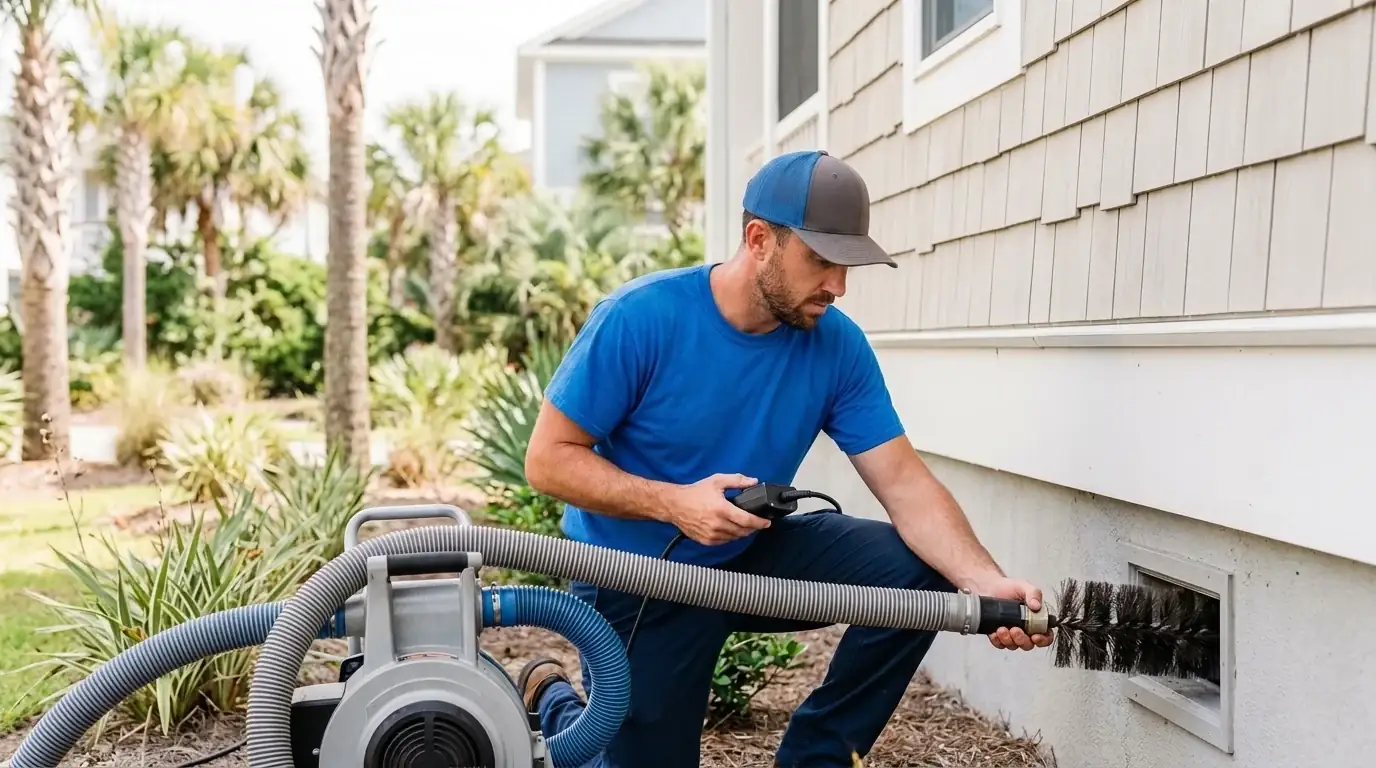
Your dryer vent is easy to forget. It sits behind the machine or runs up through a wall, out of sight, doing its job until it quietly stops doing it well. Cleaning it matters more than most homeowners expect, because a vent packed with lint is both a fire risk and a drag on how well your dryer works. This guide covers why dryer vent cleaning matters, how often to do it, and the warning signs that it is overdue. For the wider picture on keeping a coastal home comfortable, see our complete guide to coastal Carolina HVAC.
Quick answer
How often should you clean your dryer vent?
Clean your dryer vent at least once a year, and about every six months if you run frequent loads, have pets, or have a long vent run. In a humid coastal climate like the Grand Strand, damp lint packs tighter inside the vent, so a shorter interval is wise. A clogged vent is a fire and efficiency risk, which is why Comfort Masters Heating & Cooling treats it as safety work.
Key things to know
- A clogged vent is a real fire hazard. The U.S. Fire Administration ties about 2,900 home clothes dryer fires each year to dryers, and failure to clean is the leading cause.
- Once a year is the baseline. Most households should have the vent cleaned at least annually, and more often with heavy use or pets.
- The lint trap is not the vent. Emptying the lint screen every load helps, but the vent line that carries air to the outside still fills with lint over time.
- Coastal humidity works against you. Damp lint packs tighter inside the vent, so Grand Strand homes often benefit from a shorter interval than the generic once-a-year rule.
- Watch for the warning signs. Longer drying times, a dryer that runs hot, and a musty smell on clean laundry all point to restricted airflow.
On this page
- 01Why dryer vent cleaning matters
- 02How often to clean it
- 03Signs your vent needs cleaning
- 04What a professional cleaning involves
- 05Common myths about dryer vents
- 06When to call a professional
- 07Common questions
Why dryer vent cleaning matters
Dryer vent cleaning is a safety task first and a maintenance task second. Every load sheds lint, and the lint trap only catches part of it. The rest travels into the vent line, where it collects, dries, and narrows the path that hot, moist air needs to escape. Left alone, that buildup becomes both a fire hazard and a steady drain on how well your dryer runs.
How common dryer fires are
Dryer fires are more common than most people assume. The U.S. Fire Administration reports about 2,900 home clothes dryer fires each year, and it names failure to clean the dryer as the leading factor behind them, at 34 percent of cases. Those fires cause an estimated 5 deaths, 100 injuries, and $35 million in property loss every year. The National Fire Protection Association reaches the same conclusion, tying roughly one-third of home dryer fires to a failure to clean, with about 27 percent starting when lint or dust ignites.
What a clogged vent does to your dryer and home
A blocked vent does damage long before it ever starts a fire. When lint restricts the airflow, your dryer runs longer and hotter to finish a load, which wastes energy and wears out the heating element and motor sooner. The trapped moisture has to go somewhere, so a clogged vent can raise humidity in the laundry room, which matters in an already humid coastal climate and ties into the broader question of why fresh air matters in your home. If you have a gas dryer, a blocked vent is more serious still, because it can push exhaust gases, including carbon monoxide, back into the home instead of outside.
2,900
About 2,900 home clothes dryer fires are reported in the United States each year.
Failure to clean the dryer is the leading factor behind them, and those fires cause roughly 5 deaths, 100 injuries, and $35 million in property loss annually.
U.S. Fire Administration, clothes dryer fire report.
How often should you clean your dryer vent
There is a simple baseline and a few good reasons to shorten it. The right interval depends on how hard your dryer works and where you live.
The once-a-year baseline
Plan on a professional dryer vent cleaning at least once a year for a typical household. That yearly cadence is the standard recommendation from fire-safety authorities and most dryer manufacturers, and it keeps lint from building to the point where it chokes airflow or catches. Annual cleaning is the floor, not the ceiling. The same once-a-year logic applies to the rest of your equipment, which is why we recommend a schedule for how often to service your HVAC system too.
When you should clean it more often
Some homes should clean the vent closer to every six months. The heavier and more often the dryer runs, the faster lint collects in the line, and a few household factors speed that up.
High-use households and pets
A large household running back-to-back loads pushes far more lint through the vent than a couple doing laundry once a week. Pets add to it, because pet hair and dander end up in the lint stream. If that describes your home, plan on cleaning about twice a year.
Long or winding vent runs
A long vent run, or one with several bends and elbows, gives lint more surface to cling to and more corners to pack against. Homes where the dryer sits far from an exterior wall tend to clog faster, so they benefit from a shorter interval.
Why coastal Grand Strand homes may need it sooner
Coastal homes have one more factor working against them. The humid coastal air keeps lint damp, and damp lint packs tighter and dries more slowly inside the vent than it would inland. Exterior vent hoods near the coast also see more moisture and can attract nesting birds or insects. None of that changes the fire risk on its own, but it is a sound reason to check the vent more often than the generic once-a-year advice suggests.
Warning signs
Signs your dryer vent needs cleaning.
0 of 5 checked
- Clothes take longer to dry. When a normal load needs a second cycle to finish, restricted airflow is the usual reason.Most common sign
- The dryer or laundry room runs hot. A dryer that is hot to the touch, or a room that heats up during a cycle, means heat is not venting out.Check by feel
- You see lint around the outside vent. Lint building up on the exterior hood or wall means it is not being carried out of the line.Look outside
- Clean laundry smells musty. A damp, musty odor on finished loads points to trapped moisture from poor airflow.Notice the smell
- The exterior vent flap stays shut. If the outside flap does not open while the dryer runs, little air is getting through.Watch it run
Seeing more than one of these is a sign the vent is overdue. Have it cleaned before the airflow gets worse, and treat any burning smell as urgent.
Reset checklist
What a professional dryer vent cleaning involves
A proper cleaning is more than pushing a brush through the line. The value is a vent that you can confirm is clear, from the dryer connection all the way to the exterior hood.
Inspection and airflow check
A technician starts by looking at the whole run, from where the vent leaves the dryer to where it exits the wall or roof. Checking the airflow at the outside hood shows how restricted the line is before any work begins. That first look also finds crushed sections, disconnected joints, or a hood flap that no longer opens, which are problems a brush alone will not fix.
Clearing the vent line and exterior hood
The lint comes out with a rotating brush and a vacuum that pulls the debris toward the outside rather than back into the room. The exterior hood gets cleared too, since that is where lint, nests, and debris tend to collect. When the line is clean, a second airflow check confirms the air is moving freely again, so the result is verified rather than assumed.
What you can safely do between cleanings
You can do real good between visits. Clean the lint screen before or after every load, keep the space behind the dryer clear so the vent is not crushed, and watch for the warning signs above. These habits slow the buildup, but they do not reach the vent line or the exterior hood, which still need a professional cleaning on schedule. When the signs point to a clog, the safe move is to have it looked at rather than run another load and hope.
Common myths about dryer vent cleaning
A few common beliefs lead homeowners to skip a cleaning that their vent actually needs.
Myth: cleaning the lint trap is enough
The lint screen catches only part of what a load sheds. The rest travels into the vent line, and that is exactly where the U.S. Fire Administration points when it names failure to clean the leading cause of dryer fires. Emptying the screen every load is good practice, but it is not a substitute for cleaning the vent.
Myth: a short vent run never clogs
A short, straight run clogs more slowly, but it still collects lint every time the dryer runs. Even a few feet of duct will pack up over months of use, especially in humid coastal air that keeps the lint damp. Short runs need cleaning too, just often on a longer interval than a long, winding one.
Myth: a new dryer means no vent maintenance
A new dryer does nothing for the vent behind it. The duct and the exterior hood are separate from the machine, and they collect lint at the same rate regardless of the dryer’s age. The vent is what fails to clear, so it still needs cleaning on the same schedule as an older setup.
When to call a professional
Dryer venting is do-it-yourself in part and professional in part. Knowing where that line falls keeps a small problem from turning into a fire or a failed dryer.
Signs you should schedule a cleaning
Call for a cleaning when loads keep taking longer, the dryer runs hot, lint collects at the outside hood, or a musty smell lingers on clean laundry. Any one of those is worth a visit, and more than one together means the vent is overdue. If you ever smell something burning, or see smoke, stop the dryer, get everyone out of the house, and call 911 before anything else.
What to expect from our team
Comfort Masters Heating & Cooling now cleans dryer vents alongside its duct cleaning and duct sanitizing work across North Myrtle Beach and the Grand Strand. A technician inspects the run, clears the line and the exterior hood, and confirms the airflow before leaving, with the findings explained in plain terms. You can add it to a visit through our HVAC maintenance and repairs service.
Common questions
Dryer vent cleaning, answered.
How often should you clean your dryer vent?
Clean your dryer vent at least once a year for a typical household, and about every six months if you run frequent loads, have pets, or have a long vent run. Coastal humidity keeps lint damp and packed, so many Grand Strand homes benefit from the shorter interval. Annual cleaning is the minimum, not the maximum.
What are the signs a dryer vent is clogged?
The most common sign is clothes that take longer to dry, often needing a second cycle. A dryer or laundry room that runs hot, visible lint at the outside vent hood, and a musty smell on clean laundry are the others. Seeing more than one together means the vent is overdue for a cleaning.
Is cleaning the lint trap the same as cleaning the vent?
No. The lint screen catches only part of what a load sheds, and the rest collects in the vent line that runs to the outside. Emptying the screen every load helps, but the vent line and exterior hood still need a separate cleaning. Failure to clean the vent is the leading cause of dryer fires.
Why is dryer vent cleaning important?
A vent packed with lint is a fire hazard and an efficiency problem. The U.S. Fire Administration ties about 2,900 home dryer fires a year to dryers, with failure to clean the leading cause. A clogged vent also makes the dryer run longer and hotter and traps moisture in the home.
Can a clogged dryer vent cause a fire?
Yes. When lint builds up in the vent, it restricts airflow and traps heat, and lint is easy to ignite. The U.S. Fire Administration reports about 2,900 home clothes dryer fires each year and names failure to clean the dryer as the leading factor. Regular cleaning is the main way to lower that risk.
Does a humid coastal climate change how often I should clean it?
Yes. Humid coastal air keeps lint damp, and damp lint packs tighter and dries more slowly inside the vent than it would inland. Exterior hoods near the coast also see more moisture and debris. For many Grand Strand homes, that is a reason to clean the vent closer to every six months than once a year.
What does a professional dryer vent cleaning include?
A technician inspects the full run, checks the airflow at the outside hood, then clears the vent line and exterior hood with a rotating brush and vacuum. A second airflow check confirms the line is clear before the visit ends. The findings are explained in plain terms, so you know the vent is actually clean.
Sources and references
- U.S. Fire Administration, Clothes Dryer Fires in Residential Buildings. usfa.fema.gov
- U.S. Fire Administration, Appliance and Electrical Fire Safety. usfa.fema.gov
- National Fire Protection Association, Home Fires Involving Clothes Dryers and Washing Machines. nfpa.org
- U.S. Consumer Product Safety Commission, dryer fire safety guidance. cpsc.gov
Ready when you are
Add a dryer vent cleaning to your next visit.
Comfort Masters Heating & Cooling cleans dryer vents across North Myrtle Beach and the Grand Strand from its shop at 3502 State Hwy 50 in Little River. A technician inspects the run, clears the line and exterior hood, and confirms the airflow before leaving. Call to get on the schedule and ask what a cleaning involves for your home.
Call (843) 443-7186 Book Online
Service area
HVAC across the Grand Strand.
Comfort Masters Heating & Cooling provides coastal HVAC and duct service across North Myrtle Beach and the Grand Strand from 3502 State Hwy 50 in Little River, SC 29566.
Comfort Masters Heating & Cooling 3502 State Hwy 50, Little River, SC 29566 (843) 443-7186 Get directions
Areas we serve
- North Myrtle Beach
- Little River
- Calabash
- Cherry Grove
- Longs
- Loris
- Myrtle Beach
- Sunset Beach
- Ocean Isle Beach