
9-Step Fall HVAC Checklist to Get Your Heat Pump Ready for Winter in North Myrtle Beach
A Grand Strand heat pump spends six months cooling, then gets asked to run in reverse on the first cold morning. These nine fall steps cover the filter, the outdoor coil, the defrost cycle, auxiliary heat, the thermostat, the condensate drain, and the ducts, plus the instrumented half of the job that needs a licensed technician.
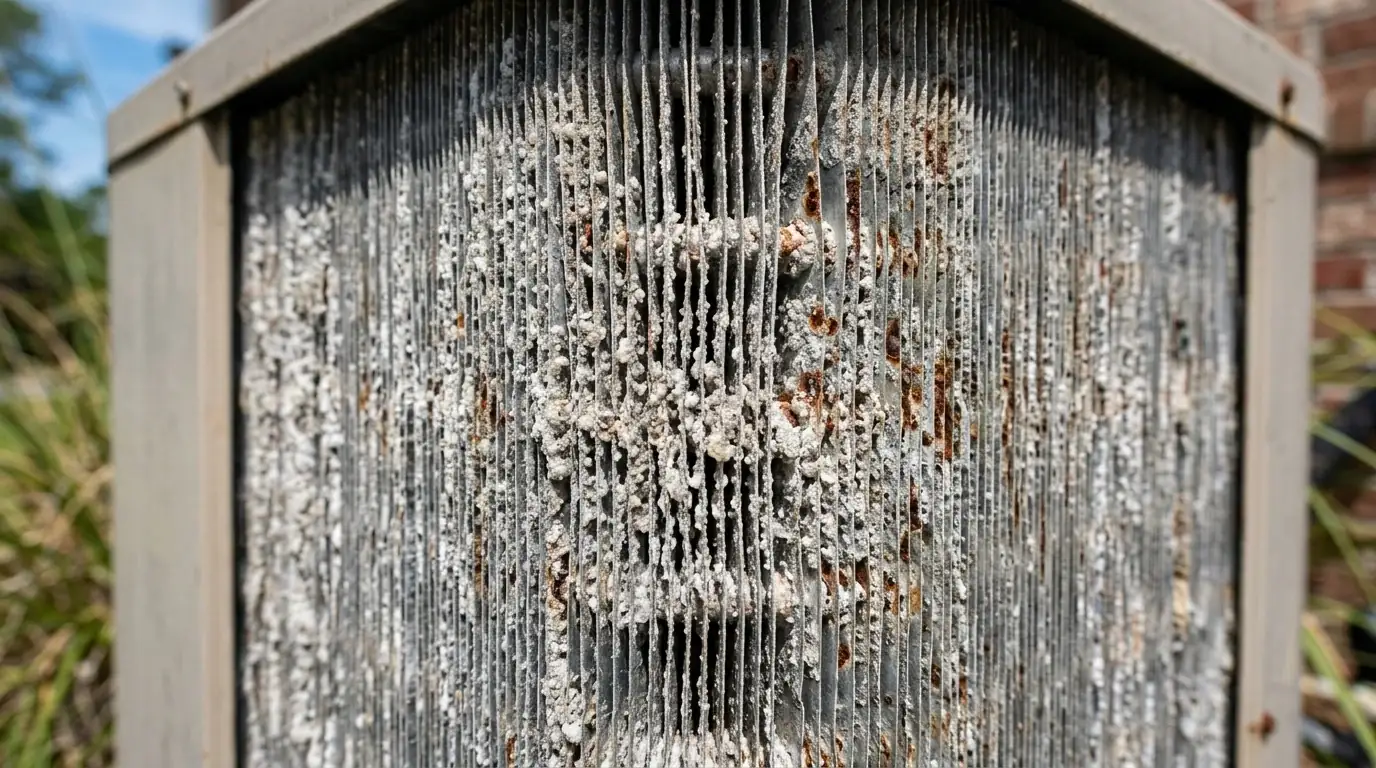
A fall HVAC checklist matters in North Myrtle Beach for one reason that has nothing to do with snow: the 9 steps below are the difference between finding a problem on a mild October afternoon and finding it on the first 28 degree night in January. Your heat pump has spent roughly six months cooling. Now you are about to ask it to run in reverse for the first time since spring. Coastal Carolina winters are mild until a cold front proves otherwise, and the equipment that gets through one is the equipment somebody looked at first. For the wider picture, see our complete guide to coastal Carolina HVAC.
Quick answer
What should be on a fall HVAC checklist in North Myrtle Beach?
Nine steps: replace the filter, clear and rinse the outdoor unit, run the heat early, watch the defrost cycle, check auxiliary heat, reprogram the thermostat, clear the condensate drain, check registers and ducts, then book a tune-up. Comfort Masters services heat pumps across North Myrtle Beach, and a service call runs $55 or $95 depending on your town.
On this page
- 01Why fall maintenance matters here
- 02How salt air changes the checklist
- 03The 9-step checklist
- 041. Replace the air filter
- 052. Clear and rinse the outdoor unit
- 063. Run the heat before you need it
- 074. Watch the defrost cycle
- 085. Check auxiliary heat
- 096. Reprogram the thermostat
- 107. Clear the condensate drain
- 118. Check registers and ducts
- 129. Book the fall tune-up
- 13What to do next
- 14Common questions
Why fall maintenance matters more on the Grand Strand
April through October is the operational peak here, and systems run nearly continuously through it. A Grand Strand heat pump does not get a rest season. It cools hard for six months, then gets asked to reverse into heating on the first cold morning, often with no test run in between.
That changeover is where fall problems surface. A worn contactor, a reversing valve that sticks, a defrost board that has quietly failed, a bank of heat strips that has sat idle since March: none of these announce themselves in August. They announce themselves the first night you need heat.
ENERGY STAR recommends annual pre-season check-ups, spring for cooling and fall for heating, and puts a number on what neglected airflow costs: airflow problems can reduce a system’s efficiency by up to 15 percent, according to the ENERGY STAR maintenance checklist. That is before anything breaks.
The local context
Coastal South Carolina sits in ASHRAE Climate Zone 3A, hot and humid, and the Grand Strand has far fewer heating degree days than inland South Carolina. Mild does not mean exempt. Cold snaps still arrive, and they still generate calls, which is exactly why the October to November shoulder is when heating and heat pump service gets booked here.
The advantage of a mild climate is that your heat pump can carry the whole heating load on its own most of the winter. The catch is that a system nobody has verified will find that out the hard way.
Who this applies to
Year-round homeowners get the most out of running this list in early fall. Second-home and snowbird owners have a second reason: properties shift into low-use or vacant mode from November into December, and a vacant house still needs a heating floor set and a system that will actually hold it.
Vacation-rental owners sit in between. The gap between the last summer booking and the first cold week is the only window where a repair is a scheduling matter rather than a lost booking.
15%
Airflow problems can cut a system’s efficiency by up to 15 percent.
That is the cost of a dirty filter, a blocked return, or a leaf-packed outdoor coil, before a single component fails. Three of the nine steps below exist to protect airflow.
Per the ENERGY STAR maintenance checklist.
Why the coast is hard on equipment
How salt air changes the fall checklist.
Salt settles
Airborne salt drifts inland and lands on the outdoor unit all summer, then sits there.
Fins corrode
Salt and humidity eat at the coil fins and cabinet faster than inland air ever would.
Heat transfer drops
In heating mode that coil has to pull heat out of cold outdoor air, and a fouled coil cannot.
Backup heat covers it
The system leans on expensive electric heat strips to make up what the coil cannot deliver.
This is why a coastal fall list is longer. An inland checklist treats the outdoor unit as a debris problem. Here it is a corrosion problem, and the answer is a rinse cadence rather than a once-a-year sweep.
The 9-step fall heat pump checklist
Steps 1 through 8 are things you can do yourself in an afternoon. Step 9 is the part that needs instruments. Each step tells you why it matters, what to do, and the specific signal that means stop and call a technician.
1. Replace the air filter and set a winter cadence
Why it matters
Everything downstream of the filter depends on airflow. Restrict it and the indoor coil cannot move heat properly and the blower works harder. On a heat pump there is a second cost: weak airflow across the coil can pull in the electric backup heat strips when the system should not need them, and those are the most expensive way your house makes heat. ENERGY STAR puts the efficiency penalty from airflow problems at up to 15 percent.
What to do
Pull the filter and hold it up to a light. If you cannot see light through it, it is done. ENERGY STAR recommends inspecting, cleaning, or changing filters once a month in a central air conditioner, furnace, or heat pump. Through our heavy-runtime stretches on the Grand Strand, plan on a replacement every 30 to 60 days rather than waiting to notice.
- Write the filter size on the air handler cabinet so you are not guessing at the store.
- Note which way the airflow arrow points before you slide the old one out.
- Buy two or three at a time so a missing filter is never the reason you skip it.
When to call a technician
Call if the filter comes out soaked or greasy, or if the system short cycles on a brand new one. Both point past the filter to something else.
2. Clear and rinse the outdoor unit
Why it matters
In heating mode the outdoor coil has the hard job. It pulls heat out of 40 degree air, which takes every square inch of fin surface and unobstructed airflow. A summer of salt deposits plus a fall of leaf pack takes away both at once.
What to do
Kill the power at the outdoor disconnect first. Clear two feet of space on every side, pull leaves and pine straw out of the base, and rinse the coil with a garden hose on a normal spray setting. A monthly rinse through the year is the cadence that keeps salt from setting on coastal equipment.
- Never use a pressure washer. Coil fins bend at far less pressure than most people expect.
- Never wrap or cover the unit for winter. A heat pump runs year-round, and a cover traps moisture against metal that is already fighting salt.
- Cut back anything growing within two feet, including the shrub that looked fine in May.
When to call a technician
Call if you see flattened or eaten-away fins, oily residue on the coil, or hear hissing near the unit. Oily residue and hissing can both indicate a refrigerant leak, which is licensed work under EPA 608 rules.
3. Run the heat before you need it
Why it matters
A first-heat problem is a small problem on a 65 degree afternoon in September and a large one at 11pm in January. Dust burning off idle heat strips on the first run is normal and clears in a few minutes. Anything that does not clear is information worth having now, while the schedule is still open.
What to do
Set the thermostat about 5 degrees above room temperature and let the system run 15 to 20 minutes. Stand at a supply register and feel the air. Heat pump supply air is warm rather than hot, so do not judge it against a gas furnace you remember from somewhere else. Listen at the outdoor unit for grinding, rattling, or a compressor that labors to start.
When to call a technician
Call for a burning smell that lasts past a few minutes, no warm air at any register, or a breaker that trips. If you see smoke, scorching, or flame, leave the house and call 911 first, then call us.
4. Watch the defrost cycle do its job
Why it matters
When the outdoor coil drops near freezing, moisture in the air condenses on it and freezes. The system handles this by briefly running in reverse to melt the ice off, a step called the defrost cycle. A light coat of frost on a cold morning is the system working. A solid cap of ice that never clears is the system failing, and the difference is the single most useful thing a Grand Strand homeowner can learn to spot.
What to do
On the first genuinely cold mornings, walk out and look at the outdoor unit. Normal defrost looks odd and is fine: the fan stops, the unit steams, and it goes back to heating within roughly ten minutes. Keep the base of the unit clear so meltwater drains away instead of refreezing into a block around the coil.
- Frost on the fins that clears on its own is normal.
- Ice covering the top fan grille is not.
- Steam rolling off the unit mid-cycle is normal and is not smoke.
When to call a technician
Call if ice never clears, if ice covers the top of the unit, if the system seems stuck in defrost, or if it blows cool air while set to heat. Those point at the defrost control, the reversing valve, or refrigerant charge.
5. Check auxiliary heat before the first cold snap
Why it matters
Auxiliary heat is a bank of electric resistance strips that helps the heat pump when the outdoor coil cannot keep up, and it also carries the house during a defrost cycle. Those strips have been sitting untouched since March. They are also the most expensive way your home can make heat, which is why they should engage when needed and not a minute longer.
What to do
Push the setpoint several degrees above room temperature so the system calls for help, and confirm the thermostat indicates auxiliary heat and that the air turns noticeably warmer. Learn where the emergency heat setting is and leave it alone. Emergency heat shuts the compressor off and runs on strips alone, which is a backup for a broken heat pump, not a comfort setting for a cold week. If you are weighing systems, our comparison of how heat pumps compare to furnaces here covers where that backup heat fits.
When to call a technician
Call if auxiliary heat never engages, or if it runs constantly alongside the compressor on a mild day. Constant strip heat on a 50 degree afternoon usually means the heat pump side is not doing its share.
6. Reprogram the thermostat for the season
Why it matters
Deep setbacks are good advice for a gas furnace and poor advice for a heat pump. Drop the house eight degrees overnight and the system has to claw all of it back in the morning, which is exactly when it calls in the expensive backup strips. The savings from the setback go straight into the recovery.
What to do
Keep setbacks small, two or three degrees. Put fresh batteries in before the season rather than during it. Confirm the system is set to heat rather than emergency heat. For a seasonal or vacant property, set a floor that protects the house and the plumbing instead of switching the system off entirely.
When to call a technician
Call for a blank display, a room temperature that never reaches the setpoint, or a fan that runs with no heat behind it.
7. Clear the condensate drain
Why it matters
People assume condensate is a cooling-season problem. A heat pump produces condensate in heating mode too, and a coastal summer leaves a drain line with plenty of biological growth in it. A line that backs up in January puts water on the air handler, and on many systems a float switch will shut the whole thing down to prevent damage.
What to do
Find the drain line and the pan under the air handler. Look for standing water, staining, or rust. Our maintenance visits clear the drain line and drop in a chlorine tablet, which is the part of this step most homeowners would rather hand off.
When to call a technician
Call for standing water in the pan, water anywhere near the air handler, or a system that shuts itself off and restarts on its own. Do not simply reset a tripped float switch and walk away.
8. Check the registers, returns, and duct runs you can see
Why it matters
Duct loss is invisible until the season changes. Ducts running through a vented attic or crawlspace lose conditioned air the whole way, and in fall that shows up as one or two rooms that never catch up while the thermostat insists the house is fine. Sealing and insulating ducts can improve heating and cooling efficiency by as much as 20 percent, according to ENERGY STAR.
What to do
Open every supply register, including the ones in rooms nobody uses, since closing them raises pressure across the whole system. Keep furniture and rugs off the returns. In accessible attic or crawlspace runs, look for flex duct that has come loose at a boot or been crushed under storage. Write down which rooms lag.
When to call a technician
Call if rooms sit more than a few degrees apart, if a return whistles, or if you find disconnected duct. Ask for a Manual D duct evaluation rather than a bigger unit. Manual D is the ANSI-approved duct design standard published by ACCA, and oversizing equipment to cover a duct problem makes comfort worse, not better.
9. Book the fall tune-up and get the findings in writing
Why it matters
The eight steps above are the half of the job you can verify with your eyes. The other half needs instruments: refrigerant charge, amperage draw on the compressor and the blower motor, tight electrical connections, reversing valve operation, the defrost board, and whether the heat strips are pulling what they should. ENERGY STAR recommends an annual pre-season check-up, fall for heating. Improper installation alone can cut system efficiency by up to 30 percent, which is the sort of thing only measurement finds.
What to do
Book inside the September 1 to October 15 window, before the first cold front fills the schedule. Ask what the visit covers before you book it, and ask for the findings in writing. Comfort Masters uses ACCA Manual J, S, and D standards, holds South Carolina mechanical license 38846 and North Carolina license 36196, and Alex Todd is EPA 608 certified for refrigerant handling. Every visit ends with documented findings before anyone recommends work. For the wider cadence, see how often to service HVAC in South Carolina.
When to call a technician
Call if any escalation signal above showed up, or if the system has gone more than a year without service. A system that has never been measured is a system nobody can tell you the condition of.
What it costs
What a visit runs, published up front.
Diagnostic visit
Service Call
$55 or $95
$55 in Little River and Calabash, $95 in the other service areas.
Maintenance plan
Service Agreement
$115 or $175
$115 a year for one visit, $175 a year for two.
What the plan covers
Two visits, timed to the seasons. A chemical coil clean in spring and a brush clean in fall, which matches how coastal equipment actually wears.
Drains cleared twice a year. Line clearing and a chlorine tablet, so condensate does not back up in a humid summer.
Filters stay yours. Monthly checks and replacements are the homeowner’s job. Everything else on the visit is ours.
3-year labor warranty on new installs. Separate from the plan, and it applies to qualifying installation work.
Prices current as of publication. See our maintenance plans and what they cover for the full agreement.
What to do next
What you can do this weekend
Steps 1, 2, 3, and 6 take one afternoon and no tools beyond a garden hose and a screwdriver. Replace the filter, clear and rinse the outdoor unit, run the heat for twenty minutes, and reset the thermostat for the season. Steps 4 and 5 happen on their own schedule, when the first cold morning arrives and you go out to look.
When to book the tune-up
September 1 to October 15 is the real window, and the reason is capacity rather than urgency. Once the first cold front moves through, the calls that come in are no-heat calls, and those get scheduled ahead of a tune-up. Booking in the shoulder means picking your day. You can schedule maintenance or a repair directly, and we cover HVAC service in Little River, SC along with the rest of the Grand Strand.
When it is an emergency
No heat during a cold snap is a same-day call, especially in a home with older residents or young children. Smoke, scorching, flame, or a burning smell that will not clear means leave the house and call 911 first. Once you are safe, call us at (843) 443-7186 and we will pick it up from there.
Fall maintenance
Track your 9 fall steps.
0 of 9 done 0%
- Replace the air filter and write the size on the air handler cabinet.Every 30 to 60 days
- Clear and rinse the outdoor unit, power off first, two feet clear on every side.Monthly rinse
- Run the heat for 15 to 20 minutes on a mild afternoon and listen.Once each fall
- Watch the defrost cycle on the first cold morning and confirm the ice clears.First cold snap
- Confirm auxiliary heat engages, and leave emergency heat alone.Once each fall
- Reprogram the thermostat with small setbacks and fresh batteries.Once each fall
- Check the condensate drain and pan for standing water, staining, or rust.Once each fall
- Open every register, clear every return, and note the rooms that lag.Once each fall
- Book the tune-up and ask for the findings in writing.September 1 to October 15
All nine done. For the instrumented half of the job, book a fall tune-up before the first cold front fills the schedule.
Reset checklist
Common questions
Fall heat pump maintenance, answered.
When should I schedule fall HVAC maintenance in North Myrtle Beach?
Book between September 1 and October 15. That window sits after the cooling peak and before the first cold front. You pick your day instead of waiting behind no-heat calls. ENERGY STAR recommends an annual pre-season check-up, fall for heating and spring for cooling.
Do heat pumps need fall maintenance in a mild coastal winter?
Yes. A mild winter means your heat pump carries the heating load on its own most of the season, which is more work for the equipment, not less. The Grand Strand still gets cold snaps, and a system that has run in cooling since April has never been tested in heating mode since spring.
Is frost on my outdoor heat pump normal in the fall?
Light frost on the coil is normal near freezing. The system clears it by briefly running in reverse, which is called the defrost cycle. That usually finishes within about ten minutes. Ice that never clears, or ice covering the top fan grille, needs a technician.
What is emergency heat and when should I use it?
Emergency heat shuts off the compressor and runs the electric backup strips alone. It is for a failed heat pump, not a cold week. Running it by choice is the most expensive way to heat your home. If you need it, call us.
How often should I change my filter during heating season?
ENERGY STAR recommends inspecting, cleaning, or changing filters once a month in a heat pump, furnace, or central air conditioner. On the Grand Strand, plan on replacing every 30 to 60 days through heavy-runtime stretches. Airflow problems can reduce a system’s efficiency by up to 15 percent.
Can I rinse the outdoor unit myself?
Yes, with the power off at the outdoor disconnect and a garden hose on a normal spray setting. Never use a pressure washer, because coil fins bend easily. Never wrap or cover the unit for winter either. A heat pump runs year-round, and a cover traps moisture against metal already fighting salt.
What does a fall heat pump tune-up actually include?
The instrumented work you cannot do yourself. That means refrigerant charge, voltage and amperage on motors, tight electrical connections, reversing valve and defrost operation, coil cleaning, drain clearing, and a ductwork and equipment defect inspection. Every visit ends with the findings in writing before any repair is recommended.
How much does a service call cost on the Grand Strand?
A service call is $55 in Little River and Calabash, and $95 in the other service areas. That covers a real diagnosis. You get the findings in writing before anyone recommends work. We cannot quote a repair sight unseen, and we will not pretend otherwise.
What is the difference between the one-visit and two-visit plans?
The one-visit agreement runs $115 a year. The two-visit plan runs $175 a year and adds a second seasonal service, with a chemical coil clean in spring and a brush clean in fall, plus drains cleared twice a year. Filters stay your job on both plans.
How should I set the thermostat in a seasonal or vacant home?
Set a heating floor rather than switching the system off. That protects the house and the plumbing. Keep setbacks small, because a heat pump recovering from a deep setback pulls in expensive backup heat. Confirm the system is on heat, not emergency heat, before you go.
References
Sources and references.
- ENERGY STAR Maintenance Checklist. Airflow problems can reduce a system’s efficiency by up to 15 percent. Inspect, clean, or change air filters once a month. Have a contractor do annual pre-season check-ups.
- ENERGY STAR Heating and Cooling. Sealing and insulating ducts can improve the efficiency of a heating and cooling system by as much as 20 percent. Improper installation can reduce system efficiency by up to 30 percent.
- Air Conditioning Contractors of America Technical Manuals. Manual J residential load calculation, Manual S equipment selection, and Manual D duct design are ANSI-approved standards referenced in building codes nationwide.
- South Carolina Department of Labor, Licensing and Regulation Contractor’s Licensing Board. Mechanical contractor licensing for South Carolina. Comfort Masters holds license 38846.
Ready when you are
Book a fall tune-up in North Myrtle Beach.
Comfort Masters Heating & Cooling services heat pumps across North Myrtle Beach and the Grand Strand from its shop at 3502 State Hwy 50 in Little River. A service call is $55 in Little River and Calabash and $95 in the other service areas, and it includes a full diagnostic with written findings before any repair is quoted. We are open Monday through Friday, 8am to 7pm, and Saturday 8am to 4pm.
Call (843) 443-7186 Book Online
Professionally reviewed by

Alex Todd
- ACCA Manual J
- ACCA Manual S
- ACCA Manual D
- EPA 608
- SC HVAC #38846
- NC HVAC #36196
Owner and lead HVAC technician at Comfort Masters Heating & Cooling, serving the Grand Strand since 2019 and working to ACCA Manual J, S, and D standards.
Reviewed: August 2026
Service area
Heat pump service across the Grand Strand.
Comfort Masters Heating & Cooling provides coastal HVAC service across North Myrtle Beach and the Grand Strand from 3502 State Hwy 50 in Little River, SC 29566, covering Horry County in South Carolina and Brunswick County in North Carolina.
Comfort Masters Heating & Cooling 3502 State Hwy 50, Little River, SC 29566 (843) 443-7186 Get directions
Areas we serve
- North Myrtle Beach
- Little River
- Calabash
- Cherry Grove
- Longs
- Loris
- Myrtle Beach
- Sunset Beach
- Ocean Isle Beach