
Federal HVAC Tax Credit 2026: What Changed for 25C
The federal 25C tax credit for HVAC and heat pump equipment ended December 31, 2025. We break down what the credit used to cover, correct a few common misunderstandings about eligibility, and cover what still lowers the cost of a system today, from financing to a correct load calculation.
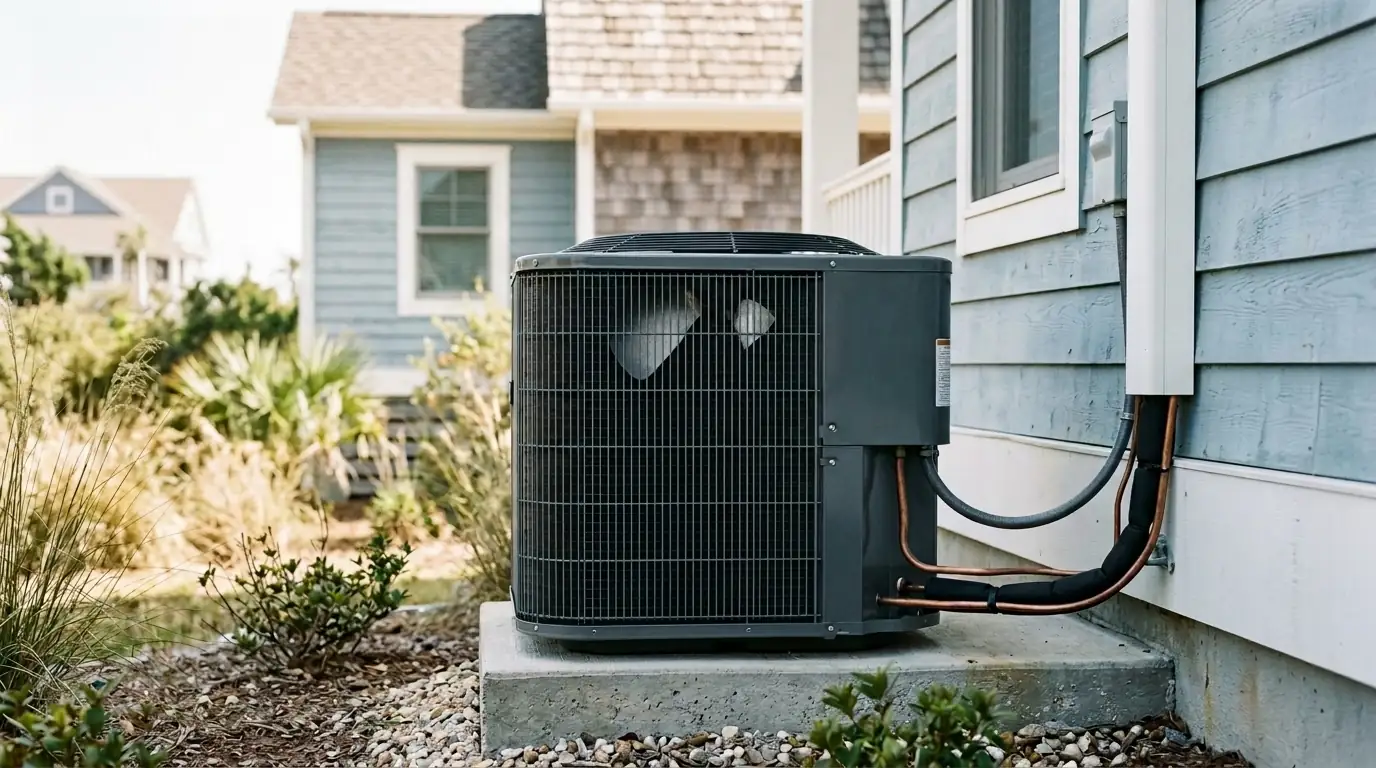
The federal HVAC tax credit, known as Section 25C, ended for any system placed in service after December 31, 2025. Comfort Masters Heating & Cooling has fielded this question from Grand Strand homeowners who remember hearing about the credit and assumed it still applies in 2026. It is gone. Here is what changed, what the credit covered before it ended, and what still lowers the cost of a new system now.
Quick answer
Is there still a federal HVAC tax credit in 2026?
No. Section 25C, the federal HVAC tax credit, ended for any system placed in service after December 31, 2025. A heat pump or air conditioner installed at a North Myrtle Beach home in 2026 does not qualify. Before it ended, 25C covered up to 2,000 dollars for a qualifying heat pump and up to 600 dollars for a central air conditioner.
On this page
- 01What Changed: the 25C Credit’s Expiration
- 02What the 25C Credit Used to Cover
- 03What This Means for a 2026 HVAC Decision
- 04Common Myths About the Expiration
- 05Should You Still Get Your System Evaluated
- 06Common Questions About the Tax Credit
What Changed: The 25C Credit’s Expiration
Section 25C of the federal tax code offered a credit for energy efficient home upgrades, including heat pumps and central air conditioners. That changed. Congress ended the credit years ahead of schedule, and here is what happened and when it took effect.
The Law That Ended It
Section 25C had originally been extended through 2032 under the Inflation Reduction Act, giving homeowners years of runway to plan around it, according to the IRA Section 13301 tracker. That did not last. On July 4, 2025, Congress passed the One Big Beautiful Bill Act, Public Law 119-21, and Section 70505 of that law ended 25C early, along with several related energy credits. The Internal Revenue Service published guidance on the change shortly after the law was signed.
The New Placed-in-Service Cutoff
The law’s cutoff is the date equipment is placed in service, meaning installed and operating, not the date it was purchased or contracted. Any heat pump, air conditioner, or other 25C-eligible system placed in service after December 31, 2025, no longer qualifies. A system installed and running on or before that date could still be claimed on a 2025 tax return.
$0
That is the federal tax credit available for a 2026 HVAC installation.
Section 25C offered up to 2,000 dollars for a qualifying heat pump before it ended for equipment placed in service after December 31, 2025.
Internal Revenue Service guidance on Public Law 119-21.
What the 25C Credit Used to Cover
Before it ended, 25C was not a flat number. The credit covered 30 percent of the cost of qualifying equipment, up to different caps depending on what was installed.
The Heat Pump and Heat Pump Water Heater Cap
A qualifying heat pump or heat pump water heater carried its own annual cap of 2,000 dollars, separate from the credit’s other limits, according to the Internal Revenue Service. That made heat pumps the equipment category with the most federal support under 25C, which lines up with how common heat pumps already are on the Grand Strand. A heat pump installed in 2026 no longer carries that 2,000 dollar credit.
The Central Air Conditioner Cap
A qualifying central air conditioner topped out at a 600 dollar credit under 25C’s general annual limit, per the same IRS guidance. That is a smaller number than the heat pump cap, reflecting how the credit weighted efficiency gains differently by equipment type. This figure no longer applies to a 2026 installation either.
What This Means for a 2026 HVAC Decision
Nothing about a heat pump’s place in a Grand Strand home changed when the federal credit expired. Heat pumps remain the most common system on the coast, handling both summer cooling and the real winter heating demand here. Comfort Masters’ heating and heat pump services in North Myrtle Beach still start the same way they always have, with a load calculation before any equipment is recommended.
If You Already Have a Quote or Contract in Hand
A signed contract or an accepted quote from 2025 does not extend the credit into 2026. Eligibility follows the placed-in-service date, meaning the date the system is installed and running, not the date it was ordered or paid for. A system contracted in December 2025 but not installed until January 2026 falls on the wrong side of that line.
What Financing Still Covers
Financing did not change when the credit did. Comfort Masters offers financing through Synchrony for larger jobs, with terms that follow Synchrony’s own disclosures. For homeowners who are not replacing a system yet, our maintenance plans run 115 dollars a year for one visit or 175 dollars a year for two visits, and both catch small problems early instead of waiting on a breakdown.
What a Correct Diagnosis Still Controls
A tax credit never determined whether a system was sized correctly. That still comes down to a Manual J load calculation, the math that sets how much heating and cooling a specific home needs. Comfort Masters runs that calculation before recommending a heat pump, an air conditioner, or a package unit, so the equipment fits the house instead of a generic size chart.
Common Myths About the Tax Credit’s Expiration
The credit’s abrupt end has left a few misunderstandings in its place. Three come up often enough with Grand Strand homeowners that they are worth addressing directly.
Myth: A 2026 Install Still Qualifies If I Ordered It in 2025
Reality: it does not. The Internal Revenue Service’s guidance on the law ties eligibility to the placed-in-service date, not the order date or the contract date. A system has to be installed and operating by December 31, 2025, to qualify for a 2025 return. Ordering, paying a deposit, or signing paperwork before that date does not carry the credit into 2026.
Myth: There Is No Way to Lower the Cost of a New System Anymore
Reality: the federal credit was one option among several, not the only one. Financing through Synchrony still applies to larger installs, and a correct load calculation prevents the more common cost problem, which is paying for a system sized wrong in the first place. Losing one credit does not remove every way to manage what a new system costs.
Myth: State or Utility Rebates Automatically Fill the Gap
Reality: that is not something to assume. State and utility rebate programs vary by provider and change on their own schedules, separate from the federal tax code. Whether a specific rebate applies to a Grand Strand address depends on the utility serving that property, and it is worth confirming directly with that utility rather than assuming a rebate matches what 25C used to offer.
Should You Still Get Your System Evaluated
The tax code changed. What determines whether a coastal HVAC system needs attention did not. A system’s age, its maintenance history, and how it is running matter more than any credit ever did.
Signs a System Is Due for a Professional Look
A properly sized, maintained coastal system lasts an average of 15 years, according to ENERGY STAR. Salt air and heavy summer runtime can shorten that on the Grand Strand, so a system approaching that age, running longer cycles than it used to, or leaving a home feeling humid at the right temperature is worth having looked at before the next cooling or heating peak.
What a Diagnostic Visit Covers
A Comfort Masters service call is 55 dollars in Little River and Calabash and 95 dollars in the rest of the service area. That visit includes a full diagnostic with written findings, and any repair is quoted separately after the diagnosis. The fee covers the technician’s time to identify the problem, not a repair itself.
For the full picture on keeping a coastal system running well past any one tax year, see the complete guide to HVAC for coastal Carolina homes.
Common questions
The federal tax credit, answered.
Is There Still a Federal Tax Credit for HVAC Systems in 2026?
No. Section 25C, the federal tax credit for HVAC and heat pump equipment, ended for any system placed in service after December 31, 2025. That change came from the One Big Beautiful Bill Act, Public Law 119-21. A system installed in 2026 does not qualify for a federal credit under 25C.
When Exactly Did the 25C Federal Tax Credit Expire?
The credit ended for equipment placed in service after December 31, 2025, the cutoff set by Section 70505 of the One Big Beautiful Bill Act. Section 25C had originally been extended through 2032 under the Inflation Reduction Act, so the new law cut that timeline short by seven years.
What Did the 25C Tax Credit Cover Before It Expired?
Before it ended, 25C covered 30 percent of the cost of qualifying equipment. Heat pumps and heat pump water heaters had a separate cap of 2,000 dollars a year. Central air conditioners were capped at 600 dollars a year under the credit’s general annual limit.
Can I Still Claim the Credit If I Ordered My System in 2025?
Eligibility depends on when equipment is placed in service, not when it was ordered or contracted. A system installed and running by December 31, 2025, could still qualify on a 2025 tax return. The same system installed in January 2026 does not qualify, even if you signed the contract months earlier.
Does the Federal Credit’s Expiration Affect HVAC Financing Options?
No. Financing is separate from the federal tax credit. Comfort Masters Heating & Cooling offers financing through Synchrony for larger jobs, and that option did not change when Section 25C ended. Any financing terms follow Synchrony’s own disclosures, so ask about current options when you book a visit.
Should I Still Get My HVAC System Evaluated Now That the Credit Is Gone?
Yes. The credit’s expiration does not change whether a system needs service. A properly maintained coastal system lasts an average of 15 years, according to ENERGY STAR, and salt air can shorten that. A professional evaluation, not the tax code, is what determines whether repair or replacement makes sense.
Sources and References
- Internal Revenue Service. FAQs for Modification of Sections 25C, 25D, 25E, 30C, 30D, 45L, 45W, and 179D Under Public Law 119-21
- Internal Revenue Service. Energy Efficient Home Improvement Credit
- IRA Section 13301 Tracker. Energy Efficient Home Improvement Credits
Ready when you are
Get your coastal system looked at the right way.
Comfort Masters Heating & Cooling works on coastal systems across North Myrtle Beach and the Grand Strand from its shop at 3502 State Hwy 50 in Little River. A service call is $55 in Little River and Calabash and $95 in the other service areas, and it includes a full diagnostic with written findings before any repair is quoted.
Call (843) 443-7186 Book Online
Service area
HVAC across the Grand Strand.
Comfort Masters Heating & Cooling provides coastal HVAC service across North Myrtle Beach and the Grand Strand from 3502 State Hwy 50 in Little River, SC 29566.
Comfort Masters Heating & Cooling 3502 State Hwy 50, Little River, SC 29566 (843) 443-7186 Get directions
Areas we serve
- North Myrtle Beach
- Little River
- Calabash
- Cherry Grove
- Longs
- Loris
- Myrtle Beach
- Sunset Beach
- Ocean Isle Beach