
Why is My Heat Pump Blowing Cold Air?
Cold air from a heat pump is usually a defrost cycle, sometimes a thermostat mode, and occasionally a real fault. Here is how to tell the difference in fifteen minutes, what aux heat and emergency heat each do to your bill, and when to shut the system down and call Comfort Masters.
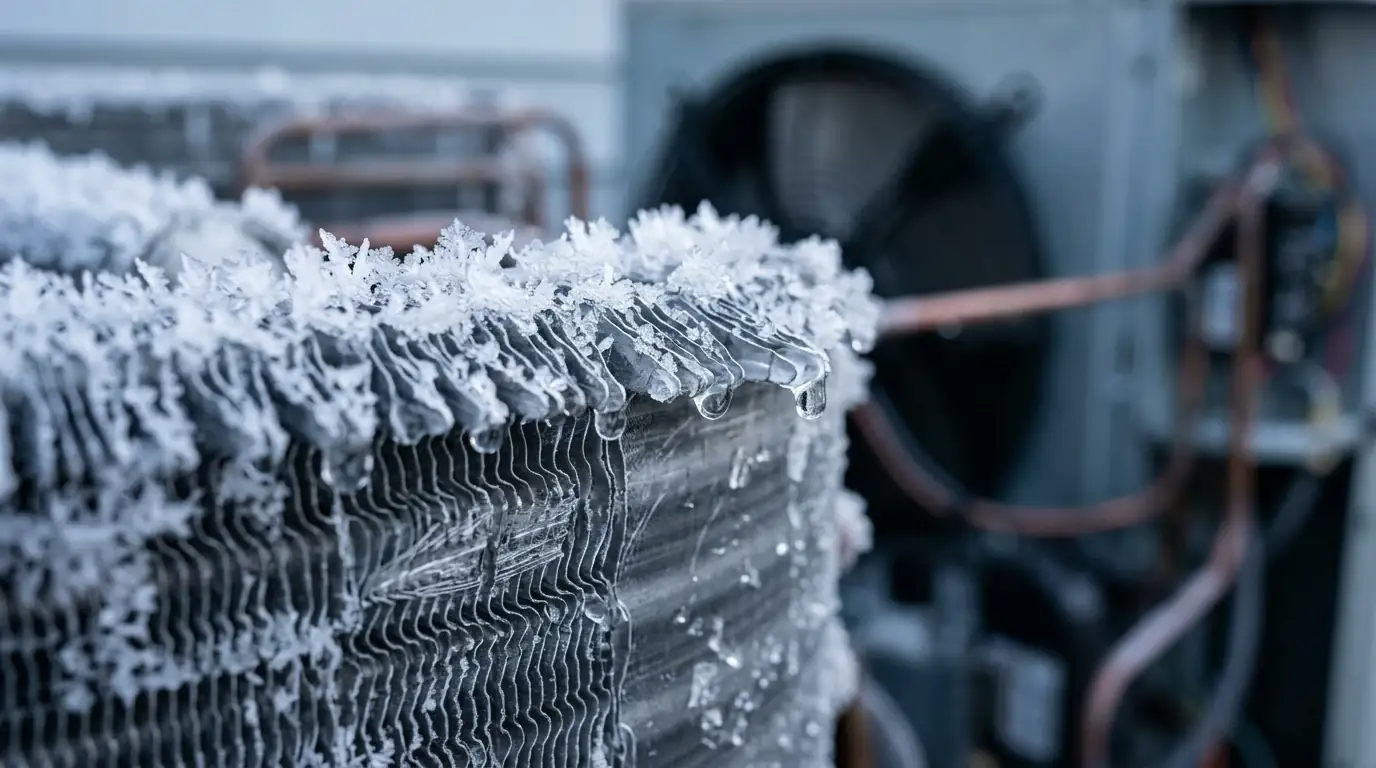
A heat pump blowing cold air in winter usually comes down to one of three things, and the thermostat is where you start. Confirm it is set to heat, with the fan on auto rather than on. From there the answer is a normal defrost cycle, a thermostat mode that got changed, or a fault that needs a technician. Here is how to tell them apart in the next fifteen minutes.
Quick answer
Why is my heat pump blowing cold air?
A heat pump blowing cold air is usually running a defrost cycle, which melts frost off the outdoor coil and ends within about fifteen minutes. Set the thermostat to heat, check the filter, and look for steam rising off the outdoor unit. If the air is still cold after fifteen minutes, call Comfort Masters in North Myrtle Beach at (843) 443-7186.
On this page
- 01First, is it just the defrost cycle?
- 02Aux heat and emergency heat are not the same thing
- 03When cold air is not normal, and what to do
- 04Common questions
- 05Sources and references
- 06Call Comfort Masters for heat pump repair
First, is it just the defrost cycle?
A heat pump does not create heat. It moves heat, pulling warmth out of the outdoor air and carrying it inside. That efficiency is why ENERGY STAR reports an air source heat pump can deliver up to three times more heat energy than the electrical energy it consumes.
Moving heat has one side effect. When the outdoor coil drops below freezing, moisture freezes onto it, and a frosted coil cannot absorb heat. So the system reverses for a few minutes and runs in cooling mode to melt the frost off. While it does, the air at your vents turns cool. That is designed behavior, not a breakdown.
What a defrost cycle looks and sounds like
Walk outside and look at the unit. You are checking four things:
- A whoosh or a solid clunk at the changeover, which is the reversing valve switching direction.
- The outdoor fan stops while the compressor keeps running.
- Steam rising off the outdoor coil, which is frost melting the way it should.
- Warm air returning at the vents within roughly fifteen minutes.
Steam is a good sign. A unit frozen solid, with ice on the fan blades or ice that never clears, is a different problem.
Why coastal winters trigger it more often
Frost forms fastest in damp air near freezing, which is what a Grand Strand cold front delivers. Winter mornings here sit in the thirties and forties with ocean humidity, so a coastal heat pump can run more defrost cycles than the same unit in dry inland cold. Several in one damp morning is normal. Our coastal Carolina HVAC guide covers what else the salt air and humidity do to a system, and if you are weighing equipment types, we compare how a heat pump compares to a furnace in this climate.
Aux heat and emergency heat are not the same thing
These two words sit inches apart on a thermostat and get treated as one setting. They are not. One is automatic and normal, the other is manual and expensive, and knowing which you are looking at changes what you do next. Both run off the same equipment we cover under heating and heat pump services in North Myrtle Beach.
Aux heat: automatic, and normal in a cold snap
Auxiliary heat is a set of electric resistance strips inside your air handler. The thermostat brings them on by itself when the heat pump cannot hold the setpoint, and often during defrost so the vents do not blow cold. An AUX light on a freezing morning is the system working as designed.
The catch is cost. The U.S. Department of Energy reports a modern heat pump can reduce electricity used for heating by approximately 65 percent compared with electric resistance heating. Strips are the expensive way to heat a house. If AUX stays lit in mild weather, or jumping the thermostat up five degrees forces the strips on, the system is leaning on its costly half and a technician should find out why.
Emergency heat: manual, and a last resort
Emergency heat is a mode you select. It locks out the compressor and heats the house on the strips alone. It exists for one situation: a heat pump that has failed outright and a house that needs heat until someone gets there.
Here is the part most troubleshooting lists miss. Emergency heat does not explain cold air by itself, because strips make warm air. If the thermostat is on emergency heat and the air is still cold, the strip heat or its breaker has failed. That is a service call, not a setting. Move the thermostat back to heat and call us.
When cold air is not normal, and what to do
Cold air that outlasts a defrost cycle is not defrost. Four failures produce it, and none of them is a homeowner fix.
- A reversing valve stuck in cooling. The system is air conditioning your house in October. Air at the vents is cold, not lukewarm.
- Low refrigerant from a leak. Capacity drops, the outdoor coil ices over, and the ice does not clear between cycles. Refrigerant work is federally regulated and requires an EPA Section 608 certified technician.
- Failed strip heat or a tripped breaker. The heat pump carries the load until it cannot, and there is no backup behind it.
- A defrost board, sensor, or wiring fault. The unit either never leaves defrost or never enters it.
Turn the system off at the thermostat rather than letting it run on a fault, and book HVAC maintenance and repairs.
Stop and call now if you notice any of these
Burning or scorching smell, or smoke. Call 911 first, then call us. A breaker that trips again after one reset. Ice on the outdoor unit that never melts. Indoor temperature falling with the system running. Water pooling around the air handler.
Shut the system down and leave it off until a technician has seen it. Heat matters most for older adults, infants, and anyone with a medical condition, so treat a house that will not hold temperature as urgent.
What our technician checks on a no heat call
We measure before we recommend. On a heat pump blowing cold air that means the temperature split between supply and return air, refrigerant pressures against the manufacturer’s chart, the defrost board and sensor, reversing valve operation, amp draw on the strip heat, and filter and duct static pressure.
You get those findings in writing before anyone quotes a repair. A service call is $55 in Little River and Calabash and $95 in the other service areas, and it covers that diagnosis. We repair first and recommend replacement only when the numbers say so.
Common questions
Heat pump blowing cold air, answered.
Is it normal for a heat pump to blow cold air sometimes?
Yes, during a defrost cycle. The system reverses into cooling for a few minutes to melt frost off the outdoor coil, and the vents blow cool while it does. Expect steam off the outdoor unit and warm air back within about fifteen minutes.
How long should a heat pump defrost cycle last?
Usually a few minutes, with warm air back within roughly fifteen. On a damp Grand Strand morning in the thirties and forties, several cycles in a row are normal. A unit that ices over and never clears has a defrost or refrigerant problem.
What is the difference between aux heat and emergency heat?
Aux heat is automatic. The thermostat brings electric resistance strips on by itself when the heat pump cannot keep up. Emergency heat is a mode you select, and it locks out the compressor so the house runs on strips alone.
Should I run emergency heat if my heat pump is blowing cold air?
Only as a short bridge until a technician arrives, because resistance heat costs much more to run. The Department of Energy reports a heat pump can reduce electricity used for heating by approximately 65 percent compared with electric resistance heating.
Why is my outdoor unit covered in ice and still not heating?
Ice that never clears points to low refrigerant from a leak, a failed defrost board or sensor, or blocked airflow at the outdoor coil. Do not chip the ice off or pour hot water on the unit. Shut the system off and book a diagnostic.
What does a heat pump service call cost in North Myrtle Beach?
A service call is $55 in Little River and Calabash and $95 in the other service areas, and it covers a full diagnostic with the findings given to you in writing. Our HVAC service agreements run $115 or $175 a year.
Sources and references
- U.S. Department of Energy, Home Upgrades. Heat pumps can reduce electricity used for heating by approximately 65 percent compared with electric resistance heating.
- ENERGY STAR, Air-Source Heat Pumps. An air source heat pump can deliver up to three times more heat energy than the electrical energy it consumes, and certification requires third-party verified performance tested down to 5 degrees Fahrenheit.
- U.S. Environmental Protection Agency, Section 608 Technician Certification. Technicians who maintain, service, or repair equipment containing refrigerant must hold EPA Section 608 certification.
- South Carolina Department of Labor, Licensing and Regulation, Contractor’s Licensing Board. Comfort Masters Heating & Cooling holds SC mechanical contractor license 38846.
- North Carolina State Board of Examiners of Plumbing, Heating and Fire Sprinkler Contractors. Comfort Masters Heating & Cooling holds NC HVAC contractor license 36196.
Service call and maintenance plan prices in this article are Comfort Masters published rates and are current as of publication. Prices vary by service area.
Call Comfort Masters for heat pump repair
If the cold air outlasted the defrost cycle, the next step is a diagnosis, not another reset. We work on every brand, we are licensed in South Carolina (#38846) and North Carolina (#36196), and we have served the Grand Strand since 2019. Our shop is at 3502 State Hwy 50 in HVAC service in Little River, and the $55 service call rate also covers HVAC service in Calabash, NC.
We answer Monday through Friday from 8:00am to 7:00pm and Saturday from 8:00am to 4:00pm. Emergency service is available most weekdays, so call to confirm.
No heat today
Get the cold air diagnosed, not guessed at.
Comfort Masters Heating & Cooling repairs heat pumps across North Myrtle Beach and the Grand Strand. A service call is $55 in Little River and Calabash and $95 in the other service areas, and it includes a full diagnostic with written findings before any repair is quoted.
Call (843) 443-7186 Schedule heat pump service
Service area
HVAC across the Grand Strand.
Comfort Masters Heating & Cooling provides coastal HVAC service across North Myrtle Beach and the Grand Strand from 3502 State Hwy 50 in Little River, SC 29566.
Comfort Masters Heating & Cooling 3502 State Hwy 50, Little River, SC 29566 (843) 443-7186 Get directions
Areas we serve
- North Myrtle Beach
- Little River
- Calabash
- Cherry Grove
- Longs
- Loris
- Myrtle Beach
- Sunset Beach
- Ocean Isle Beach
Professionally reviewed by

Alex Todd
- ACCA Manual J
- ACCA Manual S
- ACCA Manual D
- EPA 608
- SC HVAC #38846
- NC HVAC #36196
Owner and lead HVAC technician at Comfort Masters Heating & Cooling in Little River, working on coastal systems across the Grand Strand since 2019.
Reviewed: October 2026