
Heating Repair vs. Replacement for Coastal Carolina Homes
Repair or replace? On the Grand Strand most homes heat with a heat pump, not a furnace, so the national age rules do not transfer. We compare the two paths on what you can know up front, lifespan and salt-air wear, winter running cost, and process, then show the written diagnosis that decides it.
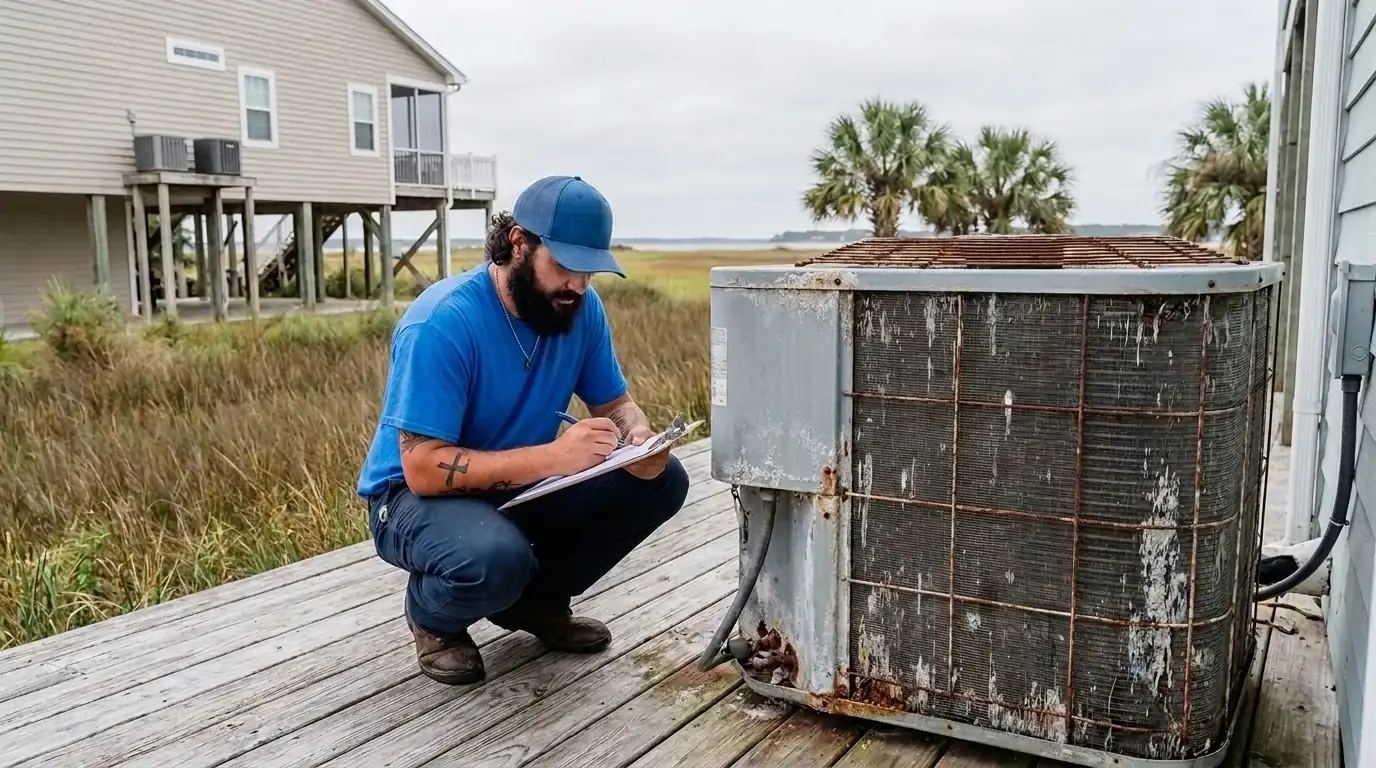
Heating repair and heating replacement are two different decisions, and on the Grand Strand the deciding factor is usually the condition of the outdoor unit rather than the age on the label. Most homes here heat with a heat pump, not a gas furnace, so the national rules of thumb do not transfer cleanly. This guide compares the two paths on cost, lifespan, running cost, and process, and names the one step that settles it. For the wider picture, see our coastal Carolina HVAC guide.
Quick answer
Repair or replace your heating system?
Repair when the system is under 10 years old, the fault is isolated, and this is its first real failure. Replace when failures repeat in one season, the coil is corroded, or there is a safety fault. ENERGY STAR puts the pricing threshold at 10 years for a heat pump. On the coast, condition decides before age does.
At a glance
Repair vs. replacement, side by side.
| Factor | Repair | Replacement |
|---|---|---|
| What it solves | One failed part or setting on a system that is otherwise sound | A system that is worn out, unsafe, or wrong for the house |
| What you know up front | The diagnostic fee, before anyone opens the unit | Nothing until the home is measured and the load is calculated |
| Typical timeline | Often the same visit when the part is on the truck | A designed project, scheduled after the estimate is approved |
| Effect on winter running cost | Restores the efficiency the system had before the fault | ENERGY STAR equipment can cut heating and cooling costs by up to 20 percent |
| Warranty you end up with | Covers the repaired part, not the rest of the system | 3-year labor warranty on a new Comfort Masters install |
| Best fit | Under 10 years old, one isolated fault, sound coil and cabinet | Repeat failures, corroded coil, obsolete refrigerant, or a safety fault |
| What you receive | Written findings and a working system | A load calculation, a documented install, and a job packet |
On this page
- 01What a heating repair involves
- 02What a heating replacement involves
- 03How they differ on cost
- 04Lifespan and coastal wear
- 05Running cost and daily comfort
- 06How the process differs
- 07Which one is right for your home
- 08Common questions
What a heating repair involves
A repair starts with a diagnosis, not with a part. The technician tests the system, identifies the fault, and writes the findings down before recommending anything. That order matters, because the same symptom can point to a worn contactor or to a failed compressor.
How a diagnosis leads to a repair
The technician confirms the complaint, checks the thermostat call, reads refrigerant pressures and electrical values, and isolates the failed component. Those readings go on paper. Only then does a repair get quoted, so you are approving a specific fix rather than a guess. Our diagnostics are not commissioned, which keeps the finding separate from the sale.
The parts most often repaired on a coastal system
Heat pump heating faults cluster in a handful of components, and most of them are repairable on a system that is otherwise sound.
Defrost board, reversing valve, and contactor
The reversing valve is what lets one outdoor unit both heat and cool, and the defrost board tells the unit when to clear frost off the outdoor coil. When either fails, the system often keeps blowing air but stops producing real heat. A pitted contactor is a cheaper and more common cause of the same complaint.
Heat strips, thermostat, and blower motor
Electric heat strips are the backup heat behind a heat pump. A failed strip, a miswired thermostat, or a weak blower motor all show up as rooms that never reach the setting. Each is a repair, not a reason to replace the whole system.
When a repair is the right call
Repair fits when the equipment is young, the coil and cabinet are sound, and this is the first real failure. A system under 10 years old with one isolated fault is usually worth fixing. Our heating and heat pump services cover that diagnosis across the Grand Strand.
What a heating replacement involves
A replacement is a design job, not a swap of the same box for a newer one. The system that comes out was sized for a house that may have been re-insulated, added onto, or re-ducted since. Sizing gets recalculated before anything is ordered.
How a replacement is designed and sized
We run a Manual J load calculation, the math that measures how much heating and cooling your specific home needs, then use Manual S to match equipment to that load and Manual D to check the duct design. Comfort Masters uses ACCA Manual J, S, and D standards on every install. A one-for-one replacement without that math is how a house ends up with equipment that short cycles and never dehumidifies properly.
What gets replaced beyond the outdoor unit
Replacing a heating system rarely stops at the unit in the yard. The indoor half and the distribution have to match the new equipment.
Air handler, coil, and refrigerant line set
The indoor coil and the outdoor unit are a matched pair, so mixing an old coil with new equipment gives up the efficiency you paid for. Current refrigerants also differ from what older systems used, which is why the line set gets evaluated rather than assumed.
Ductwork, electrical, and the thermostat
Leaky or undersized ducts cap what any new system can deliver. ENERGY STAR notes that leaky ducts can pull particles and air from attics and crawl spaces into the house. Electrical capacity and a compatible thermostat get checked in the same pass.
When replacement is the right call
Replacement fits when the equipment is past its useful life, when repairs have started repeating, or when a safety fault rules out a patch. ENERGY STAR advises pricing a replacement once a heat pump or air conditioner passes 10 years, and once a furnace or boiler passes 15. Our engineered system installation page covers how that project runs.
How they differ on cost
The two paths differ in what you can know before work starts. One has a published number. The other has a number only after the home is measured.
What it costs
What you know before we start.
Repair path
Diagnostic Service Call
$55 or $95
$55 in Little River and Calabash, $95 in the other service areas. Includes a full diagnostic and written findings before any repair is quoted.
Replacement path
Written Estimate
After the load calc
Equipment pricing follows the Manual J calculation, not a phone quote. New installs carry a 3-year labor warranty.
What moves the decision between them
Age against the threshold. ENERGY STAR marks 10 years for a heat pump or air conditioner and 15 years for a furnace or boiler as the point to start pricing a replacement.
Repeat repairs. ENERGY STAR lists frequent repairs alongside rising energy bills as a sign the equipment has lost efficiency.
Coil and cabinet condition. On the coast this outranks age. A corroded coil cannot shed heat, and no repair restores metal that salt has already eaten.
Refrigerant and parts availability. A system on an obsolete refrigerant costs more to recharge and gets harder to source parts for every year.
Safety faults. A cracked heat exchanger on a gas furnace or a compromised electrical connection ends the conversation. Those are replacement territory.
Service-call tiers and labor warranty are Comfort Masters figures. Replacement pricing varies by home and is quoted in writing after the load calculation. Age thresholds and repair-frequency guidance per ENERGY STAR.
What a repair costs to find out
The diagnostic service call is $55 in Little River and Calabash and $95 in our other service areas. That fee buys a real diagnosis with the findings in writing. Whether the repair itself is worth doing is a separate question the diagnosis answers, and you see the number before approving it.
What a replacement costs to plan
We do not quote equipment over the phone, because the correct capacity comes from the load calculation rather than from the size of the old unit. Once the home is measured, the estimate is written down, and a new install carries a 3-year labor warranty. If the timing matters to you, our repair and maintenance service can keep a borderline system running while the replacement is planned.
How they differ on lifespan and coastal wear
Age is the first thing every national article reaches for, and it is the thing the coast changes most. A system four miles from the Atlantic does not age like the same model in Columbia.
How long heating equipment lasts on the Grand Strand
ENERGY STAR treats 10 years as the point to start pricing a replacement heat pump or air conditioner, and 15 years for a furnace or boiler. Those are national markers for equipment in ordinary conditions. Most Grand Strand homes heat with a heat pump running in heating mode rather than a gas furnace, so the 15-year furnace number that dominates search results is the wrong benchmark here. The 10-year marker is the one that applies to the majority of coastal systems.
Why salt air changes the repair-or-replace math
Salt and humidity settle on the outdoor coil year-round and accelerate corrosion. A corroded coil sheds heat poorly, so the system runs longer to hit the same setting, and the added runtime wears the compressor. That is why a coastal unit can be mechanically repairable and still be a poor investment at eight years, while an inland unit of the same age is worth fixing. Rinsing the coil and servicing on schedule under a maintenance agreement is what slows the clock.
Why the coast is hard on equipment
How salt air shortens the decision.
Salt settles
Airborne salt drifts inland and lands on the outdoor coil every day of the year.
Fins corrode
Corrosion eats the coil fins and the cabinet faster than inland air ever would.
Runtime climbs
A corroded coil cannot release heat well, so the system runs longer for the same result.
Repair stops paying
The unit reaches the replace side of the decision years before its rated life.
Condition is checkable. A technician can read coil corrosion, cabinet rust, and compressor amp draw on site, which is why the repair-or-replace call belongs to an inspection rather than to an age chart.
How they differ on running cost and daily comfort
Between a working system and a failing one, the difference usually shows up on the power bill before it shows up on the thermostat.
Rising winter bills and what they usually mean
A jump in winter electricity on a heat pump often means the backup heat strips are carrying the house because the heat pump is not. The U.S. Department of Energy notes that a properly installed air-source heat pump can deliver two to four times more heat energy than the electricity it consumes, and resistance heat strips cannot do that. A defrost fault, a low refrigerant charge, or a failed reversing valve will all push a system onto the strips. That is a diagnosis, and it is often a repair rather than a replacement.
Uneven heat, short cycling, and noise
ENERGY STAR lists rooms that are too hot or too cold, and a noisy system, among the signs worth acting on, and points at equipment operation, duct problems, and insulation as causes. Short cycling, where the system starts and stops in quick bursts, usually points to sizing or airflow. None of these resolve on their own, and each one is worth putting a technician on.
10yrs
Past 10 years, ENERGY STAR says it is time to price a replacement heat pump.
That marker assumes ordinary conditions. On the Grand Strand, salt exposure can bring a system to the same decision point earlier, which is why the coil gets inspected rather than the birth date looked up. A new ENERGY STAR system can cut heating and cooling costs by up to 20 percent.
Replacement age thresholds and savings figure per ENERGY STAR.
How the process differs
The two paths differ in scope, in timeline, and in what you hold at the end of them.
What a repair visit looks like
A repair visit is a diagnosis followed, where the part is on the truck, by a same-visit fix. We work Monday through Friday from 8:00am to 7:00pm and Saturday from 8:00am to 4:00pm out of the shop at 3502 State Hwy 50 in Little River. You approve the quoted repair before anything is opened up.
What a replacement project looks like
A replacement runs design, then approval, then install, then documentation. The load calculation comes first, equipment selection follows from it, and the finished job is photographed and packaged so you have a record of what went in. That documentation is the difference between an engineered install and an estimated one.
How a service call works
Four steps, all in writing.
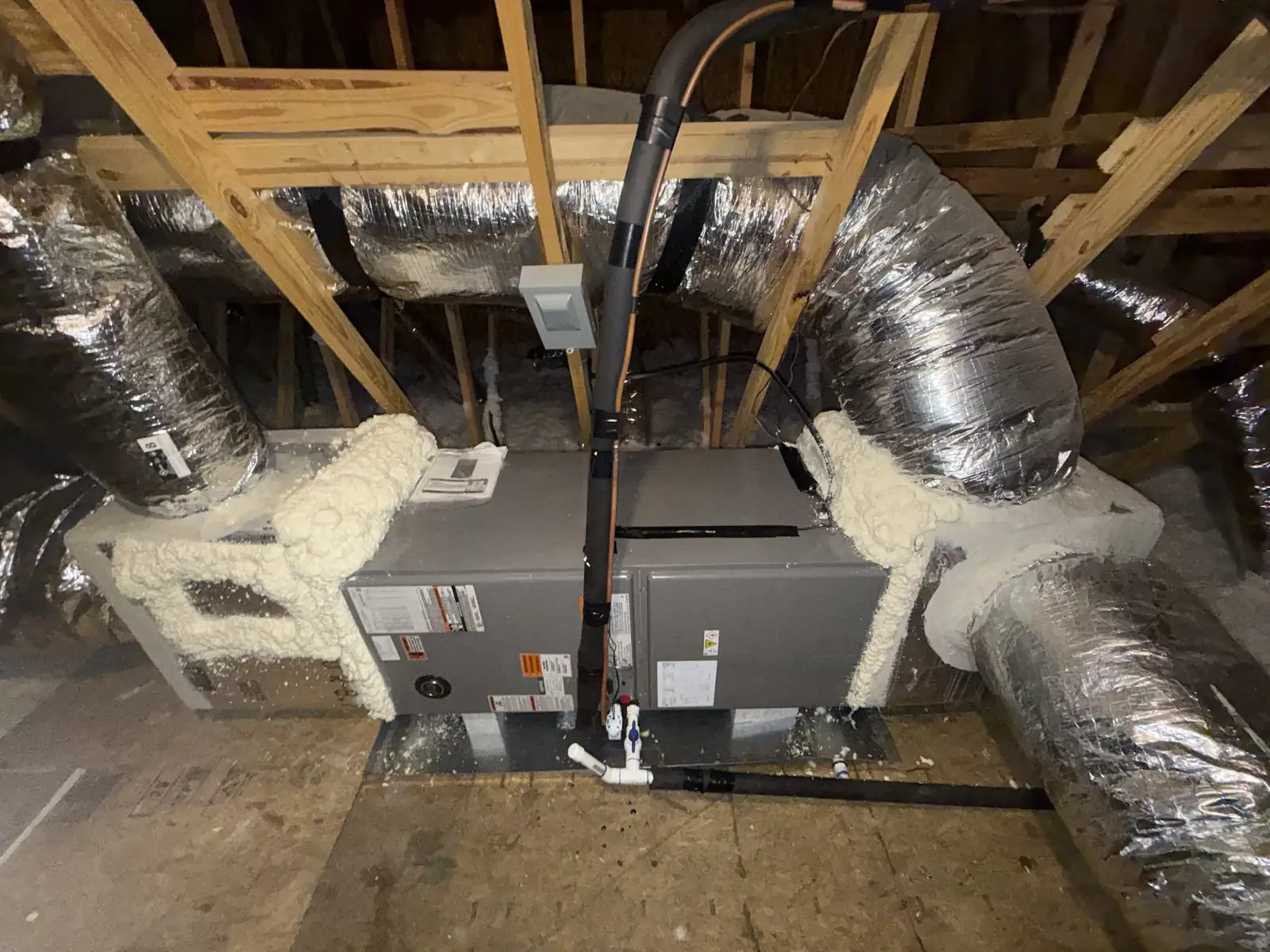
You call us.
Tell us what the system is doing. Most repair calls get same-day or next-day service across the Grand Strand.
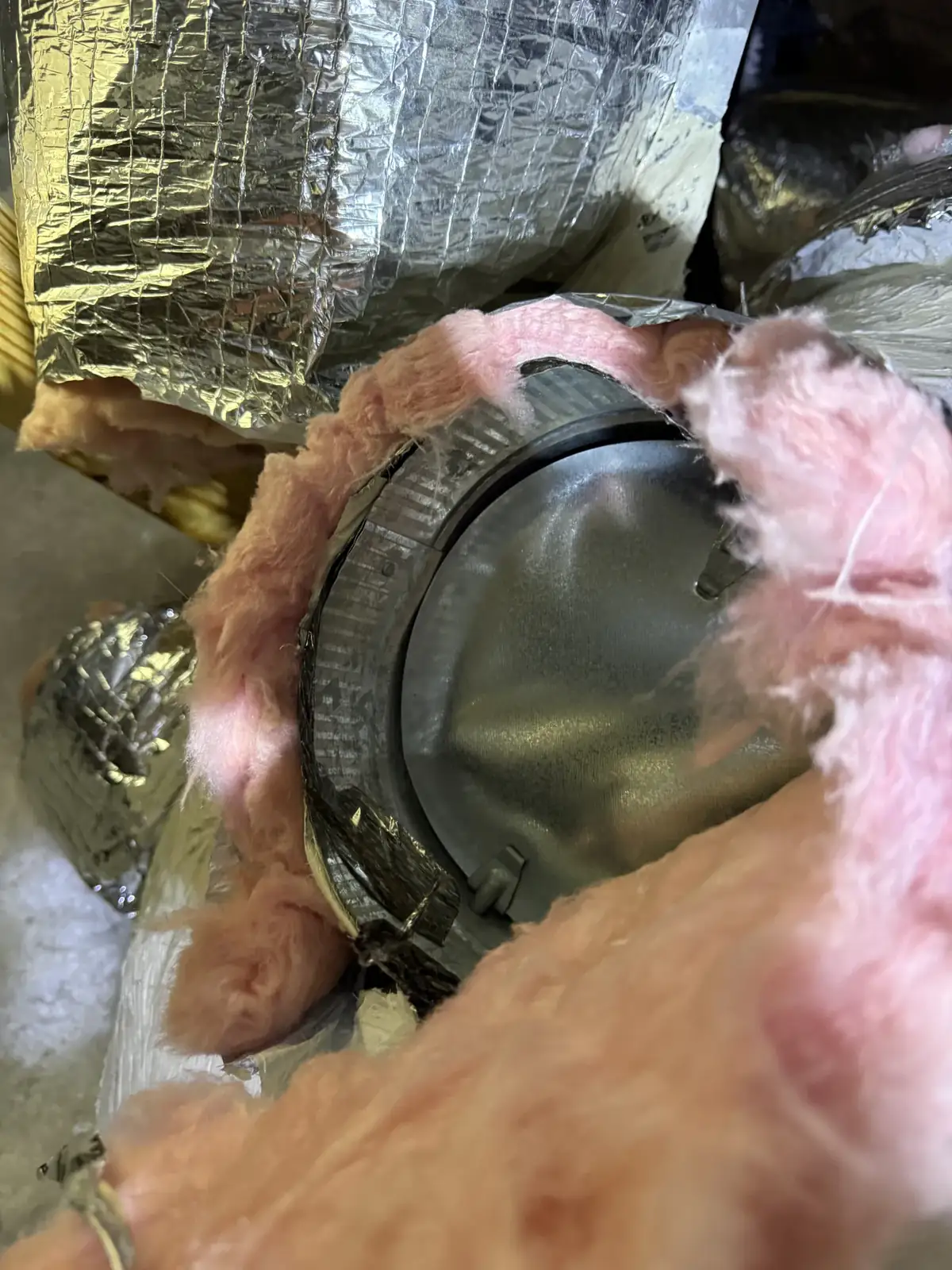
We diagnose it.
A technician tests the system end to end and writes down what is wrong in plain English before recommending anything.
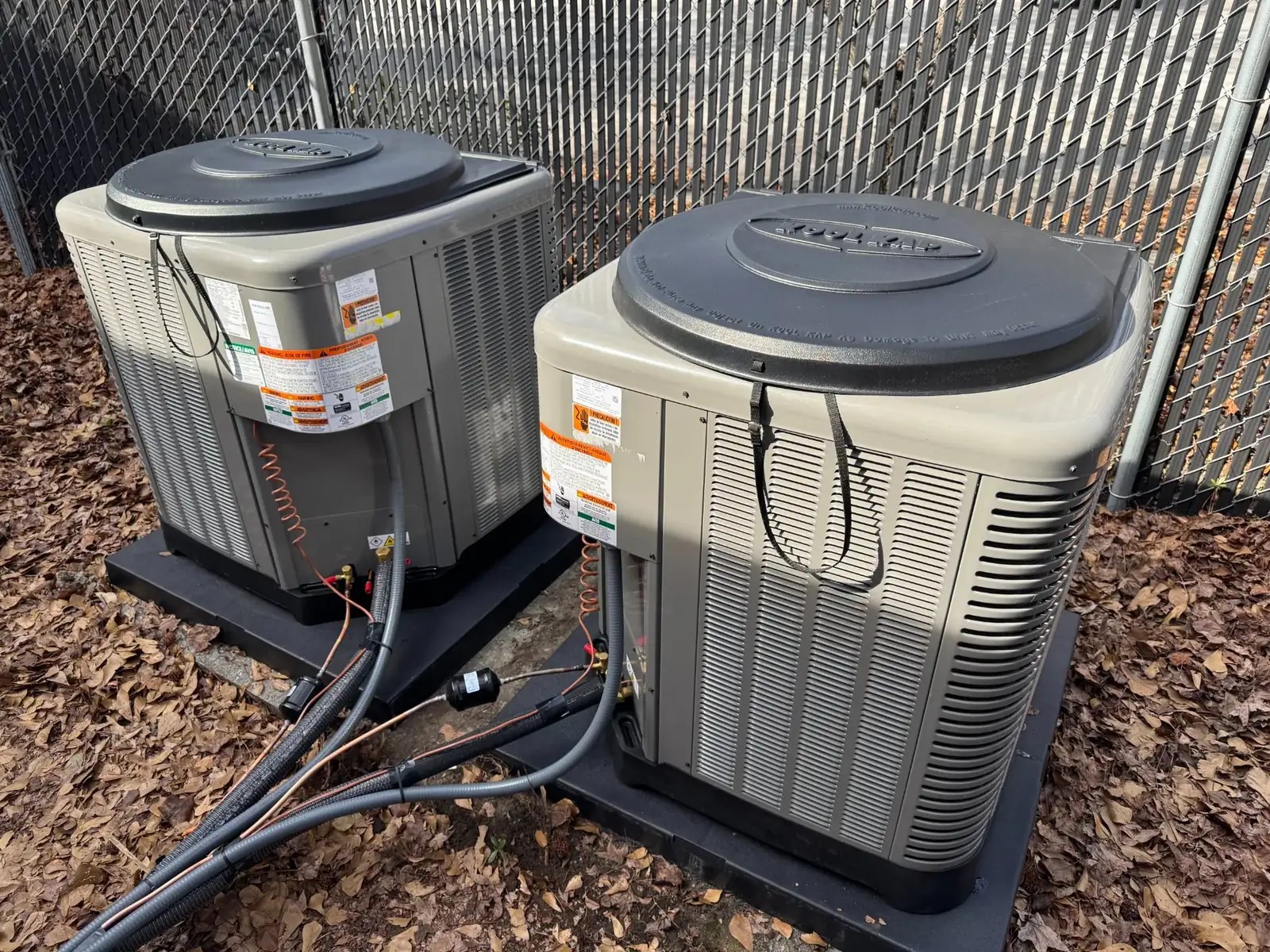
You see the options.
Repair and replacement are laid out with the findings behind each one. Nothing proceeds until you approve it.
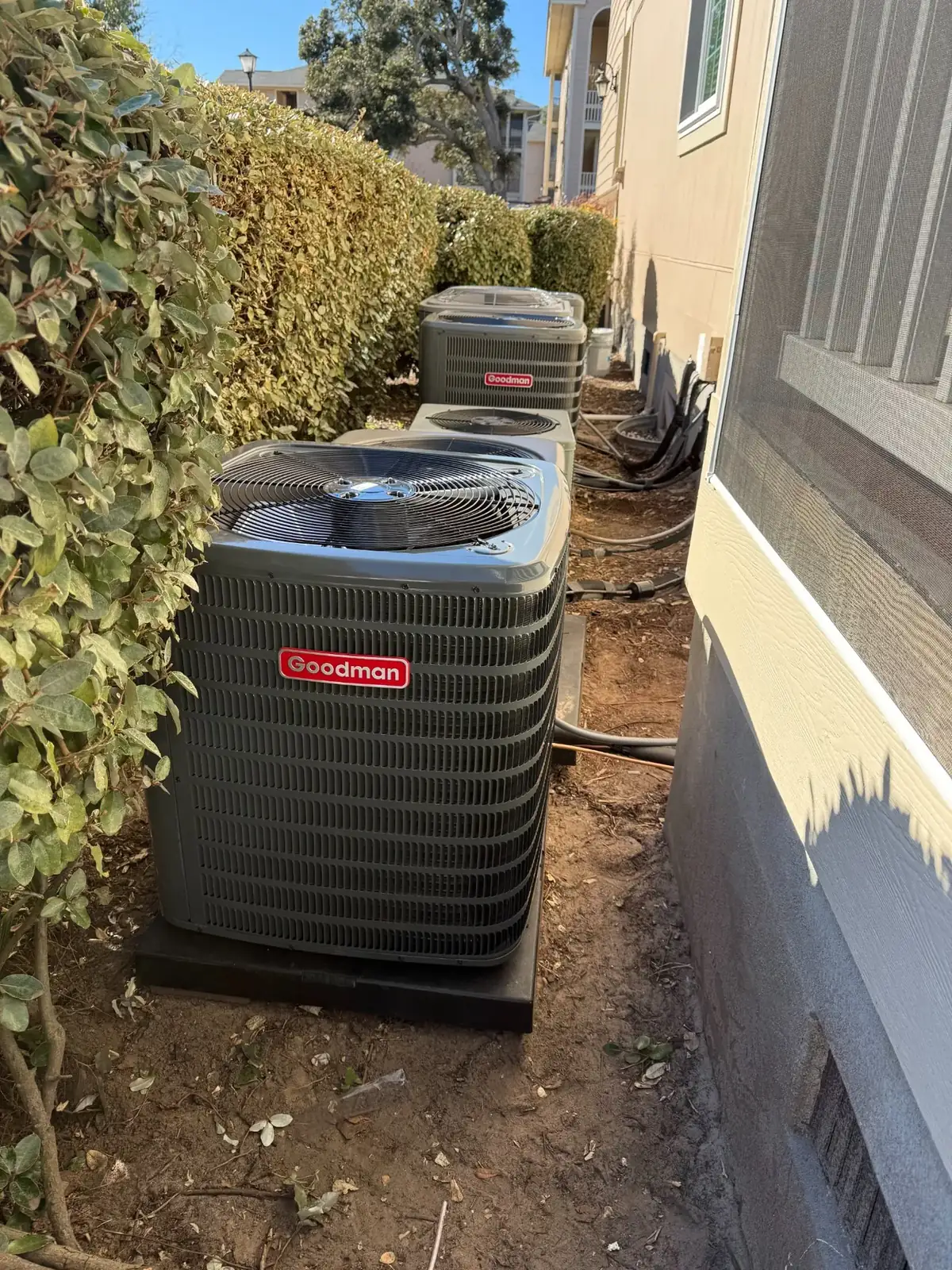
We do the work.
Repairs finish the same visit when parts are on hand. New installs carry a 3-year labor warranty.
Which one is right for your home
Lean toward repair when the system is under 10 years old, the coil and cabinet are sound, and this is its first real fault. Lean toward replacement when failures repeat inside one season, the coil is corroded, the refrigerant is obsolete, or there is a safety fault. A written diagnosis on your own system settles which describes you.
When to lean toward repair
Two situations point clearly toward fixing what you have.
The system is young and this is its first real fault
A heat pump inside the 10-year window with a clean coil and one failed component is worth repairing. The rest of the system still has service life in it, and a single part restores the efficiency it had before.
The failed part is common, stocked, and isolated
Contactors, capacitors, defrost boards, and thermostats are stocked parts with contained labor. When the diagnosis lands on one of these and the rest of the system tests clean, the repair is the smaller and better move.
When to lean toward replacement
Three findings move the decision the other way.
Repeat failures across a single season
A second or third repair inside one heating season is a pattern, not bad luck. ENERGY STAR pairs frequent repairs with rising energy bills as a sign the equipment has lost efficiency. At that point the repairs are buying months, and each one is money that does not go toward the replacement you are heading for.
Corroded coil, obsolete refrigerant, or a wrong-sized system
Corrosion is not repairable. Neither is a system that was sized wrong for the house in the first place, which shows up as short cycling and rooms that never balance. If a load calculation says the equipment never matched the load, a new part will not fix that. Our comparison of heat pump vs. furnace on the Grand Strand covers what to put in its place.
A safety fault
A cracked heat exchanger on a gas furnace, scorched wiring, or a failed electrical connection ends the repair conversation. If you smell gas or a carbon monoxide alarm sounds, leave the house first and call 911, then call us once you are outside. Do not restart the system to test it.
Whichever way your system leans, the deciding step is a diagnosis in writing on your equipment, not an age chart from a national article. If the cooling side is the one giving you trouble, our guide on whether to repair or replace your AC covers that decision.
Common questions
Repair or replace, answered.
At what age should I replace my heating system?
ENERGY STAR suggests pricing a replacement once a heat pump or air conditioner passes 10 years, and once a furnace or boiler passes 15. On the Grand Strand, salt exposure can bring a system to that point earlier, so the coil condition matters as much as the age. A technician can read both on site.
Is it cheaper to repair or replace a heat pump?
A single repair on a young, sound system costs less than a replacement. The comparison changes once repairs repeat, because each one buys months rather than years. The diagnosis tells you which situation you are in, and our service call is $55 in Little River and Calabash and $95 in the other service areas.
Why did my power bill jump but my house is still cold?
That pattern usually means electric backup heat strips are carrying the house because the heat pump is not producing heat. A defrost fault, a low refrigerant charge, or a failed reversing valve will all do it. The Department of Energy notes a heat pump delivers two to four times more heat energy than the electricity it uses, and strips cannot match that.
Does salt air really shorten how long a system lasts?
Yes. Airborne salt settles on the outdoor coil year-round and corrodes the fins and cabinet. A corroded coil sheds heat poorly, so the system runs longer and the compressor wears faster. Rinsing the coil and servicing on schedule slows it down, which is what a maintenance agreement is built around.
How many repairs are too many in one season?
A second or third repair inside a single heating season is a pattern worth pricing against replacement. ENERGY STAR lists frequent repairs together with rising energy bills as a sign the equipment has lost efficiency. The number itself matters less than whether the failures are spreading across different components.
What does a heating diagnostic cost?
A diagnostic service call is $55 in Little River and Calabash and $95 in our other Grand Strand service areas. It covers a full diagnosis with the findings written down before any repair is quoted. You see and approve the repair price before work begins.
Why will you not quote a replacement over the phone?
Because the correct capacity comes from a Manual J load calculation on your home, not from the size of the old unit. Insulation, windows, ductwork, and additions all change the answer. We measure first, then put the estimate in writing. New installs carry a 3-year labor warranty.
Do most Grand Strand homes have a furnace or a heat pump?
Most heat with a heat pump. Coastal South Carolina has far fewer heating degree days than inland areas, so one unit that both heats and cools fits the climate. That is why the 15-year furnace guidance in most national articles is the wrong benchmark for a typical home here.
What should I do if I smell gas or the carbon monoxide alarm sounds?
Leave the house immediately and call 911 from outside. Do not restart the system, and do not wait to see whether the alarm resets. Once you are safe and the scene is cleared, call us at (843) 443-7186 and we will inspect the equipment before it goes back into service.
Will a new system lower my winter bills?
ENERGY STAR reports that a certified system, installed correctly, can save up to 20 percent on heating and cooling costs. The words installed correctly carry the weight there, because a right-sized system on sound ducts is what produces the saving. That is what the load calculation and duct check are for.
Sources and references
- ENERGY STAR, When is it time to replace? energystar.gov
- U.S. Department of Energy, Air-Source Heat Pumps. energy.gov
- ACCA, Manual J Residential Load Calculation. acca.org
- ENERGY STAR, Air-Source Heat Pumps product guidance. energystar.gov
Ready when you are
Get the call in writing.
Comfort Masters Heating & Cooling has worked on coastal systems across North Myrtle Beach and the Grand Strand since 2019, from the shop at 3502 State Hwy 50 in Little River. A service call is $55 in Little River and Calabash and $95 in the other service areas, and it includes a full diagnostic with written findings before repair or replacement is quoted.
Call (843) 443-7186 Book a heating diagnosis
Professionally reviewed by

Alex Todd
- ACCA Manual J standards
- ACCA Manual S standards
- ACCA Manual D standards
- EPA 608
- SC HVAC #38846
- NC HVAC #36196
Owner and lead HVAC technician at Comfort Masters Heating & Cooling, working on coastal heat pumps and ductwork across the Grand Strand.
Reviewed: September 2026
Service area
Heating service across the Grand Strand.
Comfort Masters Heating & Cooling provides coastal heating repair and replacement across North Myrtle Beach and the Grand Strand from 3502 State Hwy 50 in Little River, SC 29566.
Comfort Masters Heating & Cooling 3502 State Hwy 50, Little River, SC 29566 (843) 443-7186 Get directions
Areas we serve
- North Myrtle Beach
- Little River
- Calabash
- Cherry Grove
- Longs
- Loris
- Myrtle Beach
- Sunset Beach
- Ocean Isle Beach