
HVAC Installation Day in North Myrtle Beach: What to Expect
A new system usually goes in inside one day. Here is how installation day runs on the Grand Strand, from the walkthrough and the old unit coming out to startup readings and the final sign off, and exactly what paperwork you should be holding when the truck pulls away.
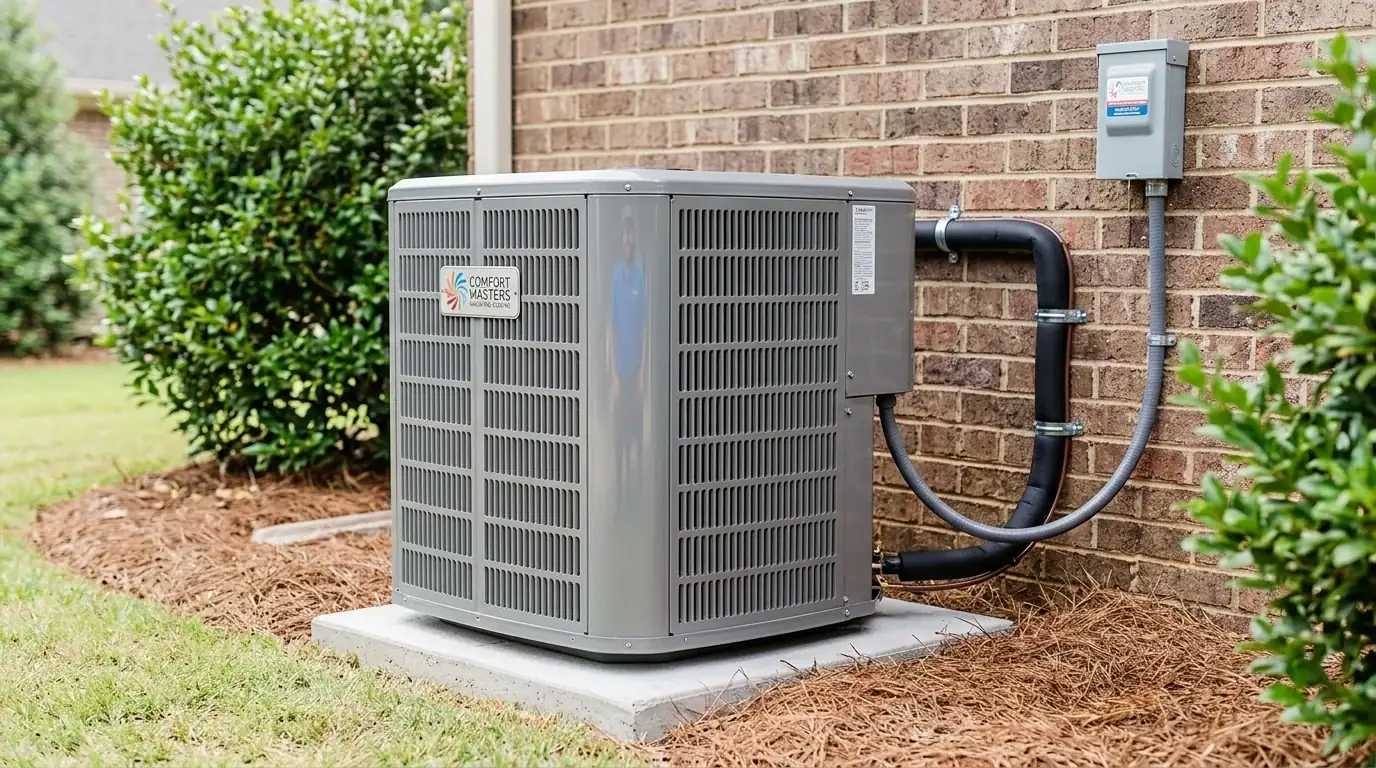
Most homeowners in North Myrtle Beach want to know what to expect on HVAC installation day well before the crew pulls into the driveway. It is a full day of people in your house, a few hours without power in part of it, and a fair amount of noise. The work itself is straightforward once you know the order it happens in. What matters just as much is what you are holding when the truck pulls away, because the paperwork from installation day is what proves what you own. If you are still deciding on equipment, start with our complete guide to coastal Carolina HVAC.
Quick answer
How does HVAC installation day work?
A straight system changeout is usually a one-day job. The crew walks the scope with you, protects your floors, recovers the refrigerant and pulls the old equipment, sets and connects the new system, evacuates the lines and weighs in the charge, then measures and records startup readings before walking you through the thermostat and the filter. You finish the day with a job packet: sizing documents, permit and inspection record, model and serial numbers, startup readings, and your warranties.
- Plan for a full working day and partial power loss
- Ductwork or a system-type change adds time
- Ask for your startup readings before you sign off
On this page
- 01Before installation day
- 02How the day runs, step by step
- 03How long installation takes
- 04The job packet you get after
- 05Before you sign off
- 06Your first season after install
- 07Common questions
Before installation day
By the time an install date is on the calendar, the decisions that determine whether the system performs have already been made. The equipment loaded on the truck was picked for your house, the permit is pulled, and the crew knows what they are walking into. Your job the night before is small, and it is worth doing.
What the load calculation already settled
The size of the system waiting on the truck did not come from the label on your old unit. It came from a Manual J load calculation, the ACCA method that measures how much heating and cooling your specific house needs based on insulation, windows, orientation, and air leakage. Manual S then matches equipment to that number, and Manual D sizes the ductwork that moves the air.
This is the part homeowners rarely see and it carries most of the weight. Research from the National Institute of Standards and Technology found that improper installation can push a household’s heating and cooling energy use roughly 30 percent above where it should be, driven largely by refrigerant charge errors and airflow problems from poorly sized ducts, per NIST research on installation quality. ENERGY STAR recommends contractors follow those same ACCA Manual J and Manual S standards for exactly this reason. Comfort Masters uses ACCA Manual J, S, and D standards on new HVAC installation in North Myrtle Beach, and the calculation becomes a document you keep.
If you are still choosing equipment, our comparisons of package unit versus split system on the coast and choosing between a heat pump and furnace cover that ground, and what a new AC system costs here covers the budget side. There are also financing options for a new system if you want to spread the cost.
The permit your contractor pulls
Replacing an HVAC system in Horry County is permitted work. County code requires anyone who intends to install, alter, or replace a regulated mechanical system to apply to the building official and obtain a permit first, per Horry County Code Enforcement. A licensed mechanical contractor pulls it, not the homeowner. Comfort Masters holds SC mechanical contractor license number 38846 and NC HVAC contractor license number 36196, which is what allows the permit to be pulled and the inspection to be scheduled on your job.
A missing permit is not a paperwork technicality. It surfaces later, at resale or during a warranty claim, when someone asks for the record and there is none. Ask which permit number is on your job and when the inspection is scheduled.
How to get your house ready
Everything below takes about twenty minutes the evening before, and each one saves the crew time that would otherwise come out of your install day.
The night before
Get the house ready in twenty minutes.
0 of 6 done 0 percent
- Clear a path to both units. The crew needs to carry equipment to the outdoor unit and to the air handler in the attic, closet, or crawl space.Night before
- Move vehicles off the driveway. The truck needs to back in close, and the old equipment leaves the same way the new equipment arrives.Morning of
- Secure pets in a closed room. Exterior doors stay open for long stretches while equipment moves in and out.Morning of
- Plan for partial power loss. The circuit feeding the system is shut off for most of the day, so charge what you need and move work to another room.Morning of
- Expect several hours of noise. Cutting, banging, and a vacuum pump running are all normal parts of the day.During the install
- Pick a staging spot. Tell the crew where they can set tools and cartons so the work stays out of your living space.On arrival
How installation day runs
Four stages, in this order.
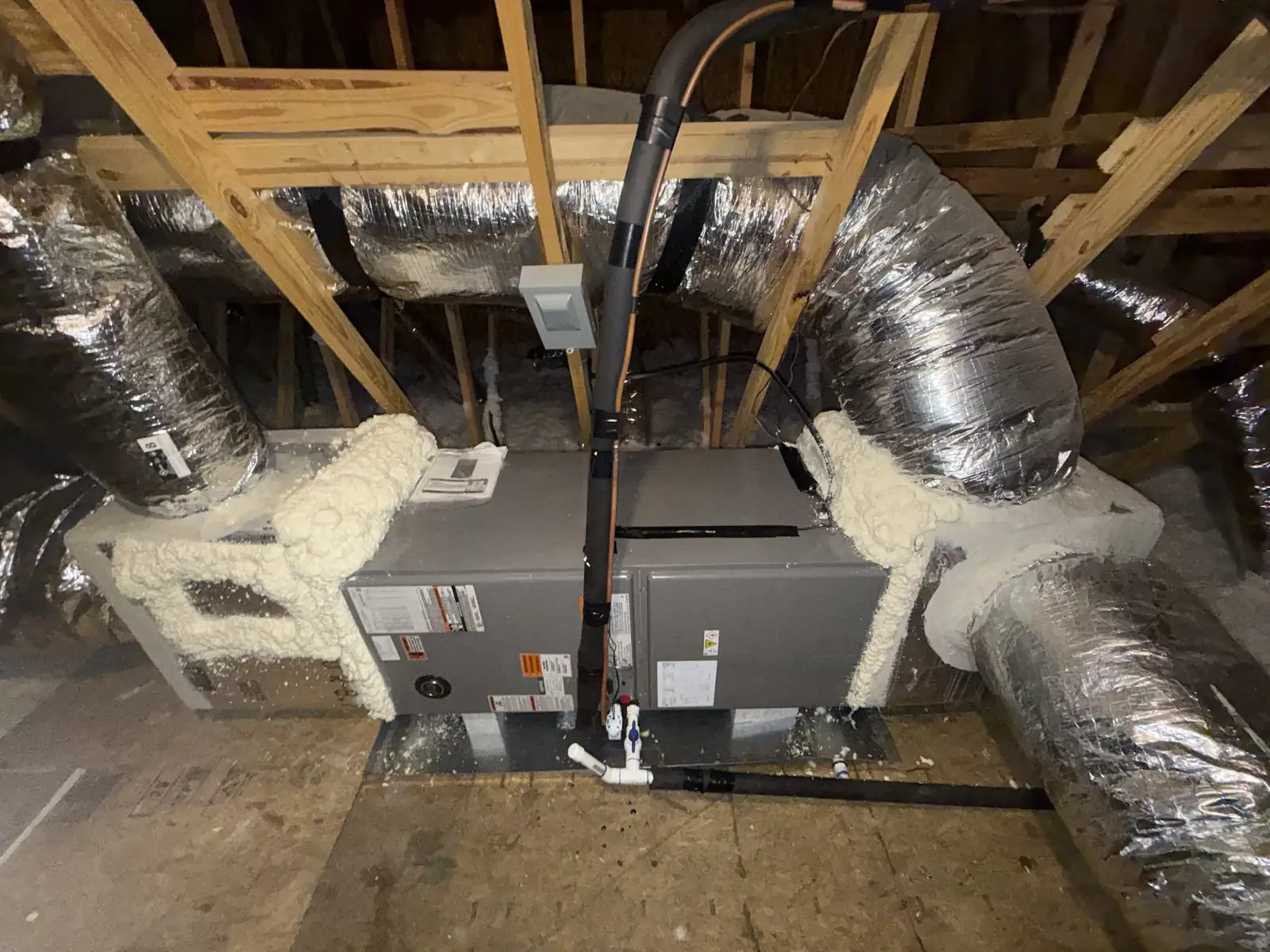
Walkthrough and protection
The lead installer confirms the scope with you, points out where equipment will sit, then lays drop cloths on flooring and protects corners on the carry path. Roughly the first hour.
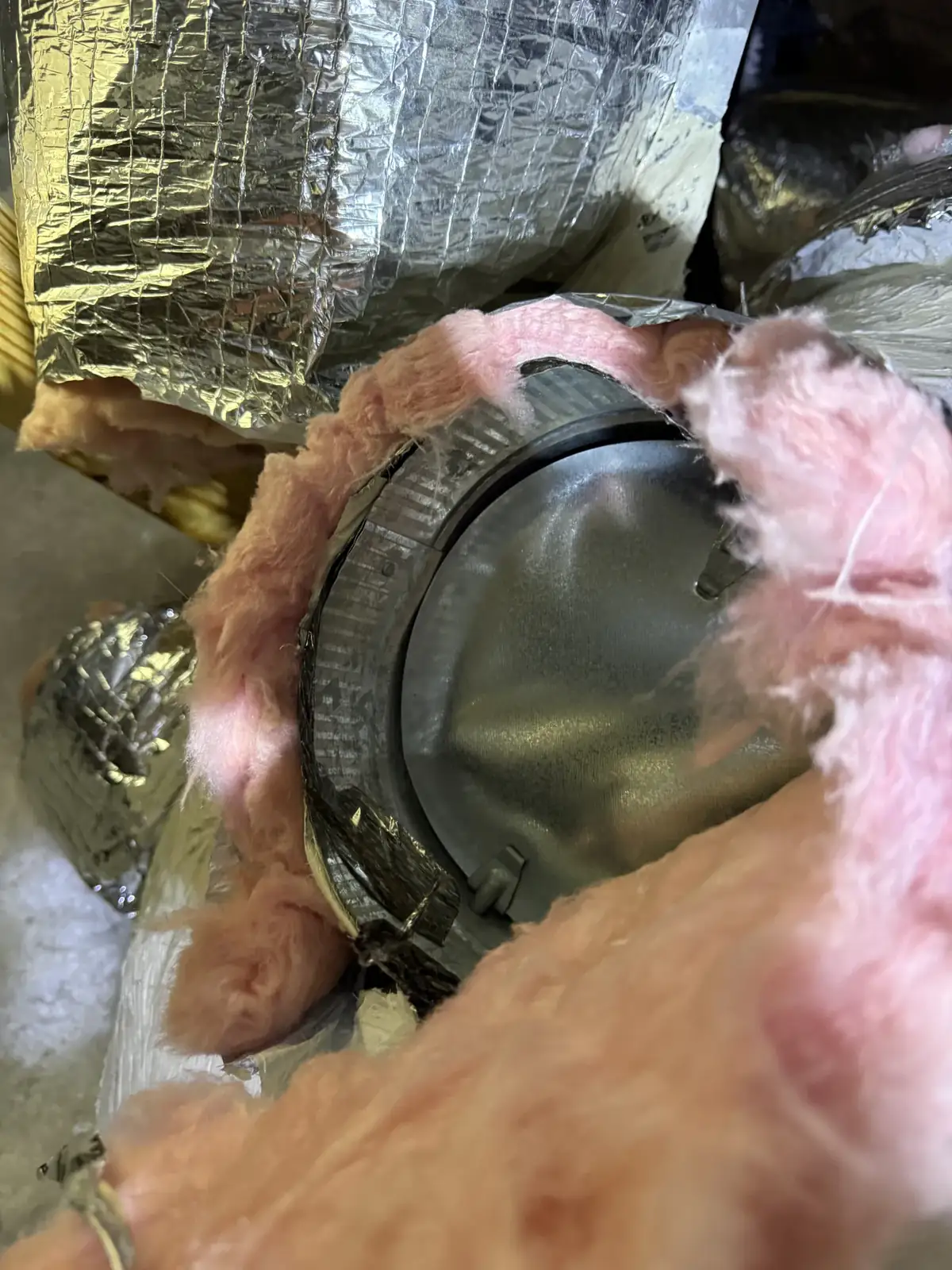
Old system out
Power is disconnected and the refrigerant is recovered into a cylinder under EPA Section 608 rules, never vented. Then the condenser, coil, and air handler come out.
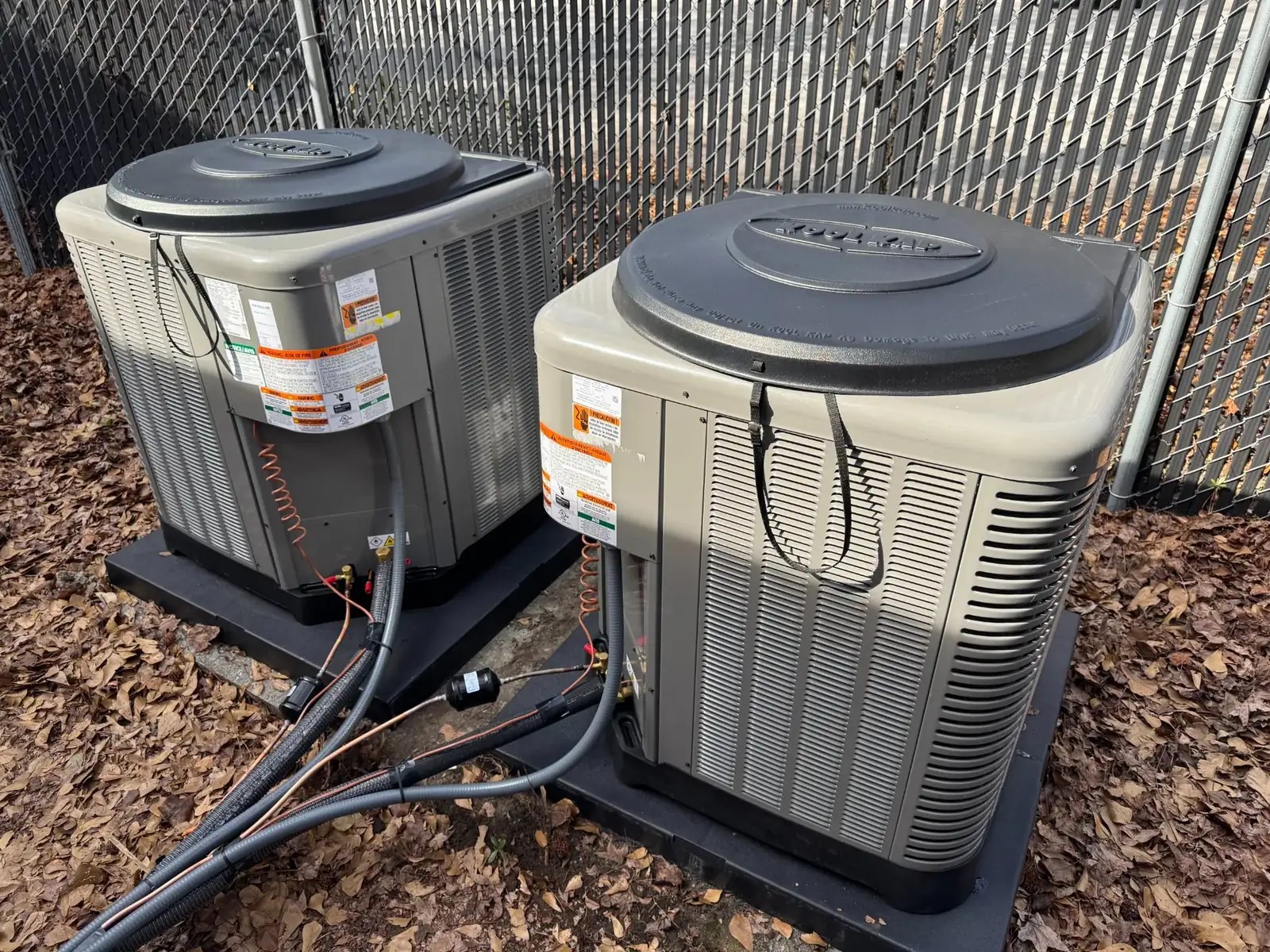
New equipment set and connected
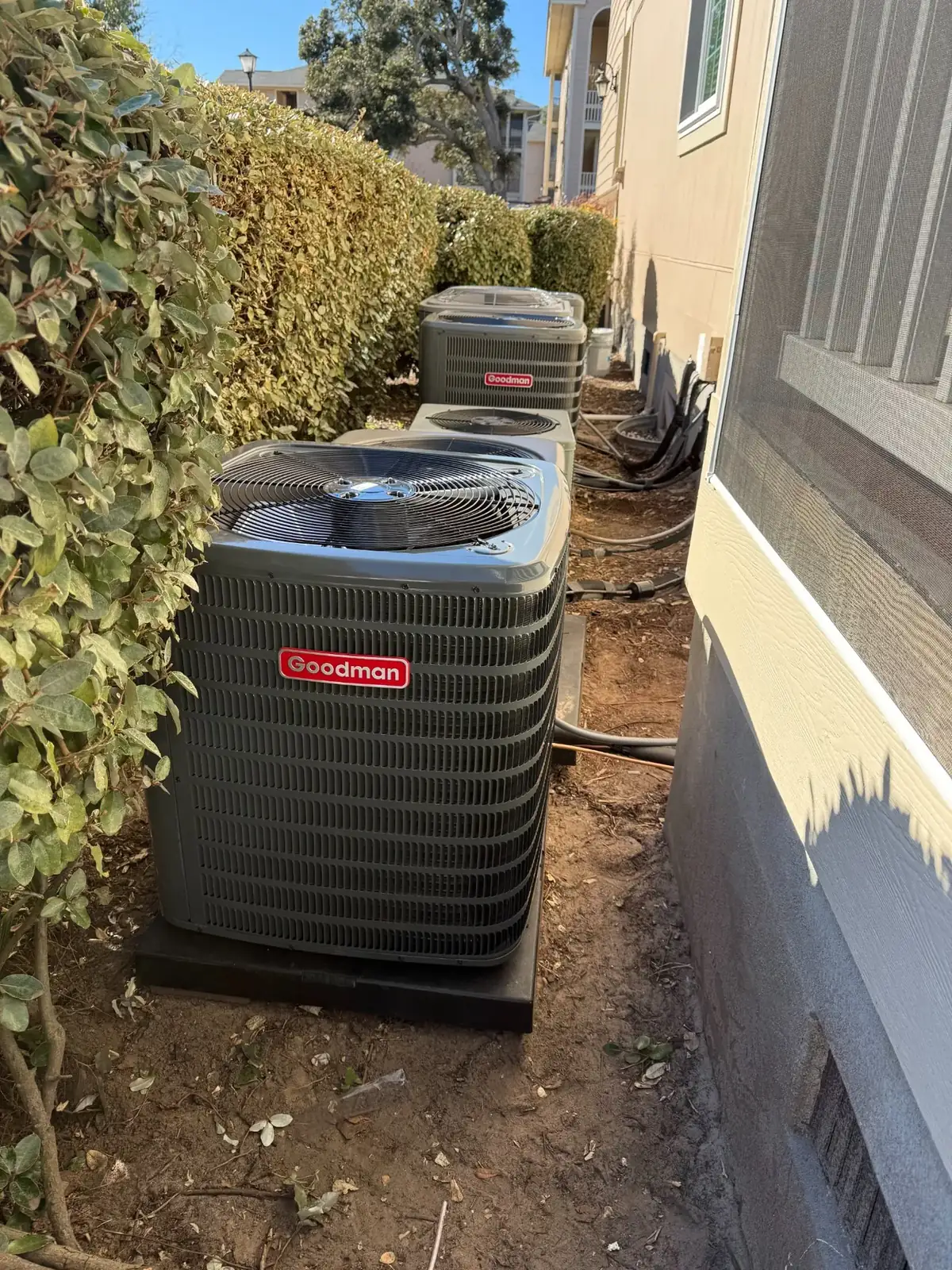
The condenser goes on its pad or stand, the air handler is set and sealed to the duct transitions, then the line set, condensate drain and trap, electrical, and thermostat are connected.
Evacuation, charge, commissioning
A vacuum pump pulls moisture and air out of the line set, the charge is weighed in, and the system starts. Then superheat, subcooling, static pressure, temperature split, and amp draw are measured and written down.
How long HVAC installation takes
A straight changeout is commonly a single working day. Contractor guides across the industry put a typical residential air conditioning installation at roughly seven to eight hours on site, and that matches what a same-for-same swap looks like on the Grand Strand. Treat it as a normal range rather than a promise, because access and scope move it in both directions. Ask for the expected duration in writing before the day.
A straight changeout
Same system type, ductwork in usable condition, equipment sitting where the old equipment sat. The crew arrives in the morning, the old system is out before lunch, and the afternoon goes to setting, connecting, evacuating, charging, and commissioning. You have cooling again that evening.
When the day runs longer
New or redesigned ductwork adds time, and so does converting between a package unit and a split system, because the equipment lands somewhere it has never been. An electrical upgrade to feed the new system stretches the day. So does access: a tight attic in August, a low crawl space, or a second-story air handler that has to come down a stairwell all slow the carry. Some jobs run into a second day, which is not a problem as long as you were told about it before it started.
The job packet you get after the install
When the crew leaves, you should be holding a set of documents, not just a receipt. The packet covers the sizing work that chose your equipment, the permit and inspection record, the identity of what is now bolted to your house, the readings taken at startup, and the warranties covering it. Documented work is how Comfort Masters operates, and it is what makes a system defensible years later.
Sizing and design documents
The Manual J load calculation that determined how much heating and cooling your home needs, the Manual S equipment selection that matched a system to it, and, where ductwork was touched, the Manual D duct design. These are the answer to the question nobody can reconstruct later: why is this the system on my house. Keep them with your closing documents.
Permit, inspection, and code record
The mechanical permit number pulled on your job and the result of the county inspection that follows. If the inspection has not happened yet on the day of the install, get the scheduled date in writing and the result when it comes in. At resale, this is the record a buyer’s inspector asks about.
Equipment identity and startup readings
Model and serial numbers for every piece of equipment, indoor and outdoor. The AHRI reference number for the matched system, which is how a rated combination is verified in the AHRI Directory of Certified Product Performance. And the commissioning readings recorded at startup: superheat, subcooling, static pressure, temperature split, and amp draw. Those numbers are the baseline. Two summers from now, a technician comparing fresh readings against them can tell whether the system drifted or something changed, which is a far better diagnostic than a guess.
Warranties and registration
Two separate things cover a new system, and homeowners mix them up constantly. The manufacturer covers the parts, and that coverage generally has to be registered after installation, so confirm who filed the registration and get the confirmation. Comfort Masters covers the labor, with a three-year labor warranty on new installs. Keep both records together, because a parts claim without a registration and an install date is a slow phone call.
3yr
Comfort Masters backs a new install with a three-year labor warranty.
That covers the labor on the work we performed. Parts coverage comes from the equipment manufacturer and generally has to be registered after installation, so keep both records in the same folder.
Three-year labor warranty on new installs, per the Comfort Masters price book.
Before you sign off
Signing off is a checkpoint, not a formality. The crew is still on site, everything is open and accessible, and anything unclear costs nothing to resolve right now. Fifteen minutes here is worth more than a phone call in July.
Walk the job with the lead installer
Look at the outdoor unit on its pad and the indoor unit where it sits. Have them show you the filter location and write down the size, because that is the number you will need every month or two through the summer. Ask where the condensate drain runs and what the trap looks like, since a clogged drain is one of the more common calls on a coastal system. Then run the thermostat through cooling and heating with them standing there.
Four questions worth asking
What are my startup readings, and can I have them in writing. When is the county inspection, and how will I hear the result. Who registers the manufacturer warranty, and can I get the confirmation. What exactly does the three-year labor warranty cover, and what does it not. Any installer doing the work properly has all four answers ready.
What happens in the first season after installation
A new system is not a system you can stop thinking about. The Grand Strand sits in ASHRAE Climate Zone 3A, hot and humid, with summer design temperatures reaching 93 to 96 degrees and sustained humidity across the whole season. Equipment here runs longer and works harder than the same model would inland, and salt air is working on the outdoor cabinet the entire time.
Filters and the first coastal summer
Through the April to October peak, systems run nearly continuously and filters need replacement every 30 to 60 days. That is the single cheapest thing protecting the equipment you just paid for, because a loaded filter starves airflow, and starved airflow is one of the two failure modes NIST identified behind inflated energy use. Rinse the outdoor coil with fresh water as well, and keep about two feet clear around the cabinet so debris cannot hold moisture against the metal.
If something feels wrong in the first season, have it looked at rather than waiting to see whether it settles. A new system under warranty is the best possible time to find a problem. If anyone in the house shows signs of heat illness while a system is down in peak summer, call 911 first and deal with the equipment afterward.
Maintenance plans and service calls
Comfort Masters maintenance plans run 115 dollars a year for one visit and 175 dollars a year for two, which covers a spring and a fall service. Details are on our HVAC maintenance plan options page. If you need a diagnostic visit outside a plan, a service call is 55 dollars in Little River and Calabash and 95 dollars in the other service areas, and it includes written findings before anything is quoted.
SC license #38846 SC LLR Contractor’s Licensing Board
NC license #36196 NC plumbing and heating board
BBB A+ rating Accredited since November 2020
Engineered, not estimated ACCA Manual J, S, and D standards
Common questions
HVAC installation day, answered.
How long does a new HVAC installation take?
A straight changeout is commonly one working day, and industry guides put a typical residential installation at roughly seven to eight hours on site. New or redesigned ductwork, a package to split conversion, an electrical upgrade, or difficult attic and crawl space access can push it longer. Ask for the expected duration in writing before the day.
Do I need to be home during the installation?
Someone should be home at the start and at the end. The crew confirms the scope with you in the morning and walks you through the thermostat, the filter, and the readings before leaving. The hours in between do not require you, though you will want to stay reachable in case a question comes up.
Will my power be off during the install?
The circuit feeding the HVAC system is shut off for most of the day, and depending on your panel, a few other outlets may go with it. The rest of the house generally stays on. Charge devices in the morning and plan to work in a room away from the equipment, since the noise runs for hours.
Do I need a permit to replace my HVAC system in Horry County?
Yes. Horry County requires a permit before a regulated mechanical system is installed, altered, or replaced, and a licensed mechanical contractor pulls it rather than the homeowner. Comfort Masters holds SC license number 38846 and NC license number 36196. Ask for your permit number and the date of the county inspection.
What paperwork should I get after a new system is installed?
A job packet, not just an invoice. It should contain the Manual J load calculation and Manual S selection, the Manual D duct design where ductwork was touched, the permit and inspection record, model and serial numbers, the AHRI reference for the matched system, the startup readings, and both warranty records.
Who registers the manufacturer warranty on my new system?
Ask, and get the confirmation in writing. Manufacturer parts coverage generally has to be registered after installation, and the registration is tied to the equipment serial numbers and the install date. Whoever files it, you want the confirmation in the same folder as your model and serial numbers so a future claim moves quickly.
What is covered by the three-year labor warranty?
Comfort Masters includes a three-year labor warranty on new installs, covering the labor on the work we performed. Parts are covered separately by the equipment manufacturer under its own terms. Keep both records together, and ask us to walk you through what each one covers before you sign off on the job.
When should the new system get its first maintenance visit?
Book the first service for the season ahead rather than waiting for a problem. Our plans are 115 dollars a year for one visit and 175 dollars a year for two, which covers spring and fall. Through the April to October peak, change the filter every 30 to 60 days and rinse the outdoor coil with fresh water.
Sources and references
- National Institute of Standards and Technology. Underperforming? Energy Efficiency of HVAC Equipment Suffers Due to Poor Installation.
- Horry County Code Enforcement. When to get a Building Permit.
- ENERGY STAR. Heat and Cool Efficiently.
- United States Environmental Protection Agency. Section 608 Technician Certification.
- Air-Conditioning, Heating, and Refrigeration Institute. AHRI Directory of Certified Product Performance.
Ready when you are
Get an install day that comes with the paperwork.
Comfort Masters Heating & Cooling installs coastal systems across North Myrtle Beach and the Grand Strand from its shop at 3502 State Hwy 50 in Little River. We measure the home, size the system to a Manual J load calculation, pull the permit, and hand you the documents at the end. We are open Monday through Friday from 8am to 7pm and Saturday from 8am to 4pm.
Call (843) 443-7186 Schedule a consultation with our team
Service area
HVAC across the Grand Strand.
Comfort Masters Heating & Cooling provides coastal HVAC installation and service across North Myrtle Beach and the Grand Strand from 3502 State Hwy 50 in Little River, SC 29566, covering Horry County, SC and Brunswick County, NC.
Comfort Masters Heating & Cooling 3502 State Hwy 50, Little River, SC 29566 (843) 443-7186 Get directions
Areas we serve
- North Myrtle Beach
- Little River
- Calabash
- Cherry Grove
- Longs
- Loris
- Myrtle Beach
- Sunset Beach
- Ocean Isle Beach
Professionally reviewed by

Alex Todd
- Uses ACCA Manual J standards
- Uses ACCA Manual S standards
- Uses ACCA Manual D standards
- EPA 608
- SC HVAC #38846
- NC HVAC #36196
Owner and lead HVAC technician at Comfort Masters Heating & Cooling, serving the Grand Strand since 2019.
Reviewed: August 2026