
7 Signs Your Ductwork Is the Problem, Not Your AC, in North Myrtle Beach
An AC that runs fine but a home that still is not comfortable often points to the ductwork, not the unit. This guide covers the 7 signs that separate a duct problem from an AC problem, from uneven room temperatures to rising bills, and what each one means for a North Myrtle Beach home.
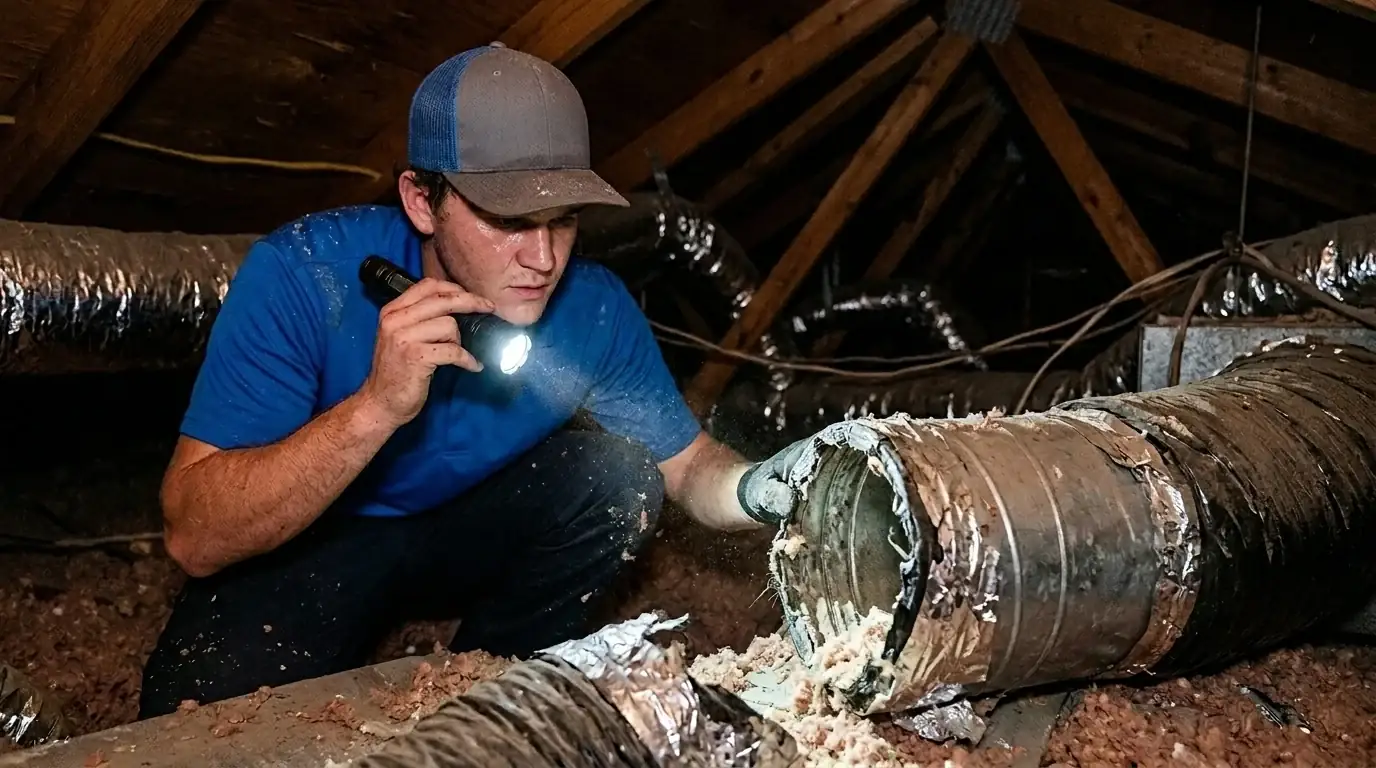
A North Myrtle Beach home can show 7 clear signs your ductwork is bad even while the air conditioner keeps running and cooling correctly. This guide walks through each sign and what it means for a Grand Strand home, so you can tell a duct problem from an AC problem before you call. Rule out the AC hardware first with our guide to why your AC might not be cooling, or see the complete Coastal Carolina HVAC guide for the full picture.
Quick answer
Is it your ductwork or your AC?
In a North Myrtle Beach home, ductwork is usually the problem when some rooms stay hot while others cool fine, airflow is weak at only some vents, bills climb without a weather change, dust or odor gets worse when the system runs, vents make noise, a recently serviced AC still underperforms, or duct damage is visible in the attic or crawlspace. Comfort Masters checks all 7 signs before recommending a fix.
On this page
- 01Uneven room temperatures
- 02Weak airflow at some vents
- 03Rising bills, same weather
- 04Dust, odor, or allergy symptoms
- 05Whistling, rattling, or banging
- 06A serviced AC still underperforms
- 07Visible duct damage
Why ductwork gets blamed on the AC in North Myrtle Beach
An air conditioner and its ductwork are two different systems doing two different jobs. The AC unit cools the air, and our North Myrtle Beach air conditioning services cover that equipment directly. The ductwork carries that cooled air to every room and pulls return air back to the system. When a homeowner says the AC is not working, the actual fault often sits somewhere in that second system, not the first.
Comfort Masters is certified to perform Manual J load calculations and Manual D duct design, the same standards used to size a system and lay out the ductwork that serves it. A duct diagnosis follows that same standard, checking the path the air takes rather than only the equipment that starts it moving.
Coastal humidity and duct leakage
The Grand Strand sits in ASHRAE Climate Zone 3A, a hot and humid climate zone with summer design temperatures of 93 to 96 degrees Fahrenheit and sustained humidity across the cooling season. That combination is hard on ductwork specifically. Humidity breaks down duct insulation and liner faster than a dry inland climate would, and a long cooling season means a leaky duct system stays under load for months at a time.
Who this applies to
This list matters most for older homes with original ductwork, retrofit homes where ducts were added or rerouted after the fact, and coastal rental properties where nobody lives full time to notice a slow decline in comfort. If your home fits any of those categories, treat the signs below as a reason to look at the ducts, not only the AC.
7 signs your ductwork is the problem, not your AC
1. Some rooms stay hot while others cool fine
The AC runs, the thermostat reads the right temperature, and one bedroom is still noticeably warmer than the rest of the house. Ductwork carries the air your AC already cooled, so a leak or a disconnect can make a working unit feel broken. A branch line that has come loose, been crushed, or was never sized correctly for that room will starve it of conditioned air no matter how well the AC itself is running.
Why it matters
An AC that cools correctly at the unit can still leave individual rooms hot because of what happens between the unit and the vent. Treating this as an equipment problem, and replacing or over-servicing the AC, will not fix a duct issue.
What to do about it
Note which rooms run hot and how long the pattern has held. Do not close vents in the warm rooms to try to force air elsewhere. Closing vents raises pressure in the duct system and can push leaks to get worse.
When to contact a provider
If the imbalance affects more than one room, or has been getting worse over several weeks, it is worth a professional duct check rather than a repeat AC service call.
2. Airflow is strong at some vents and weak or dead at others
A blocked or crushed branch line shows up as weak airflow at one vent, not the whole house. This is different from a whole-system airflow problem, which would show weak air everywhere and usually points to the blower or a dirty filter at the unit itself.
Why it matters
Register-by-register differences point to something specific to that duct run: a disconnect, a kink, a section that was crushed during other work in the attic, or a damper that got closed and forgotten.
What to do about it
Check airflow by hand at each vent in the home and write down which ones are weak. Confirm the return air grilles are not blocked by furniture or rugs, since a restricted return can mimic a duct problem.
When to contact a provider
A weak vent that does not improve after a filter change and clearing the return grilles is a sign the branch line itself needs to be inspected.
3. Cooling bills climb without a change in weather or equipment
A higher bill with the same thermostat setting, the same weather, and no new equipment is one of the clearest financial signs of duct loss. Conditioned air that leaks into an attic or crawlspace before it reaches a room is air the system paid to cool twice, once when it left the unit and again when the thermostat calls for more because the room never reached temperature.
Why it matters
An efficient AC pushing air into a leaky duct system still shows up as a high bill, because the meter measures what the unit uses, not what actually reaches the living space.
What to do about it
Compare the current bill to the same month last year rather than to last month, since cooling load changes with the season. A jump that does not track with weather is the signal worth acting on.
When to contact a provider
Bring the bill comparison to a duct diagnosis. It helps a technician judge whether the leak is significant enough to prioritize.
20-30
Typical duct losses run 20 to 30 percent of the air moving through a home’s duct system.
On the Grand Strand’s long cooling season, that loss runs for months at a time, which is why a rising bill with no other explanation is worth checking against the ductwork, not just the AC unit.
Per ENERGY STAR, U.S. Environmental Protection Agency and U.S. Department of Energy.
4. Dust, a musty smell, or worse allergy symptoms show up when the system runs
A leaky return duct can pull attic, crawlspace, or wall cavity air into your home before it ever reaches the filter. That air carries insulation fibers, dust, and moisture, which is why a house can start feeling dustier or a musty smell can appear only when the AC is running.
Why it matters
This is an air quality symptom as much as a comfort one. Per the EPA, moisture inside ductwork can support mold growth and circulate contaminants through the home, so this sign is worth taking seriously even when the temperature itself is not the complaint.
What to do about it
Note whether the smell or dust is worse in a specific room, which can point to which return or supply run is pulling in outside air. Change the filter if it has not been changed recently, since a dirty filter alone can also increase dust.
When to contact a provider
A smell or dust increase that persists after a filter change points to the ducts. Comfort Masters performs duct cleaning and duct sanitizing alongside a leak inspection, which addresses both the source and the existing contamination.
5. You hear whistling, rattling, or banging from vents, walls, or the ceiling
Whistling or rattling from a wall or ceiling is a duct sound, not a compressor sound. These noises come from air forcing its way past a loose connection, through a narrow gap, or through a section that has partly come apart, not from the outdoor unit or the indoor blower itself.
Why it matters
Noise location is the fastest self-check a homeowner can do. A sound coming from the outdoor unit or a mechanical closet points to the equipment. A sound coming from inside a wall, ceiling, or floor cavity points to the ductwork running through it.
What to do about it
Note where in the house the sound happens and whether it starts right when the system kicks on. That timing detail helps a technician find the section faster.
When to contact a provider
Any new or worsening duct noise is worth a look before the loose section fails further and turns into a full disconnect.
6. A newer or recently serviced AC still doesn’t perform
If the AC has already been repaired or replaced and the problem is still there, the ducts are the next place to look. Once the equipment itself has been ruled out through a documented repair or a fresh install, the remaining variable in most homes is the duct system carrying that equipment’s output.
Why it matters
This sign matters most for a reader who already spent money on the AC and still has the original complaint. A correctly sized, correctly installed unit connected to leaky or undersized ductwork will still underperform, and no amount of additional AC service will change that.
What to do about it
Pull together the paperwork from the recent AC repair or install. It documents that the equipment side has already been addressed, which speeds up a duct diagnosis.
When to contact a provider
If you are at this point, see our AC repair-vs-replacement guide to confirm the equipment decision is settled, then book a duct-specific diagnosis rather than another AC-focused visit.
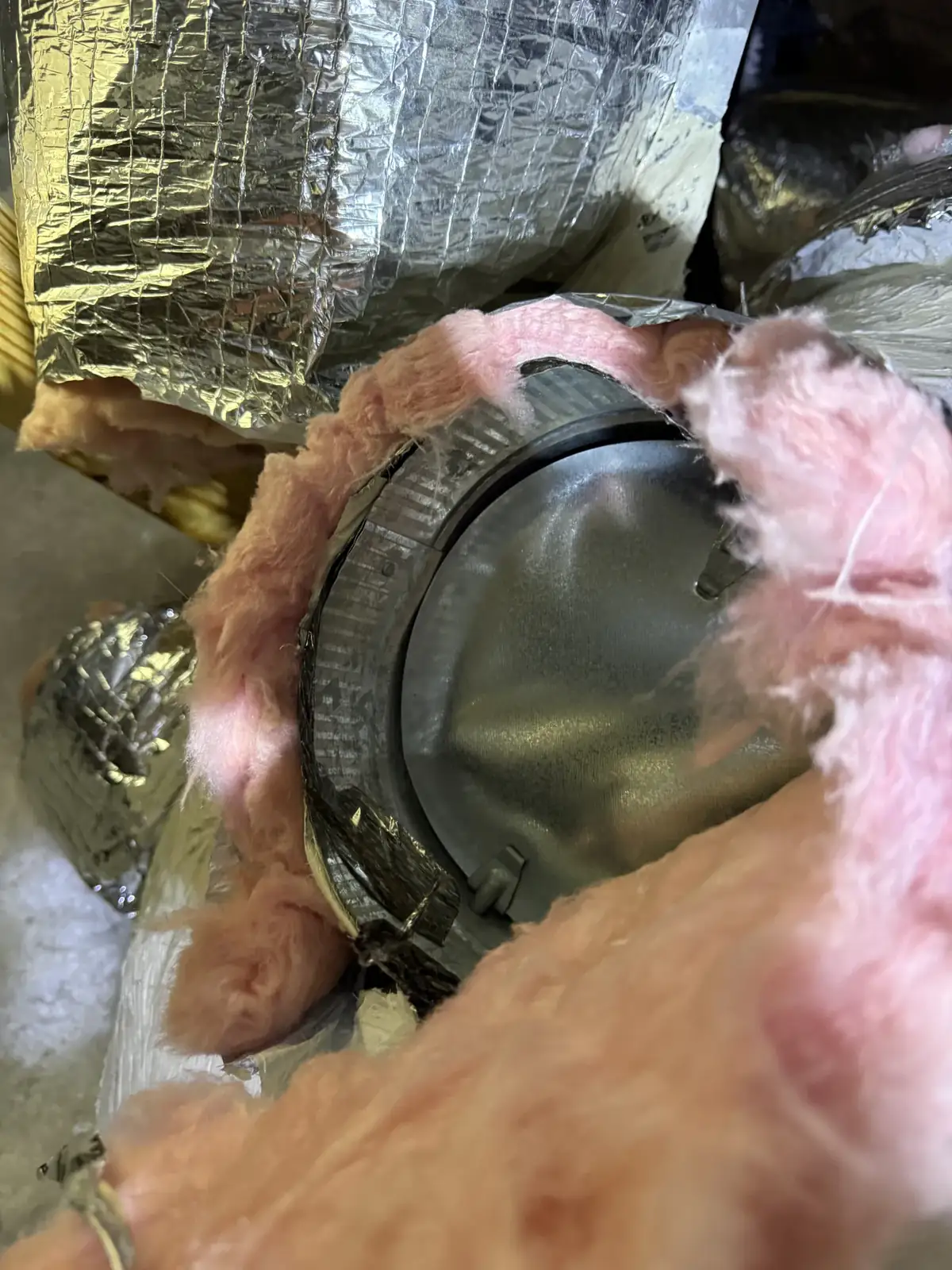
7. Ductwork is visibly damaged, disconnected, or crushed where you can see it
Coastal humidity breaks down duct insulation and liner faster than a dry inland climate would, so visible wear in an attic or crawlspace shows up sooner here than it would inland. A sagging insulation jacket, a duct that has pulled apart at a joint, or a section crushed by stored items or foot traffic are all signs you do not need a technician to confirm.
Why it matters
Visible damage is the clearest sign on this list, but the other six matter because most duct problems are not visible without opening up the attic or crawlspace. Do not wait for a visible sign before addressing the earlier symptoms.
What to do about it
If you can safely see the attic or crawlspace ductwork, note the location and take a photo if possible. Do not attempt to reconnect or reseal ductwork yourself. A proper repair follows the same Manual D standard used to design the system in the first place.
When to contact a provider
Visible disconnection or crushing should be scheduled promptly, since that section is providing little or no conditioned air to whatever room it serves until it is repaired.
What to do next
None of the 7 signs above are a reason to skip service, even the milder ones. A duct problem tends to get more expensive to fix the longer it runs, since the AC keeps working harder to compensate. The steps below help you get ready for a visit, not replace one.
Steps you can take before calling
Change the air filter if it has not been changed in the last one to three months, and note which of the 7 signs match what you are seeing and in which rooms. If you can safely see attic or crawlspace ductwork, note anything visibly wrong, but do not attempt to reconnect, reseal, or cut into ductwork yourself.
When to book a duct diagnosis
Book a diagnosis once one or more of the signs above has been present for more than a few days, or as soon as you see visible duct damage. Comfort Masters checks the duct system against the same Manual D standard used to design it, and puts the findings in writing before recommending a repair. See our HVAC maintenance and repair services for what a service visit covers, or our HVAC service agreements if you want ductwork checked as part of a regular maintenance plan.
When to call for help right away
The 7 signs above are ductwork symptoms, not safety emergencies. Separately, if you ever smell gas, notice a burning smell, see sparking at an electrical component, or hear a carbon monoxide alarm, evacuate the home and call 911 or your gas utility first, before calling for HVAC service.
Common questions
Ductwork problems, answered.
How can I tell if it’s my ductwork and not my AC unit?
The clearest signs are room-to-room temperature differences, weak airflow at specific vents, rising bills without a weather change, and noise from walls or ceilings rather than the outdoor unit. If the AC has already been checked and the problem persists, the ductwork is the next place to look.
Why does my AC run fine but some rooms still feel hot?
This usually means the air is being cooled correctly but is not reaching that room. A leak, a disconnect, or an undersized branch line in the ductwork can starve one room of conditioned air while the rest of the house cools normally, even though the AC itself is working.
Can leaky ducts really raise my cooling bill?
Yes. According to ENERGY STAR, typical duct systems lose 20 to 30 percent of the air moving through them to leaks. That lost air still cost energy to cool, so a leaky duct system can raise a bill even when the AC equipment has not changed.
Does dusty air mean my ducts need cleaning or repair?
It can. A leaky return duct pulls attic or crawlspace air, including dust and insulation fibers, into the system before it reaches the filter. If dust or a musty smell increases when the AC runs, duct cleaning and a leak inspection both address the cause.
Is a whistling sound from my vents a duct problem?
Usually. Whistling, rattling, or banging from a wall, ceiling, or floor points to air forcing past a loose connection or a gap somewhere in the ductwork. Noise coming from the outdoor unit or a mechanical closet is more likely an equipment issue and should be checked separately.
I just had my AC repaired. Why is it still not cooling right?
If the AC has already been repaired or replaced and the comfort problem has not changed, the ductwork carrying that equipment’s output is the most likely remaining cause. A duct diagnosis checks the path the air takes after it leaves the unit.
How much duct leakage is normal in a Grand Strand home?
Some leakage exists in almost every duct system. ENERGY STAR puts typical losses at 20 to 30 percent of the air moving through the system, and a long cooling season on the Grand Strand keeps that loss active for months at a time.
Can salt air and humidity damage my ductwork faster?
Yes. Coastal humidity breaks down duct insulation and liner faster than a dry inland climate does, which is why visible wear and leaks can show up sooner in a North Myrtle Beach home than in a similar inland home. The long cooling season adds to that wear.
What happens during a professional duct diagnosis?
A duct diagnosis follows the same Manual D standard used to design ductwork in the first place. A technician checks airflow at each register, inspects accessible duct runs for leaks, disconnects, or damage, and documents the findings in writing before recommending any repair.
How much does a duct diagnosis or repair visit cost?
A duct diagnosis starts with our standard service call, which is 55 dollars in Little River and Calabash and 95 dollars in the other service areas. That covers the inspection and written findings. Any repair is quoted separately after the diagnosis.
Sources and references
- ENERGY STAR, Duct Sealing. energystar.gov
- U.S. Environmental Protection Agency, Should You Have the Air Ducts in Your Home Cleaned? epa.gov
- Air Conditioning Contractors of America (ACCA), residential duct design and quality installation standards. acca.org
Professionally reviewed by

Alex Todd
- ACCA Manual J
- ACCA Manual S
- ACCA Manual D
- EPA 608
- SC HVAC #38846
- NC HVAC #36196
Owner and lead HVAC technician at Comfort Masters Heating & Cooling, certified to perform Manual J load calculations and Manual D duct design for Grand Strand homes.
Reviewed: September 2026
Ready when you are
Get your ductwork diagnosed in North Myrtle Beach.
Comfort Masters Heating & Cooling checks ductwork against the same Manual D standard used to design it, across North Myrtle Beach and the Grand Strand, from its shop at 3502 State Hwy 50 in Little River. A service call is $55 in Little River and Calabash and $95 in the other service areas, and it includes a full diagnostic with written findings before any repair is quoted.
Call (843) 443-7186 Book Online
Service area
HVAC across the Grand Strand.
Comfort Masters Heating & Cooling provides coastal HVAC service, including ductwork design, repair, and installation, across North Myrtle Beach and the Grand Strand from 3502 State Hwy 50 in Little River, SC 29566.
Comfort Masters Heating & Cooling 3502 State Hwy 50, Little River, SC 29566 (843) 443-7186 Get directions
Areas we serve
- North Myrtle Beach
- Little River
- Calabash
- Cherry Grove
- Longs
- Loris
- Myrtle Beach
- Sunset Beach
- Ocean Isle Beach