
Why is my AC freezing up? Frozen Coil Steps for North Myrtle Beach
Ice on the coil means the system is running below freezing, and running it that way is what turns a cheap fix into an expensive one. Here is why an AC freezes up, how to thaw a frozen coil safely, what never to do to it, and the signs that mean you need a technician on the Grand Strand.
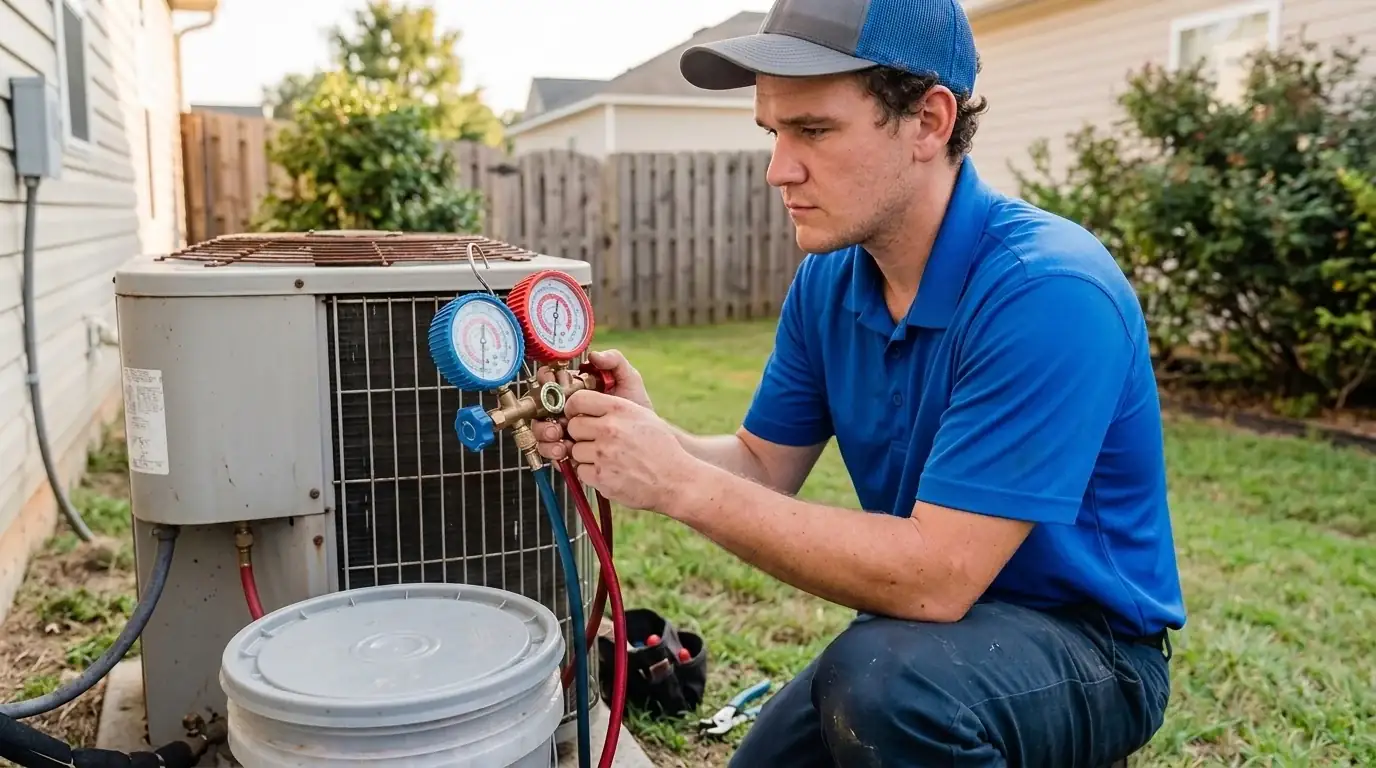
If your AC is freezing up and you can see ice on the coil, the refrigerant line, or the air handler, turn the system off before you do anything else. Running it iced over is what turns a cheap fix into an expensive one. Here is why a coil ices, how to thaw it safely, and when to stop troubleshooting and book AC maintenance and repairs in North Myrtle Beach.
Quick answer
What to do in the next 15 minutes
An AC freezes up when the evaporator coil drops below freezing, almost always from restricted airflow or low refrigerant. Set the thermostat to off and the fan to on. Pull a clogged filter. A coil takes 1 to 4 hours to thaw. Comfort Masters diagnoses frozen coils across North Myrtle Beach for a service call of 55 or 95 dollars.
Why an AC freezes up
Ice on a coil is not a cold problem. It is an airflow problem or a refrigerant problem, and the two need opposite responses. That is why thawing the ice is a diagnostic step and not a repair.
The most common cause: restricted airflow
An evaporator coil gets cold by absorbing heat from the air moving across it. Cut off that air and the coil keeps dropping until it falls below 32 degrees. Humidity then freezes onto it, and the ice blocks even more airflow.
The U.S. Department of Energy names clogged air filters as the maintenance issue that reduces an air conditioner’s ability to absorb heat (Department of Energy). Check the filter first. It is not the only restriction:
- A clogged or collapsed air filter
- Supply vents or return grilles blocked by furniture or rugs
- An evaporator coil fouled with dust and grime
- A blower motor running slow or failing
- Crushed, disconnected, or undersized ductwork
The first two are yours. The rest belong to a technician, and there are other reasons an AC stops cooling worth ruling out at the same visit.
The serious cause: a refrigerant leak
Refrigerant is not consumed. A system does not use it up the way a car uses oil, so when it is low, it left through a leak. The leak is the repair.
Low refrigerant drops the pressure inside the coil, which pushes it below freezing even when airflow is fine. From the hallway it looks identical: ice on the line, no cold air.
This half is not a homeowner job, and it is not a legal one either. Under Clean Air Act Section 608, the EPA requires that “technicians who maintain, service, repair, or dispose of equipment that could release refrigerants into the atmosphere must be certified” (U.S. EPA). Alex Todd holds EPA 608 certification.
How to thaw a frozen AC coil safely
Thawing is the part you can do yourself. Work through it in order and give it the full time it needs.
Thawing a frozen coil
Four steps, in this order.
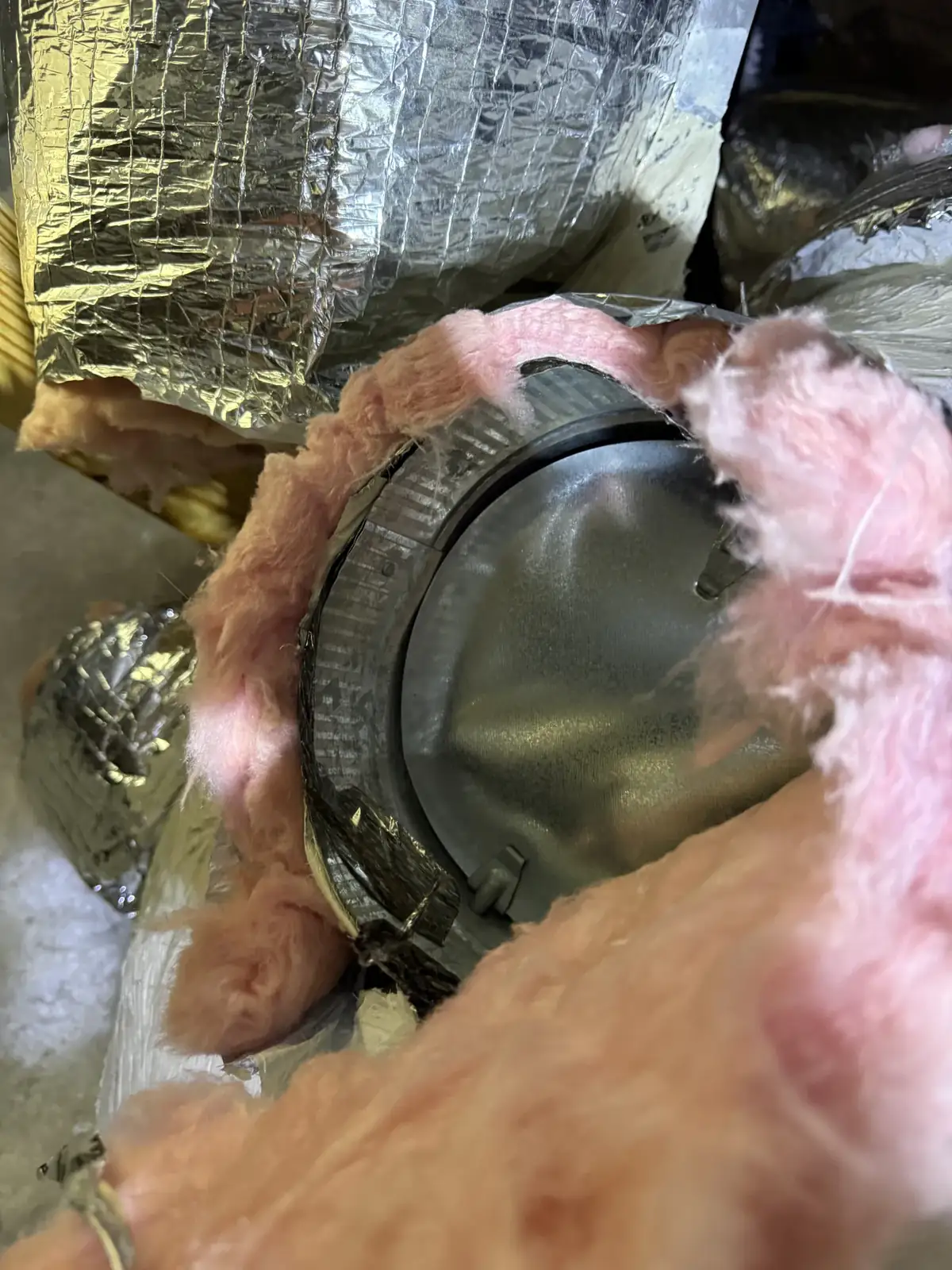
Thermostat to off.
Stop the cooling call so no more ice forms. Do not just raise the setpoint. Switch the system off.
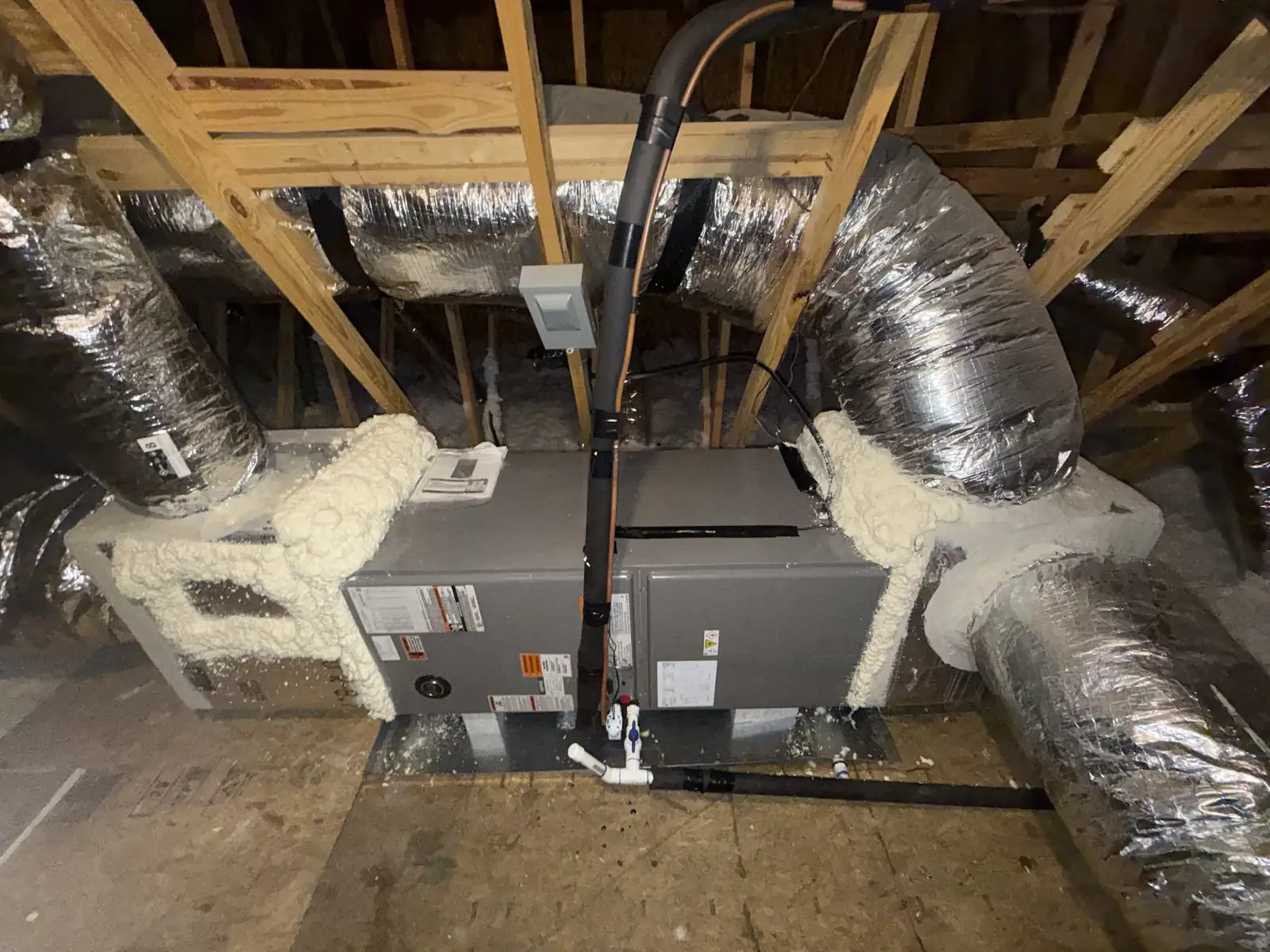
Fan to on.
Set the fan from auto to on. Room temperature air moving across the coil melts ice faster and more evenly than leaving it still.
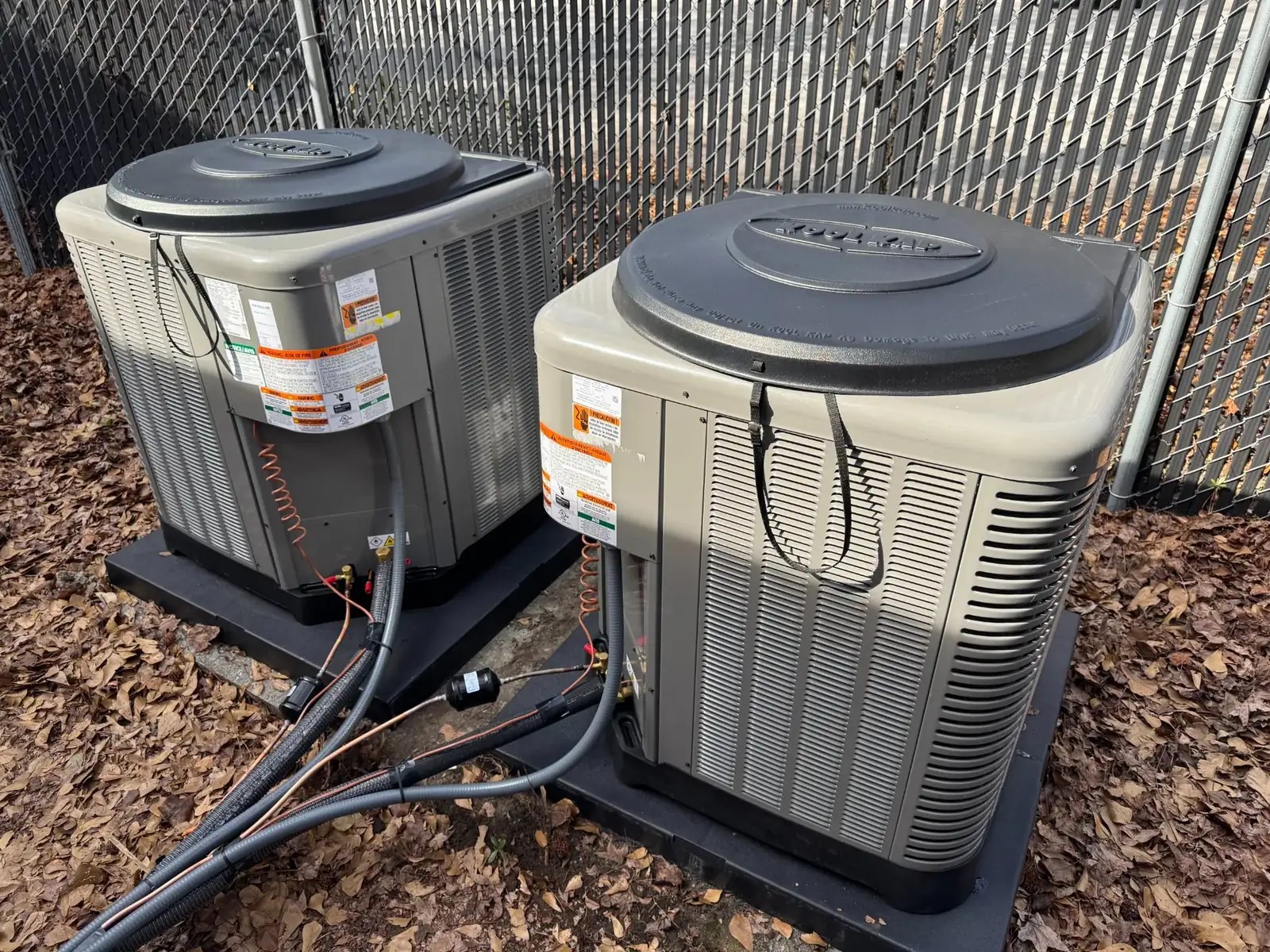
Pull a clogged filter.
If the filter is grey and packed, take it out while the coil thaws. Put a clean one in before the system runs again.
Wait it out.
Give it 1 to 4 hours depending on how much ice there is. The coil has to be fully thawed and dry before you restart cooling.
What to do while it thaws
Carrier puts a full thaw at 1 to 4 hours (Carrier). Put towels or a shallow pan under the air handler, because all that ice becomes water. Watch the condensate drain as it melts. If water backs up instead of draining, the drain is clogged.
What never to do to a frozen evaporator coil
The don’ts matter more than the do’s here. Each one turns a small repair into a large one.
- Do not chip, scrape, or pry the ice. Coil fins are thin aluminum, and bent fins block airflow permanently.
- Do not use a hair dryer or heat gun. Direct heat can damage the coil and the refrigerant lines.
- Do not run the compressor with the coil iced. Compressor damage is the most expensive failure on the system.
- Do not add refrigerant. Low refrigerant means a leak, and handling it requires EPA 608 certification.
- Do not keep resetting the breaker. Repeated restarts stress the equipment and tell you nothing new.
When to shut it down and call a technician
A thaw tells you the ice is gone. It does not tell you the cause is gone. If any of these apply, the system needs a diagnosis, not another restart.
Signs you need a technician now
- The coil freezes again after a full thaw and a clean filter
- Ice on the refrigerant line running to the outdoor unit
- Water damage or standing water around the air handler
- No cold air once the coil is fully thawed and dry
- The system freezes overnight and thaws by morning, over and over
A repeat freeze points to refrigerant loss or a mechanical fault, and neither is homeowner serviceable. A service call is 55 dollars in Little River and Calabash and 95 dollars everywhere else on the Grand Strand, and it covers a full diagnostic with the findings in writing before anyone recommends a part. We look for the repair first, and our technicians do not work on commission.
Safety risks that come before the AC
Some things outrank the air conditioner. If you smell burning, see smoke or sparking, or the breaker trips repeatedly, shut the system off at the breaker and treat it as an electrical hazard. If anyone shows signs of heat illness in a Grand Strand summer, meaning confusion, nausea, or an unsteady walk, call 911 first.
Why Grand Strand systems freeze more often
A frozen coil is a national problem with a local accelerant. Coastal South Carolina gives a system less margin than an inland one, in two specific ways our complete guide to coastal Carolina HVAC covers in more depth.
60days
Filters need replacing every 30 to 60 days from June through August.
That is the cadence a Grand Strand system runs at during peak season, when equipment runs nearly continuously. A filter that lasts a whole season inland becomes a freeze risk here.
Peak season filter cadence per Comfort Masters coastal service data.
Humidity and a six month cooling season
The Grand Strand sits in ASHRAE Climate Zone 3A, hot and humid, with summer design temperatures of 93 to 96 degrees and sustained humidity across the season. Cooling runs April through October here. More moisture in the air means more water available to freeze onto a cold coil.
Salt air and coil fouling
Salt and humidity settle on coils and speed up corrosion, so coastal equipment needs cleaning more often than inland equipment does. A fouled coil sheds heat poorly, which pushes it colder, which is the same road to ice. Rinsing the outdoor unit with fresh water monthly helps. A scheduled visit catches the rest, and our HVAC maintenance and service agreements run 115 dollars a year for one visit or 175 dollars a year for two.
Common questions
Frozen AC coils, answered.
How long does it take for a frozen AC coil to thaw?
A frozen AC coil takes 1 to 4 hours to thaw completely, according to Carrier, depending on how much ice has built up. Set the thermostat to off and the fan to on to move room temperature air across it. The coil must be fully thawed and dry before you restart cooling.
Will a frozen AC unit fix itself if I leave it off?
The ice melts on its own if you leave the system off, but the cause does not go with it. A coil freezes because airflow is restricted or refrigerant is low, and neither condition repairs itself. Expect the freeze to return once cooling restarts unless a technician finds and fixes the fault.
Why does my AC keep freezing up after I thaw it?
A coil that refreezes after a full thaw and a clean filter usually means a refrigerant leak or a hidden airflow restriction such as a failing blower or a fouled coil. Both need a technician. Comfort Masters charges 55 dollars in Little River and Calabash and 95 dollars elsewhere for a full diagnostic.
Can I run the fan while the AC coil is frozen?
Yes, and you should. Switching the fan from auto to on moves room temperature air across the frozen coil and melts the ice faster and more evenly. Keep the cooling itself switched off. Running the compressor against an iced coil is what risks expensive compressor damage.
Why do coastal South Carolina AC systems freeze up more often?
Coastal South Carolina sits in ASHRAE Climate Zone 3A, with summer design temperatures of 93 to 96 degrees and sustained humidity. More airborne moisture means more water to freeze onto a cold coil, and salt air fouls coils faster, so filters need changing every 30 to 60 days in peak season.
Sources and references
- U.S. Environmental Protection Agency. Section 608 Technician Certification Requirements. Cited for the rule that technicians who maintain, service, repair, or dispose of refrigerant-containing equipment must be certified.
- U.S. Department of Energy, Energy Saver. Energy Saver 101: Home Cooling. Cited for clogged air filters reducing an air conditioner’s ability to absorb heat.
- Carrier. Will Frozen AC Fix Itself? A Guide to Frozen AC Coils. Cited for the 1 to 4 hour thaw window, as manufacturer guidance.
- Comfort Masters Heating & Cooling. Internal coastal service data, 2026. Source for the peak season filter cadence of 30 to 60 days, the service-call tiers of 55 and 95 dollars, and the maintenance plan prices of 115 and 175 dollars a year.
Ready when you are
Get a frozen coil diagnosed properly.
Comfort Masters Heating & Cooling works on coastal systems across North Myrtle Beach and the Grand Strand from the shop at 3502 State Hwy 50 in Little River. A service call is 55 dollars in Little River and Calabash and 95 dollars in the other service areas, and it includes a full diagnostic with written findings before any repair is quoted.
Call (843) 443-7186 Book Online
Service area
HVAC across the Grand Strand.
Comfort Masters Heating & Cooling provides coastal HVAC service across North Myrtle Beach and the Grand Strand from 3502 State Hwy 50 in Little River, SC 29566.
Comfort Masters Heating & Cooling 3502 State Hwy 50, Little River, SC 29566 (843) 443-7186 Get directions
Areas we serve
- North Myrtle Beach
- Little River
- Calabash
- Cherry Grove
- Longs
- Loris
- Myrtle Beach
- Sunset Beach
- Ocean Isle Beach