
8 HVAC Steps for Grand Strand Vacation Rentals and Second Homes
A vacation rental or second home is harder on an HVAC system than a full-time house: it sits empty between bookings, runs at full tilt in July, and takes salt air on the outdoor coil year-round. These 8 steps cover thermostat and humidity settings for an empty house, filter and drain cadence, coil rinsing, maintenance agreements, remote monitoring, and a hurricane-season restart sequence for Grand Strand owners.
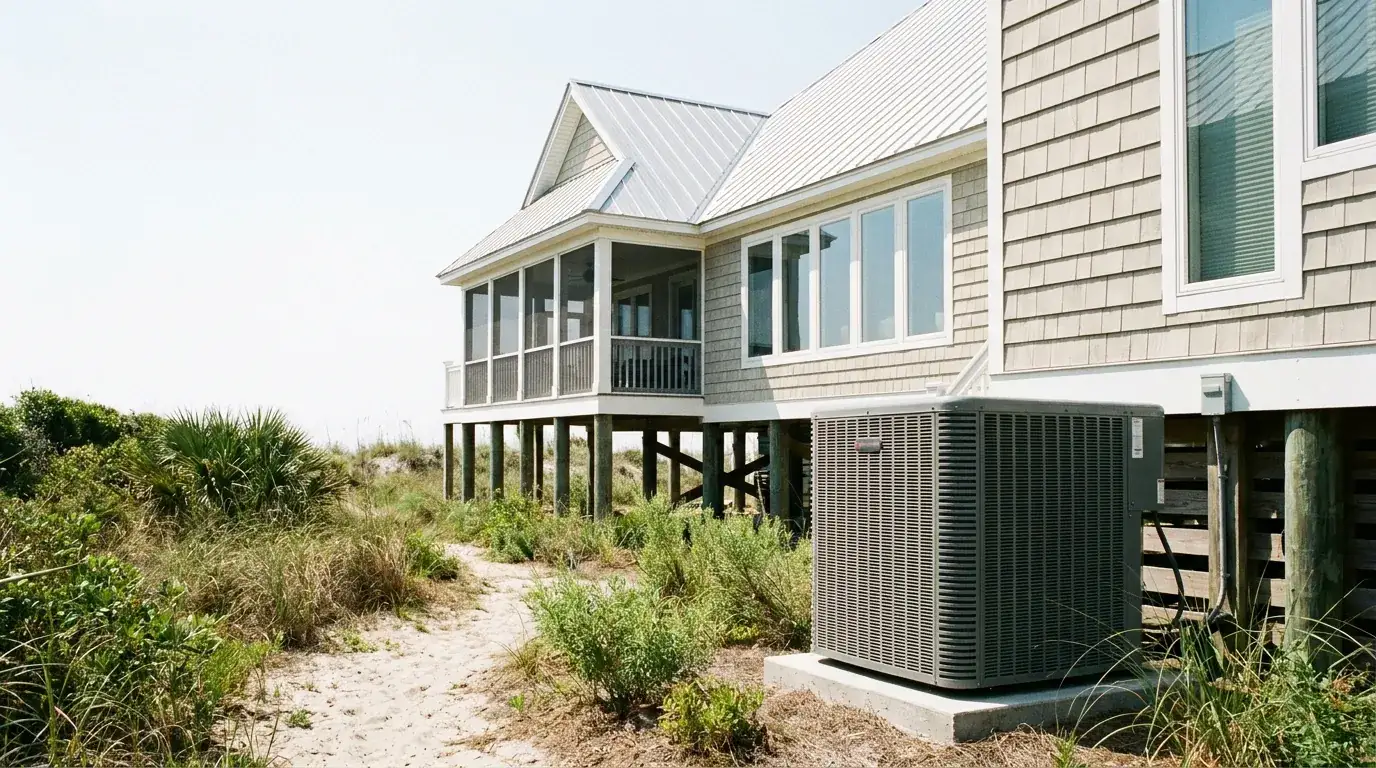
Vacation rental HVAC maintenance follows a different rhythm than it does in a full-time house, and these 8 steps are the ones that matter most for owners in North Myrtle Beach and across the Grand Strand. A rental or second home sits empty between bookings, runs hard when it is full, and sits close enough to the ocean that salt reaches the outdoor unit. Nobody is there to notice a problem starting. This guide covers what to set, what to check, and when to hand it to a technician. For the wider picture, read our complete guide to HVAC for coastal Carolina homes.
Quick answer
What should a Grand Strand rental owner do about HVAC?
Eight steps protect a Grand Strand rental or second home: set the thermostat for an empty house, control humidity, change filters on the turnover, keep the condensate drain clear, rinse the outdoor coil, book a documented maintenance agreement, add remote monitoring, and plan for hurricane season. Comfort Masters services these systems across North Myrtle Beach.
On this page
- 01Why a rental is harder on HVAC
- 02The 8 steps
- 03The owner checklist
- 04What upkeep costs
- 05A seasonal calendar
- 06Common questions
Why a rental or second home is harder on HVAC than a full-time house
Three things make this property type different, and they compound. The house is empty for long stretches. When it is occupied, the system runs at full tilt in the hottest weeks of the year. And the owner is usually somewhere else.
A full-time homeowner notices a clammy room or a louder outdoor unit within a day. On a rental, the first person to notice is a guest, and by then it is a phone call about a refund.
What the coast does to the equipment
Coastal South Carolina sits in ASHRAE Climate Zone 3A, the hot-humid zone, with summer design temperatures reaching 93 to 96 degrees. Systems here run close to continuously from June through August. Airborne salt settles on the outdoor coil year-round and corrodes it faster than inland air does, which is why a Grand Strand system needs cleaning on a tighter schedule than one an hour inland.
That combination is the reason the coastal cadence is a monthly condenser rinse and a filter change every 30 to 60 days in peak season, rather than the once-a-season habit that works further from the water.
What an empty house does to the air inside it
An air conditioner removes moisture as a side effect of cooling. It only does that while it runs. In a closed-up house set to a temperature it rarely reaches, the system barely cycles, and the moisture stays.
The EPA advises keeping indoor relative humidity below 60 percent, and ideally between 30 percent and 50 percent, to control mold growth (EPA mold guidance). Humidity is what damages a closed-up beach house, not heat. Warped trim, musty smells, and mold on a return grille all start the same way.
Why the coast is hard on equipment
How salt air wears a system down.
Salt in the air
Airborne salt drifts inland and settles on the outdoor unit year-round.
Coil corrodes
Salt eats at the coil fins and cabinet faster than inland air ever would.
Heat-shedding drops
A corroded coil cannot release heat well, so the system runs longer and harder.
Shorter lifespan
Constant strain wears the unit out years before it should need replacing.
On a rental, this runs unwatched: the system that struggles all summer is the one nobody sees, so the rinse schedule and the scheduled visit do the noticing for you.
The 8 HVAC steps for a Grand Strand rental or second home
Each step below covers why it matters, what to do, and the point at which it stops being an owner task and becomes a technician’s job.
1. Set the thermostat for an empty house, do not switch it off
Why it matters
Switching the system off for a coastal summer saves a little electricity and costs a lot of house. With no cooling at all, indoor humidity climbs toward outdoor humidity, and the EPA target of 30 percent to 50 percent relative humidity goes out of reach fast. Wood swells, finishes lift, and the air turns musty before the next guest walks in.
What to do about it
Leave the system running at a setpoint the house will reach in Zone 3A summer weather, so the equipment cycles often enough to pull moisture out. A setpoint so high the system never calls for cooling is the same as switching it off. Set the fan to auto rather than on, because a fan running continuously re-evaporates water sitting on the coil and puts that moisture back into the house.
When to call a technician
If the house feels damp or smells musty at a setpoint the system is holding, the problem is moisture removal, not temperature. Have it looked at before the next booking.
2. Control humidity, not just temperature
Why it matters
A lightly occupied house has almost no internal heat load, so it barely asks the system for cooling, and moisture removal stops with it. An oversized system makes this worse: it satisfies the thermostat in a short burst, shuts off, and leaves the water behind. That is why a rental can read 72 degrees on the wall and still feel clammy.
What to do about it
Two fixes work together. A thermostat with a humidity setpoint lets the system run for moisture rather than only for temperature. For a house that sits empty for weeks, whole-house dehumidification handles the load the air conditioner cannot reach. Sizing is the part to get right, and it comes out of a Manual J load calculation rather than a rule of thumb. Our guide to a whole-house dehumidifier for coastal SC homes covers the options.
When to call a technician
Condensation on registers, a persistent musty smell, or short cooling cycles all point at a sizing or moisture problem. Here is why an AC will not lower the humidity, and it is worth a diagnosis rather than a guess.
3. Put filter changes on the turnover schedule, not the calendar
Why it matters
ENERGY STAR advises inspecting or changing the filter once a month and changing it at a minimum every three months (ENERGY STAR maintenance checklist). A rental loads a filter faster than that baseline, because the system runs harder and the occupancy turns over. A clogged filter chokes airflow, and weak airflow undercuts both cooling and moisture removal.
What to do about it
On the Grand Strand, plan on a change every 30 to 60 days through the June to August stretch. Tie it to a turnover rather than a date, because the person already in the house between bookings is the cleaner. Leave a labeled stack of the correct size in a closet so nobody has to guess or shop. Our post on how often to change an HVAC filter in SC has the sizing detail.
When to call a technician
A filter that loads up grey in under a month, or weak airflow at the registers with a clean filter in place, means something upstream needs looking at.
4. Keep the condensate drain clear before the season, not after the leak
Why it matters
Every hour the system runs in coastal humidity, it pulls water out of the air and sends it down a drain line. Block that line in an occupied house and someone hears the drip. Block it in an empty one and the water finds a ceiling, and it keeps going until the next person arrives. This is the failure that turns a small service call into a repair of the house itself.
What to do about it
Clear the line twice a year and keep chlorine tablets in the pan to stop the biological growth that causes most blockages. Add a float switch if the system does not have one, so a backed-up pan shuts the equipment down instead of overflowing. Know where the air handler and pan sit, because that tells you what is underneath them. The same mechanism is behind an AC leaking water from the condensate drain.
When to call a technician
A water stain near the air handler, a gurgle from the drain line, or a system shutting itself off on the float switch all need a visit before the property is occupied again.
5. Rinse the outdoor coil on a coastal schedule
Why it matters
Salt on the outdoor coil costs capacity long before it costs a compressor. The fins are where the system dumps heat, and a layer of salt and grime insulates exactly the surface that needs to stay clean. The unit compensates by running longer, which raises the electric bill and shortens the equipment’s life at the same time.
What to do about it
Rinse the outdoor coil with fresh water monthly. A garden hose at normal pressure, top down, is the right tool. Skip the pressure washer and skip household cleaners, because both bend fins and strip coatings. Keep two feet clear around the cabinet so plants and stored furniture cannot trap moisture against the metal. The seasonal chemical coil clean is separate work and belongs to a technician.
When to call a technician
Visible corrosion on the cabinet, fins packed flat or matted with debris, or a unit running long cycles while cooling less are all signs to book HVAC maintenance and repairs on the Grand Strand.
6. Put the property on a documented maintenance agreement
Why it matters
An absentee owner cannot notice slow decline, which is why the visit has to be scheduled rather than triggered. Everything in steps 1 through 5 depends on somebody laying hands on the equipment twice a year and writing down what they found. For this segment the written record is as valuable as the wrench work, because it is the only way to know the condition of an asset you are not standing next to.
What to do about it
Comfort Masters offers a one-visit agreement at $115 a year and a two-visit agreement at $175 a year. The two-visit plan is the fit for a rental, because it puts a chemical coil clean in spring and a brush clean in fall, clears the drain twice, and adds priority scheduling for the weeks when that matters most. New installs carry a 3-year labor warranty. Rental owners tend to book earlier than primary homeowners, so April is the window for pre-summer setup and October for post-season closeout. The HVAC service agreements page shows what each visit covers.
When to call a technician
Book before the season you rent hardest, and again before you hand keys to a new property manager, so the condition of the system is on paper before anyone else is responsible for it.
7. Add remote monitoring so a failure is found before a guest finds it
Why it matters
On a rented property, the person who discovers the failure is usually a guest. A system that quits on a Friday in July becomes a refund, a review, and an emergency call at the worst possible moment in the calendar. The same failure caught on a Tuesday is a scheduled repair.
What to do about it
A connected thermostat that reports indoor temperature and humidity covers most of it, and a separate sensor in a room the thermostat cannot see covers the rest. Set alerts for a temperature the house should never reach and a humidity level it should never pass. Decide in advance who receives the alert, because an alarm that only reaches an inbox nobody opens does nothing. Lock the setpoint range so a guest cannot drop the house to 65 degrees and freeze the coil.
When to call a technician
When an alert fires, or when the system cannot hold its setpoint in ordinary weather, treat it as a diagnosis rather than a settings problem.
8. Have a hurricane-season plan and a restart sequence
Why it matters
The Atlantic hurricane season runs June 1 to November 30, with most activity between mid-August and mid-October (NOAA National Hurricane Center). The Grand Strand sits in the coastal evacuation zone. On the Grand Strand, storm exposure is a season on the calendar, not a surprise, and it overlaps the months a rental earns most of its income.
What to do about it
Write the sequence down before June, because you may be several states away when it is needed.
- Before a storm, clear loose items from around the outdoor unit and photograph the equipment and its pad.
- If evacuation is ordered, switch the system off at the thermostat and at the outdoor disconnect so it cannot try to start during an unstable power event.
- After power returns, restore the disconnect first, wait several minutes, then turn the thermostat back on so the compressor does not start against a load.
- If the outdoor unit sat in standing water or shifted on its pad, leave it off and book an inspection.
When to call a technician
A flooded or shifted outdoor unit, a burning smell, or a breaker that trips on restart all need a professional. If you smell burning or see smoke or sparking, call 911 first, then emergency AC repair in North Myrtle Beach.
Coastal maintenance
Track what fights salt and humidity.
0 of 5 done 0%
- Change the air filter on the turnover so airflow stays strong and the system can dehumidify.Every 30 to 60 days in peak
- Rinse the outdoor coil with fresh water to clear salt before it sets.Monthly
- Confirm the condensate drain runs clear and the float switch is in place before the house sits empty.Twice a year
- Check the indoor humidity reading, not only the temperature. Damp air at the right setpoint is a signal.Every visit or alert
- Book the scheduled service visit ahead of the season you rent hardest.Spring and fall
All five done. Your property is set up to handle a coastal season. For the professional visit, book HVAC service with our team before the season fills.
Reset checklist
What it costs
Keeping a rental system up, side by side.
One visit a year
Maintenance Agreement
$115/yr
An annual inspection, a cleaning, and priority scheduling.
Fits a rental
Two visits a year
Maintenance Agreement
$175/yr
Spring coil clean, fall service, drains cleared twice.
What else an owner pays for
Service call, Little River and Calabash. $55, which covers a full diagnostic with the findings written down before any repair is quoted.
Service call, the other service areas. $95, same diagnostic and the same written findings.
Repairs. Quoted after the diagnosis, never sight unseen. Pricing varies by what the visit finds.
New installations. Carry a 3-year labor warranty and are quoted in writing after the home is measured.
Plan and service-call prices are Comfort Masters public rates. Repair and installation pricing varies by property, so book HVAC service with our team for a written quote.
A seasonal calendar for Grand Strand owners
This segment decides earlier than primary homeowners, and the schedule fills from the coast inward. Two windows carry most of the work.
Spring, before the season fills
Seasonal homes come back online around mid-March, when Can-Am Days brings the first population spike of the year. April is the window to open the house properly: cooling checked, coil cleaned, drain cleared, filters restocked, humidity confirmed. By May the schedule tightens across the Grand Strand, and by June the phones belong to emergencies. Booking in April is the difference between a planned visit and a wait.
Fall and winter, closing the house down
October is the closeout window. Heating gets verified before the first real cold front, the coil gets its fall clean, and the drain is cleared again before the house goes quiet. From November into winter the property shifts into low-use or vacant mode, which puts steps 1 and 2 back at the top of the list: a setpoint the system can work at, and humidity that stays controlled while nobody is home. Our post on how often you should service HVAC in South Carolina covers the frequency question in more detail.
Common questions
Vacation rental HVAC, answered.
What temperature should I leave my Grand Strand rental at between guests?
Leave it at a setpoint the system will reach in coastal summer weather, so it cycles often enough to remove moisture. A setpoint so high the equipment never runs is the same as switching it off. The goal is humidity control, not a cold house. The right number depends on the property.
Should I turn the AC off completely when the house is empty?
No. An air conditioner removes moisture only while it runs, so switching it off in a closed-up coastal house lets humidity climb toward outdoor levels. The EPA advises keeping indoor relative humidity below 60 percent. The saving is small. The damage that humid, still air does to a house is not.
What humidity level should a closed-up beach house sit at?
The EPA advises keeping indoor relative humidity below 60 percent, and ideally between 30 percent and 50 percent, to control mold growth. A coastal house that sits empty often drifts above that range because the system barely cycles. Read the humidity, not only the thermostat. That is what tells you the house is safe.
How often should I change the filter in a vacation rental?
ENERGY STAR advises inspecting the filter monthly and changing it at a minimum every three months. On the Grand Strand, plan on every 30 to 60 days through the June to August peak, because a rental runs its system harder than a primary home. Tie the change to a turnover, not a date.
Who should change the filter, my cleaner or a technician?
Your cleaner, in most cases. The filter is the one HVAC task that fits naturally into a turnover, and the person already in the house is the right one to do it. Leave a labeled stack of the correct size on site. The seasonal coil and drain work belongs to a technician.
How often does a coastal outdoor unit need rinsing?
Monthly, with fresh water from a garden hose at normal pressure. Salt settles on the outdoor coil year-round on the Grand Strand and insulates the surface the system uses to shed heat. Skip pressure washers and cleaners. Both damage fins and coatings. A chemical coil clean is separate, seasonal work.
Is a maintenance plan worth it for a property I do not live in?
An absentee owner has no way to notice a system declining, so the visit has to be scheduled rather than triggered by a symptom. Comfort Masters offers a one-visit agreement at $115 a year and a two-visit agreement at $175 a year. The written record is a large part of the value.
What does a Comfort Masters maintenance visit include?
The one-visit agreement covers an annual inspection, a cleaning, and priority scheduling. The two-visit agreement adds a chemical coil clean in spring, a brush clean in fall, drain clearing twice a year, and a discount on repairs. Both put the findings in writing.
What should I do with the HVAC system before a hurricane?
Clear loose items from around the outdoor unit and photograph the equipment. If evacuation is ordered, switch the system off at the thermostat and at the outdoor disconnect so it cannot try to start during an unstable power event. Write the sequence down early. The Atlantic hurricane season runs June 1 to November 30.
How soon after a storm should the system be inspected?
Before the next guest arrives, and immediately if the outdoor unit sat in standing water, shifted on its pad, or trips a breaker on restart. Leave it off until it has been looked at. If you smell burning or see smoke or sparking, call 911 first, then call for emergency service.
Sources and references
- United States Environmental Protection Agency, Mold Course Chapter 2, indoor relative humidity guidance. epa.gov
- ENERGY STAR, HVAC Maintenance Checklist, air filter inspection and replacement intervals. energystar.gov
- NOAA National Hurricane Center, Tropical Cyclone Climatology, Atlantic hurricane season dates and peak activity. nhc.noaa.gov
Ready when you are
Get your rental system looked at the right way.
Comfort Masters Heating & Cooling services rental and second-home systems across North Myrtle Beach and the Grand Strand from its shop at 3502 State Hwy 50 in Little River. A service call is $55 in Little River and Calabash and $95 in the other service areas, and it includes a full diagnostic with written findings before any repair is quoted. Rental owners book earliest in April and October.
Call (843) 443-7186 Book Online
Service area
HVAC across the Grand Strand.
Comfort Masters Heating & Cooling provides coastal HVAC service across North Myrtle Beach and the Grand Strand from 3502 State Hwy 50 in Little River, SC 29566. Hours are Monday to Friday 8:00am to 7:00pm and Saturday 8:00am to 4:00pm.
Comfort Masters Heating & Cooling 3502 State Hwy 50, Little River, SC 29566 (843) 443-7186 Get directions
Areas we serve
- North Myrtle Beach
- Little River
- Calabash
- Cherry Grove
- Longs
- Loris
- Myrtle Beach
- Sunset Beach
- Ocean Isle Beach
Professionally reviewed by

Alex Todd
- Uses ACCA Manual J
- Uses ACCA Manual S
- Uses ACCA Manual D
- EPA 608
- SC HVAC #38846
- NC HVAC #36196
Owner and lead HVAC technician at Comfort Masters Heating & Cooling, serving the Grand Strand since 2019 and working to ACCA Manual J, S and D standards on coastal system design.
Reviewed: August 2026